

Leadership in 2025 looks fundamentally different than it did a decade ago. As businesses adapt to the demands of a volatile, hyperconnected world, project-based leadership is emerging as the dominant model for managing people, strategies, and outcomes.
The focus is no longer on maintaining traditional hierarchies or controlling every operational detail. Instead, leaders are expected to act as strategic enablers–orchestrating teams, driving execution, and delivering tangible results through project-based frameworks. But what’s driving this evolution, and how are today’s tools and technologies-like Flexi-Project – reshaping the way organizations are led?
Let’s explore.
The Rise of Project-Oriented Organizations
We’re witnessing a fundamental shift in how companies structure themselves to compete and thrive. Traditional leadership models-defined by rigid hierarchies, waterfall processes, and command-and-control management-are proving increasingly inadequate in today’s volatile, uncertain, complex, and ambiguous (VUCA) world.
Organizations now operate in an environment shaped by:
- Technological disruption and digital acceleration
- Remote and hybrid work models
- Global supply chain instability
- Stringent compliance and data governance
- Evolving customer expectations and personalization
To meet these challenges, organizations are turning to a project-centric approach, where initiatives are managed as time-bound, goal-driven units of work. Projects provide clarity amid complexity: they have defined scopes, budgets, milestones, and outcomes. This makes them ideal for driving innovation, responding to change, and aligning teams around measurable impact.
In this environment, leadership is no longer about positional authority-it’s about delivering results. And that begins with mastering project delivery.

Why Traditional Management Is No Longer Enough
In the past, managing a team or department often meant overseeing day-to-day operations, ensuring policies were followed, and occasionally driving change through top-down initiatives. This approach was manageable when change was infrequent and teams were co-located.
Today, that’s no longer the case.
Modern project environments require leaders to juggle:
- Multiple departments and stakeholders (both internal and external)
- Cross-border and cross-functional teams
- Frequent iterations and scope adjustments
- Real-time risk and compliance oversight
- Multiple communication channels and data systems
Attempting to manage these complexities with spreadsheets, emails, or legacy planning tools is a recipe for missed deadlines, scope creep, and team burnout.
This is where project management platforms step in. They eliminate silos, enable transparency, and allow leaders to focus on high-level strategy and execution-not micromanagement.

Project-Based Leadership in Practice
Modern leadership is increasingly judged not just by vision, but by the ability to turn that vision into action. That means leading through projects, not just policies.
With tools like Flexi-Project, leaders can:
- Visualize entire project lifecycles with Gantt charts and timeline views
- Allocate and rebalance resources based on live availability and priorities
- Identify and mitigate risks early through smart alerts and built-in analytics
- Ensure team alignment with integrated task boards, comments, and chats
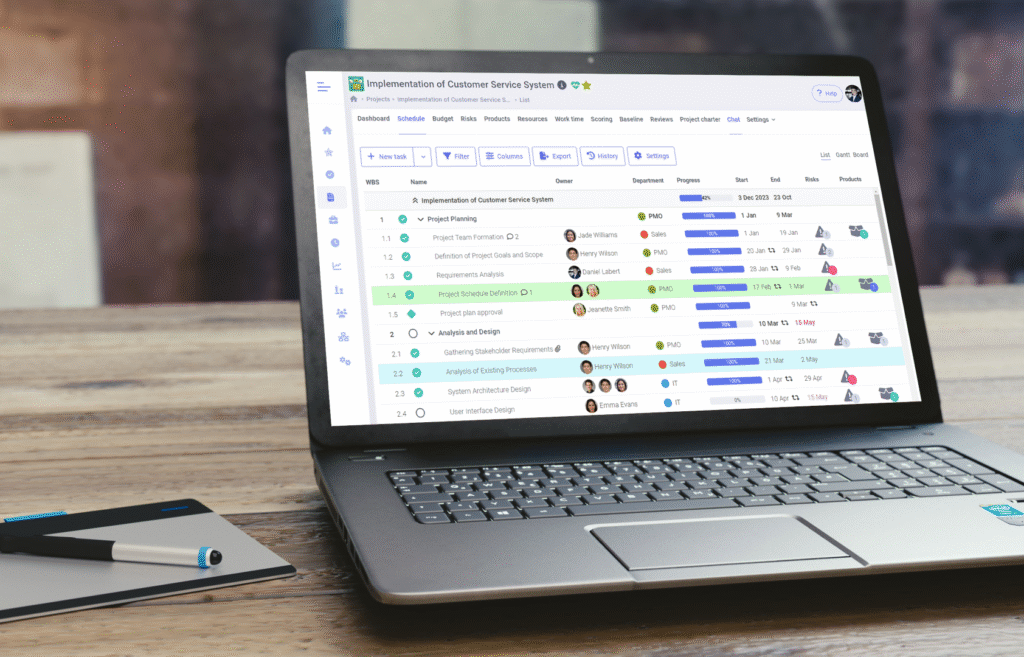
- Track deliverables and KPIs through unified dashboards and reports
In essence, leadership transforms from a supervisory role into a facilitative one. Leaders become enablers-unlocking team potential, removing obstacles, and driving outcomes.
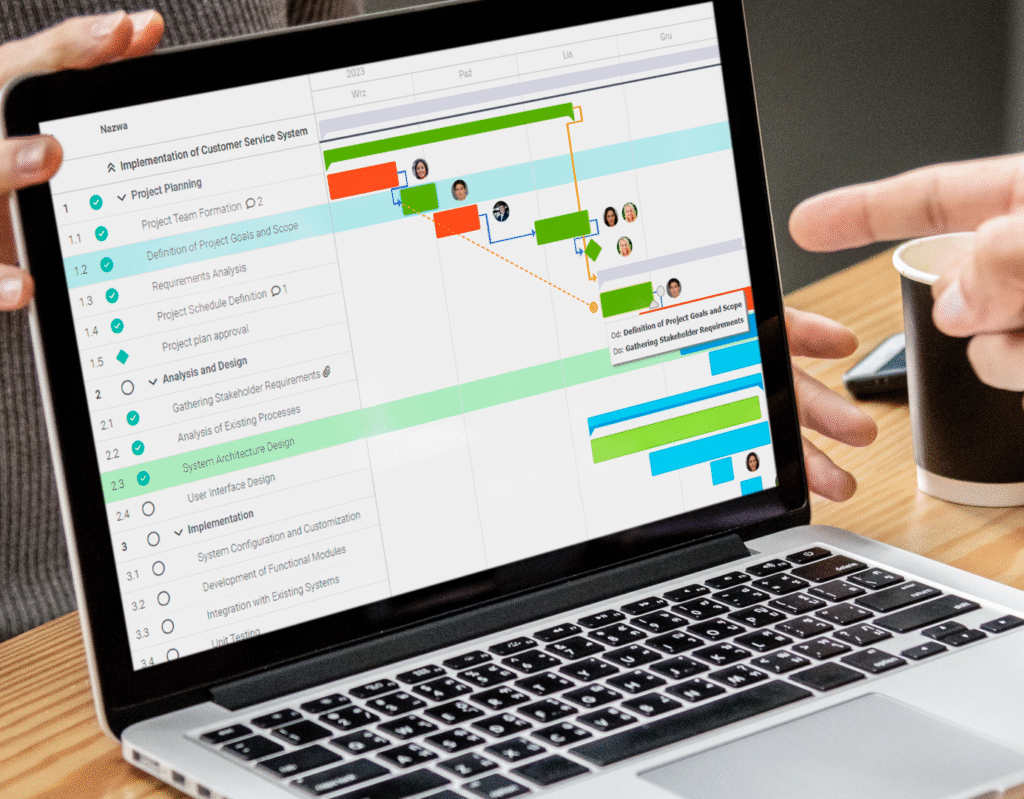
This shift toward project-centric leadership would be impossible without modern technology. Integrated, cloud-based platforms make it feasible to manage multiple initiatives, across multiple teams, with full visibility and control.
Solutions like Flexi-Project centralize:
- Project scheduling and timelines
- Budgeting and financial tracking
- File storage and document versioning
- Team communication and progress updates
- Risk analysis and mitigation strategies
- Integration with tools like Jira, Slack, Outlook, and ERP systems
This convergence of capabilities enables leaders to manage complexity without becoming overwhelmed. Instead of toggling between disconnected tools, they can see the full picture-and act decisively.
Building the Project-Centric Enterprise
At the organizational level, this evolution goes far beyond software. It represents a shift in mindset and culture.
A truly project-based organization:
- Breaks down silos, fostering collaboration across departments and functions
- Deploys people based on skills, not rigid roles or job titles
- Makes decisions grounded in project data, not assumptions or tradition
- Empowers teams with ownership over tasks, outcomes, and performance
Project managers in such companies often take on broader leadership roles-coordinating across teams, influencing strategy, and driving innovation from the ground up. Their success depends on having a platform that supports visibility, accountability, and agility at scale.
Tools That Reflect Modern Leadership Values
One reason project-based frameworks are resonating so strongly is their alignment with contemporary values in business:
- Transparency: Everyone knows what’s happening, when, and why.
- Empowerment: Teams take ownership of outcomes, not just tasks.
- Agility: Organizations pivot faster in response to data and feedback.
- Outcome-driven mindset: Success is defined by impact, not activity.
Tools like Flexi-Project are built with these principles at their core. Their features-including visual task management, real-time collaboration, risk dashboards, and performance reporting-don’t just support project execution. They reshape how people work and lead.
This has a profound impact on employee engagement, client satisfaction, and organizational adaptability.
When Should Leaders Embrace Project Platforms?
Many organizations wait too long to adopt comprehensive project management tools-usually when they’re already dealing with:
- Team misalignment and unclear priorities
- Chronic project delays or missed milestones
- Overlapping responsibilities and resource conflicts
- Growing demands for compliance, audit trails, or reporting
- Unscalable legacy tools and processes
A better approach is proactive investment-adopting platforms like Flexi-Project before complexity becomes chaos. If your organization is managing more than 3–5 concurrent projects, scaling to multiple teams, or planning a strategic growth phase, the time to implement is now.
Flexi-Project: A Catalyst for Modern Leadership
Flexi-Project isn’t just another project management tool-it’s a strategic operating system for the modern organization.
Key advantages include:
- Customizable modules tailored to specific workflows or industries
- Scalable architecture that supports startups and enterprises alike
- Real-time updates that keep leadership informed and agile
- Seamless integration with your tech stack-CRM, ERP, messaging tools
- Advanced analytics to support strategic planning and resource optimization
It’s the kind of platform that not only helps you manage projects but helps you lead better.

Final Thoughts: Project-Based Leadership Is the Future
Leadership in 2025 is being redefined, not by titles, but by capabilities. The leaders of tomorrow are not those who command the most meetings or sign the most memos, but those who can translate strategy into execution, empower diverse teams, and deliver measurable results.
Project-based leadership offers the structure, discipline, and agility to do just that. When supported by the right tools, this model becomes a competitive advantage.
Flexi-Project exemplifies this new approach. It provides the infrastructure, insights, and integrations leaders need to navigate uncertainty, scale operations, and inspire performance. In a world where complexity is the norm, the ability to lead through projects is no longer optional-it’s essential.