
September 14, 2025 – An appreciation of charming Brac.
My friend Ana kept talking about her grandmother’s village on Brac. “You have to go,” she’d say every time Croatia came up in conversation. “It’s not like the other islands.” I nodded politely for months, thinking yeah, sure, another tourist island.
Then I actually went. Ana was right. Brac is different.

What Makes Brac Stand Out
Brac is big. Like, properly big. The third-largest island in Croatia, with actual towns and people who live there year-round. Not just summer holiday homes and tourist restaurants.
The island has about 14,000 residents spread across various villages. These aren’t people who moved there to run guesthouses – many families have been there for generations. You can tell the difference when you talk to them. They know the island’s stories, not just the tourist facts.
The stone thing is real too. Brac limestone has been quarried for over 2,000 years. They used it to build parts of the White House in Washington. Diocletian’s Palace in Split. When locals tell you this, they’re not bragging – they’re just stating facts about their workplace.
Getting Around the Island
Vidova Gora – The High Point
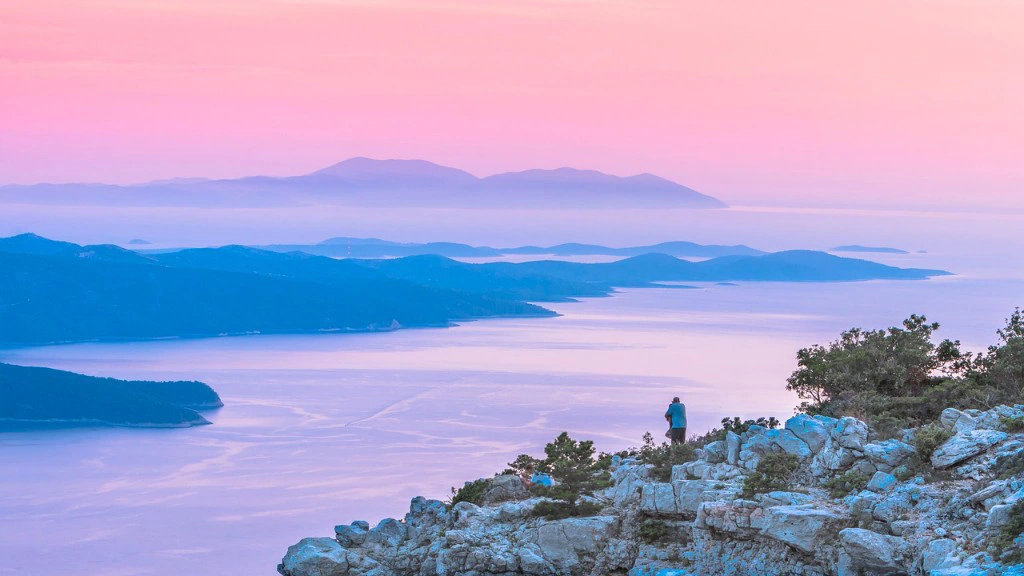
At 778 meters, Vidova Gora is the highest peak on any Croatian island. I hiked up there on my second visit, thinking it would be a quick morning walk. Wrong. It’s a proper hike – took me nearly four hours round trip.
The trail starts near Bol and winds through old stone walls that farmers built centuries ago. You’ll see sheep being moved between fields, which feels oddly normal until you remember you’re on an island in the middle of the sea.
The view from the top is worth the sweaty climb. You can see the whole island laid out below, plus that famous beach everyone photographs. On a clear day, you can spot Italy across the water.
Zlatni Rat Beach – Beyond the Instagram Shot
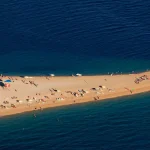
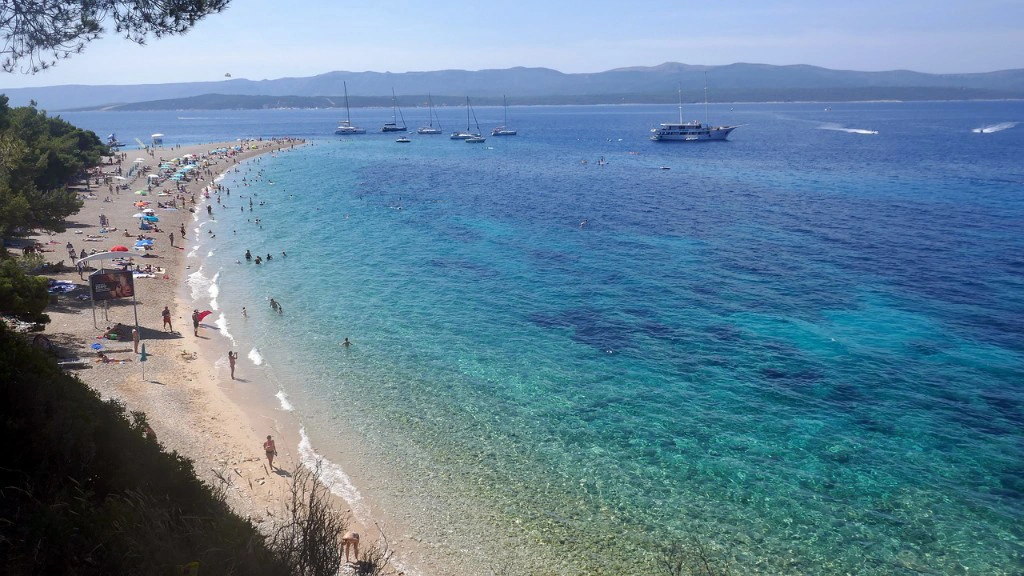
Everyone knows about Zlatni Rat. The golden triangle beach that appears in every Croatia travel guide. What they don’t tell you is that the tip actually moves. Wind and currents shift it around throughout the year.
I went in April and the point was facing southeast. Came back in September and it had moved maybe 50 meters northeast. The locals just shrug when you mention this. “It does what it wants,” one guy told me.
The beach is about 500 meters long, made of small pebbles that feel weird under your feet at first. West side is calmer, good for families. East side gets windy, which the windsurfers love. Pick your spot based on what you want to do.
Real Villages, Real People
Pucisca and the Stone Carvers
Pucisca is where they still teach people to carve stone the old way. There’s a school there that’s been running since 1909. I spent an afternoon watching students learn to shape blocks of local limestone.
The instructor, Marko, explained that many graduates end up working on restoration projects around the world. “Brac stone, Brac hands,” he said, which I thought was a nice way to put it.
Walking through Pucisca, you hear the tapping of chisels on stone. It’s been the same sound for generations. Some things don’t change, even when everything else does.
Supetar – More Than Just a Ferry Port
Supetar is where most people arrive by ferry from Split. Most people also leave immediately, heading for the famous beach or the hiking trails. Their loss.
The harbor area comes alive in the evenings when fishing boats return. I made it a habit to get to the waterfront restaurants early to watch the boats unload. The fish you eat that night was swimming that morning.
There’s also this cemetery designed by a Croatian sculptor named Toma Rosandic. Sounds morbid, but it’s actually beautiful. White stone monuments carved by local artisans, set in what feels like a peaceful garden. Worth a quick visit if you’re in town.
Food and Drink
Olive Oil That Actually Tastes Different
Brac has been growing olives for 1,500 years. The island has about 100,000 olive trees, producing roughly 200,000 liters of oil annually. Most of it is still pressed using traditional methods.
I visited the Dujmovic family’s mill near Nerežišća. They showed me their grandfather’s stone press, still working after 80 years. The oil has this peppery finish that comes from the limestone soil and the wind that dries the olives naturally.
You can taste the difference between this and supermarket olive oil immediately. It’s stronger, more complex. The kind of thing that makes you understand why people get obsessed with food quality.
Wine from Rocky Soil
Brac’s wine industry nearly died out in the late 1800s when phylloxera destroyed the vineyards. It’s made a comeback in recent decades, with local winemakers focusing on grapes that grow well in rocky soil.
I spent an evening at Stina Winery, which is built into the limestone cliffs. The owner, Andro, explained how the rocky soil forces vines to develop deep roots, creating wines with intense mineral flavors.
Their Plavac Mali is aged in natural caves. You can taste the stone in it, if that makes sense. It’s not like any wine I’ve had before.
Hidden Spots Worth Finding
Blaca Hermitage – A Monastery in a Cliff
This is probably the weirdest thing on Brac. A monastery built into a cliff face, 300 meters above sea level. Monks lived there from 1551 to 1963. Getting there requires a 45-minute hike from the nearest road.
The last monk, Father Nikola Milicevic, was an astronomer. His observatory is still there, with 19th-century instruments that he used for research. Standing in that room, surrounded by old telescopes and star charts, you feel the dedication it took to pursue science in complete isolation.
Secret Swimming Spots
Beyond the famous beach, Brac has dozens of small coves you can only reach on foot or by boat. My favorite discovery happened by accident – I took a wrong turn while hiking and ended up scrambling down rocks to this tiny cove near Murvica.
Crystal clear water, complete privacy, and a 20-minute climb that keeps most people away. I’ve been back three times and never seen another person there.
These hidden spots show you Brac’s geological diversity. Some have fine pebbles, others large stones, a few rare sandy patches. Each offers different swimming experiences.
Planning Your Visit
Getting There and Around
Most people take the ferry from Split, which is fine but limited. You see the island from one angle and miss the dramatic coastline.
I’ve found that boat tours give you a better introduction to Brac. Condor Yachting runs a tour from Split to Brac that actually gives you time to appreciate the island instead of rushing between photo stops.
Approaching Brac from the water, you see the white cliffs, hidden coves, and traditional fishing villages that ferry passengers miss completely. Plus you get access to swimming spots you can’t reach from land.
When to Go
I’ve been to Brac in May, July, and October. Each season has its advantages. May and October offer warm weather without crowds. July brings tourists to the main beach, but the island’s big enough that you can always find quiet spots.
October is harvest time for grapes and olives. Local restaurants serve seasonal dishes you won’t find in summer. The weather’s still warm enough for swimming, but you get to see the island’s working side.
Winter visits limit swimming but show you authentic island life. Stone carving workshops, olive oil production, wine making – the activities that keep the island alive when tourists go home.
Why Brac Works
What keeps me coming back to Brac isn’t any single attraction. It’s the fact that the island hasn’t transformed itself completely for tourism. Real people still live real lives there, and they’re willing to share their traditions with visitors who show genuine interest.
The island teaches you to slow down. You can’t rush through Brac’s experiences. Conversations with locals develop gradually. Hiking trails demand respect for the terrain. The best discoveries come to those willing to explore beyond the obvious attractions.
Three years after Ana first told me about her grandmother’s village, I understand why some people never want to leave Brac. The island offers something rare – a place that remains true to itself while welcoming visitors. For travelers seeking authentic Croatia, Brac delivers an experience that stays with you long after you’ve returned home.
Just don’t expect it to be like the other islands. That’s exactly the point.