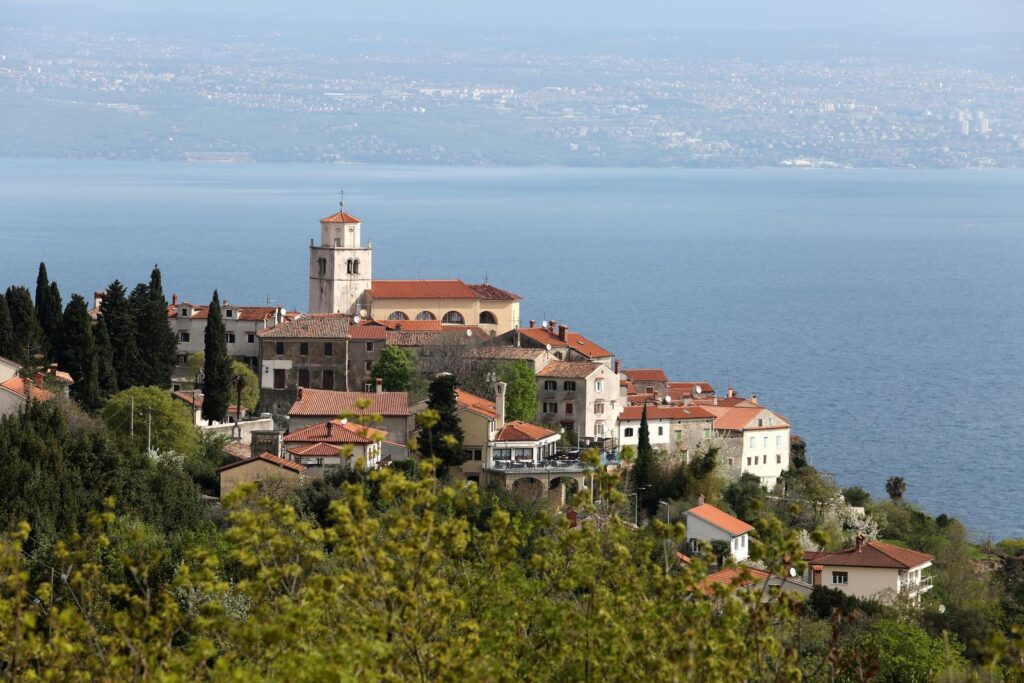
November the 5th, 2025 – It is sometimes referred to as “Tiny Tuscany” and is a truly striking little Kvarner village you’ve likely never even heard of. Its ancient stone structures tell stories spanning centuries.
As Putni kofer/Lana Mindoljevic writes, nestled among imposing mountains and surrounded by the deep blue sea, in the northern Adriatic lies Kvarner, adorned with elegant old villas and palaces, full of history and long promenades. At the junction near Istria lies a series of picturesque places, but those that aren’t directly on the coastline often pass under the radar of tourists. Criminally so. One such place is charming Mošćenice, which watches over Kvarner from high on a hill, and where you’ll think you’ve accidentally crossed the border with neighbouring Italy and stumbled right into the heart of Tuscany. This little, but beautiful and unsung gem in the hinterland will completely delight (and surprise) you.
tiny tuscany – the kvarner village where time has halted
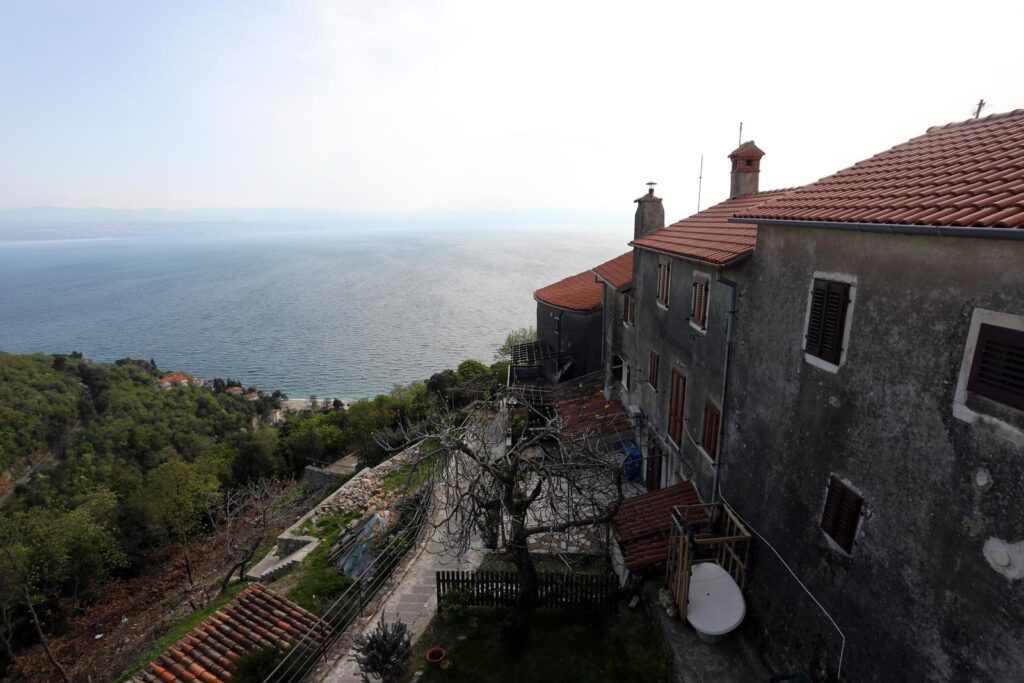
Even the sight of Mošćenice, or “Tiny Tuscany” reveals something very special about the ancient stone Kvarner village. Stone streets, old buildings full of history, and all this in the embrace of dense forests and ancient olive trees. This village offers one of the most beautiful views of the entire Kvarner area, reaching all the way to Cres and Krk, and it’s especially magical as the sun sets, dipping below the sea and turning the sky orange and red.
Mošćenice is located 173 metres above sea level, is situated on the slopes of Učka, right above the popular summer resort of Mošćenička Draga. Administratively, it belongs to Opatija, and is only thirty kilometres away from Rijeka. Today, it has a population of just a few hundred, but it was once a lively medieval settlement. For countless centuries, craftsmen, winegrowers, and olive growers have lived here in harmony with the hills, sea, and stone, leaving an indelible mark that has lasted for generations.
The best way to get to know Mošćenice is to take a leisurely stroll through its ancient streets. After parking and entering the old heart of the settlement, which is included in the Croatian Cultural Heritage Register, you will enter a peaceful world of stone and fragrant herbs. On the main square sits the Romanesque parish church of St. Andrew (Sv Andrija), which was later remodelled in the Baroque style. Its bell tower offers one of the most beautiful, sweeping views of the entire area.
At the entrance to the oldest part of this charming Kvarner village, the old town gate still stands strong, on which you can see the Habsburg coat of arms and the carved year of 1654, when it was renovated. Not far from the gate sits the ethnographic collection, which still houses an impressive number of traditional costumes, tools, decorations and objects from the lives of the local people who lived out their days in these hills.
Then you’ll come upon Mošćenički toš, a 300-year-old olive mill and a symbol of this old village. Another point of particular interest is the old guardhouse, or town loggia, as well as Kostinac, the square behind the church that was once the village cemetery.
old customs and even an old language preserved in time
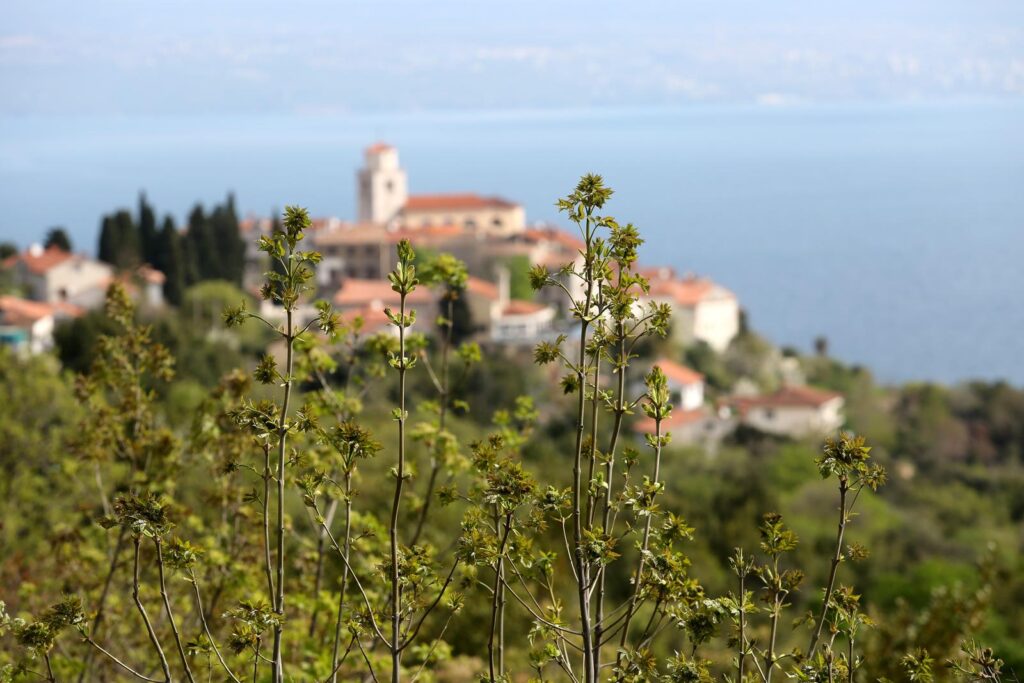
Mošćenice is a place with an exceptionally long history. This Kvarner village was actually founded by the Illyrians, and later fortified by the Romans and Venetians as their respective empires grew. During the 16th century, walls and towers were built, giving Mošćenice the shape of a fortified village, small but proud, and in the 17th century, it had its own statute. For many centuries, the inhabitants of this ancient place have preserved their customs and language, and even today you can still hear the old Čakavian dialect here and feel the spirit of simpler times.
If you like walking and recreation, Mošćenice is the starting point for an array of hiking and mountaineering trails towards the mighty Učka, including the famous Trebišća – Perun trail, which leads through a mythical landscape associated with ancient Slavic mythology. If you’re up for it, you can also head to the very top of Učka, Vojak, located at 1401 metres above sea level, and from the village itself you can walk down to the sea. A staircase with exactly 753 steps leads to the beautiful beach of Sv. Ivan.
hit an egg with a one euro coin or try your luck with a paper aeroplane
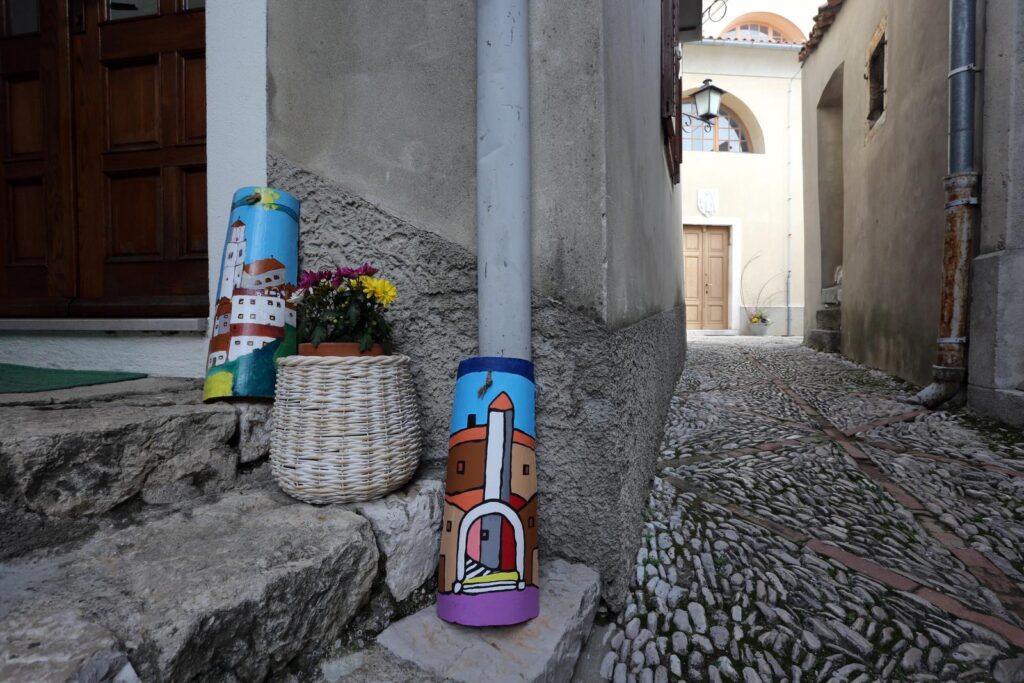
Although small and relatively overlooked, Mošćenice is a place absolutely teeming with life. They even host two interesting world championships in the village. According to the Opatija Tourist Board, an egg-throwing competition is traditionally held at Easter, in which the goal is to hit an egg with a one euro coin from a distance of 2.8 metres and manage to break its shell. This amusing tradition unsurprisingly attracts hundreds of competitors from across the region, as well as from other parts of Croatia and abroad.
The second championship is just as oddly specific and charming…
Domestic and foreign visitors all come and try their hand at throwing paper aeroplanes, which they have made themselves, over the village walls and down towards the sea. For art lovers, the International Art Colony Mošćenički Pinel, which is held at the end of August and brings together artists from all over Europe, is an experience in and of itself.