
December the 5th, 2025 – Croatia is home to the world’s only Roman palace that people still live inside, 1700 years after it was first constructed. You likely guessed it, this incredible UNESCO-protected structure is located in the heart of Split.
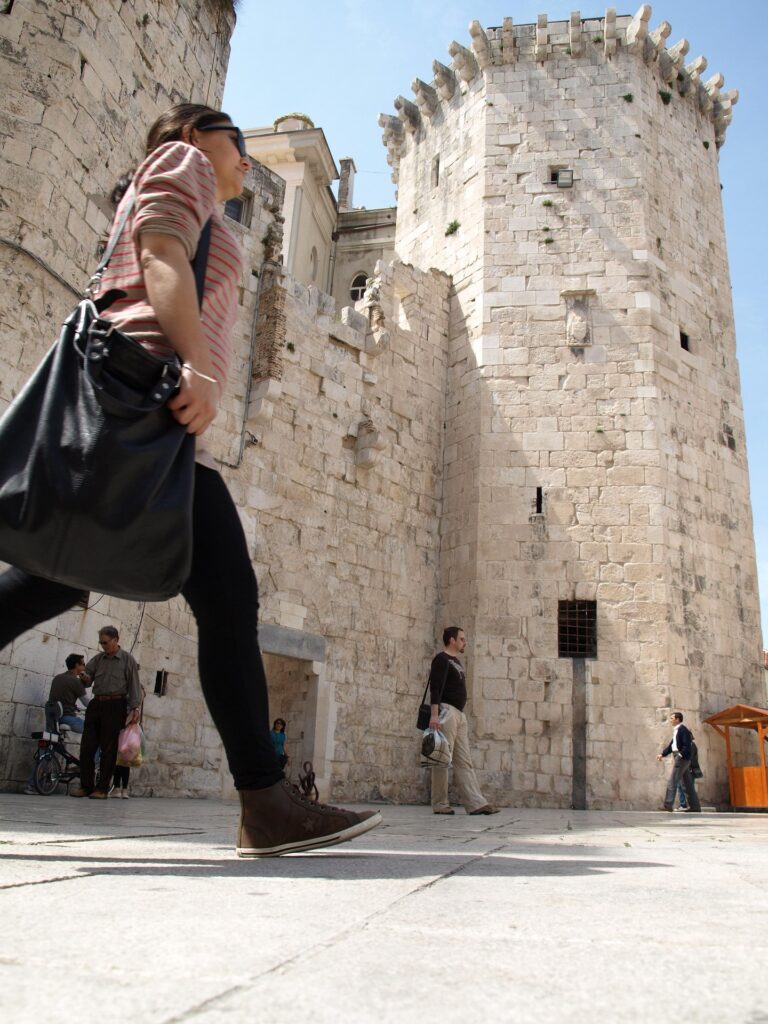
As Putni kofer writes, an astonishing living monument, this is how, in short, one could describe the most monumental building in the heart of Split – Diocletian’s Palace. These centuries-old, imposing walls preserve a rich history and multiple monuments, and wandering through its ancient streets, paved with smooth, aged stone, you’re transported directly back in time to the glory days of the Roman Empire.
History seeps out from every single little corner and piece of old stone, but what makes this huge construction so priceless is that it has made Croatia home to the world’s only Roman Palace that people still live in to this very day. Several thousand people still live within the 1,700-year-old palace walls, children still run around Voćni trg, and the remaining “Getani”, as the inhabitants of this Roman emperor’s palace call themselves, sip coffee on the “Pjaca” while rivers of tourists pass by them during the summer.
a 4th century wonder that still lives and breathes today
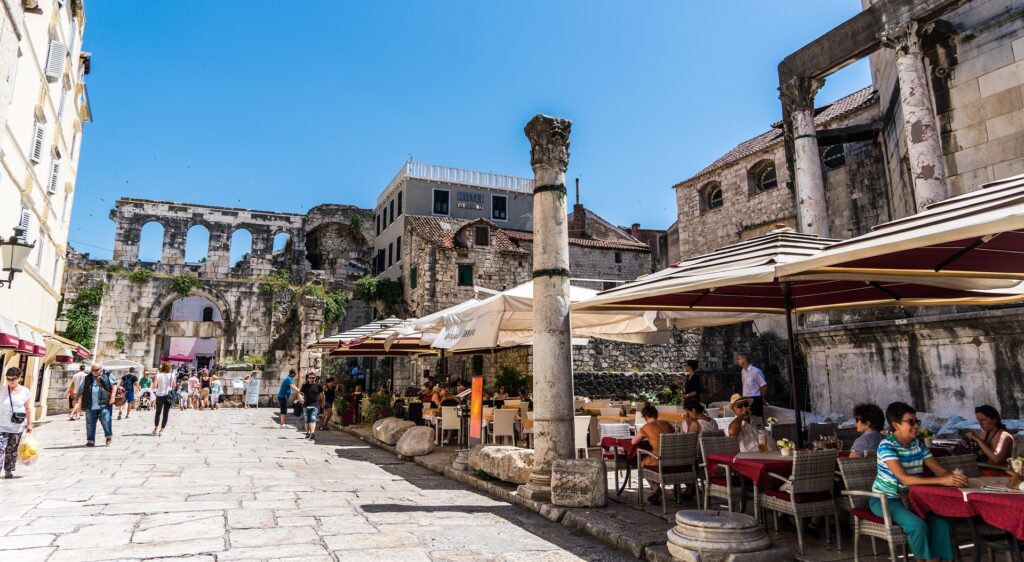
This remarkable palace was built way back during the 4th century, around 300 AD. It was intended that Emperor Diocletian would spend his retirement there. It’s no wonder that he chose Split and the beautiful Dalmatian coast as his retirement location. The palace spans an area of 40,000 square metres, and its construction took only a single decade. Today, it is one of the best-preserved monuments of Roman architecture in the entire world and is understandably under UNESCO protection.
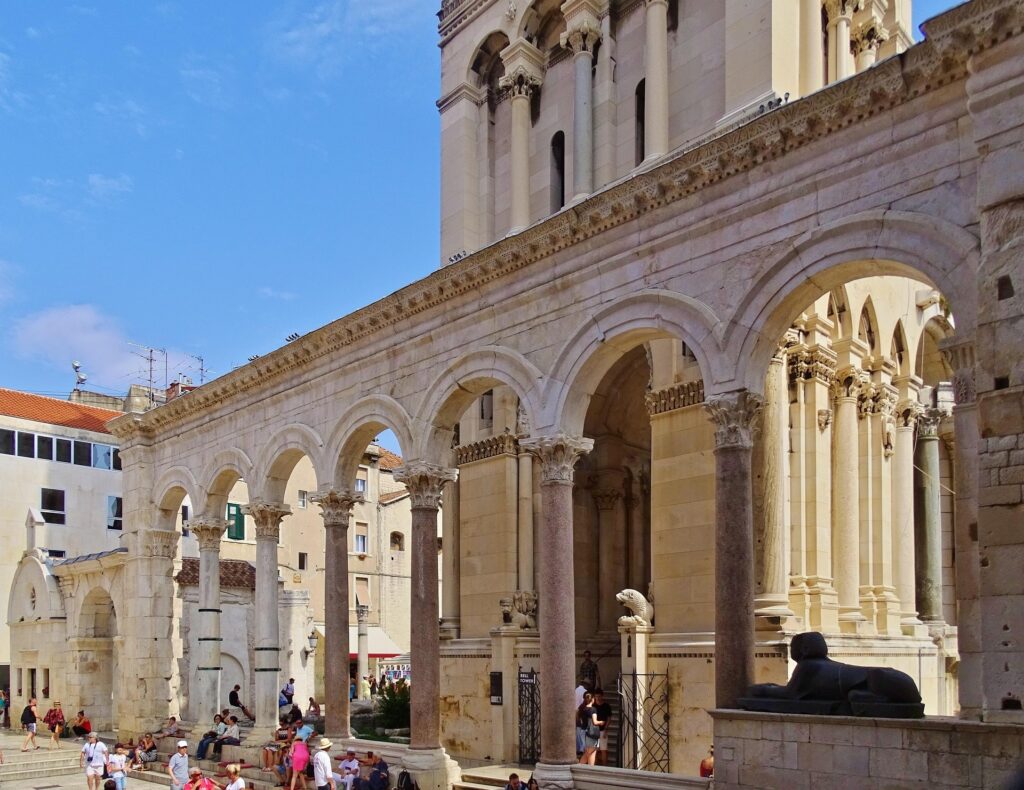
What fascinates almost every person who comes to Split is the fact that people still live and work in Diocletian’s Palace, which makes it a unique Roman building in not only Europe but the world. The settlement of the Palace and organised city life within it began during the 6th century, when it represented a kind of refuge for the exiled population after the destruction of ancient Salona.
If you enter it from the southern part of the Riva (waterfront/promenade), you’ll pass through Emperor Diocletian’s very own cellars. They were shaped during construction to level the level of the southern, residential part with the other parts of the palace. It is currently assumed that they served as storage space or even as dungeons, but today they are a very unique fair and exhibition space with various events held there.
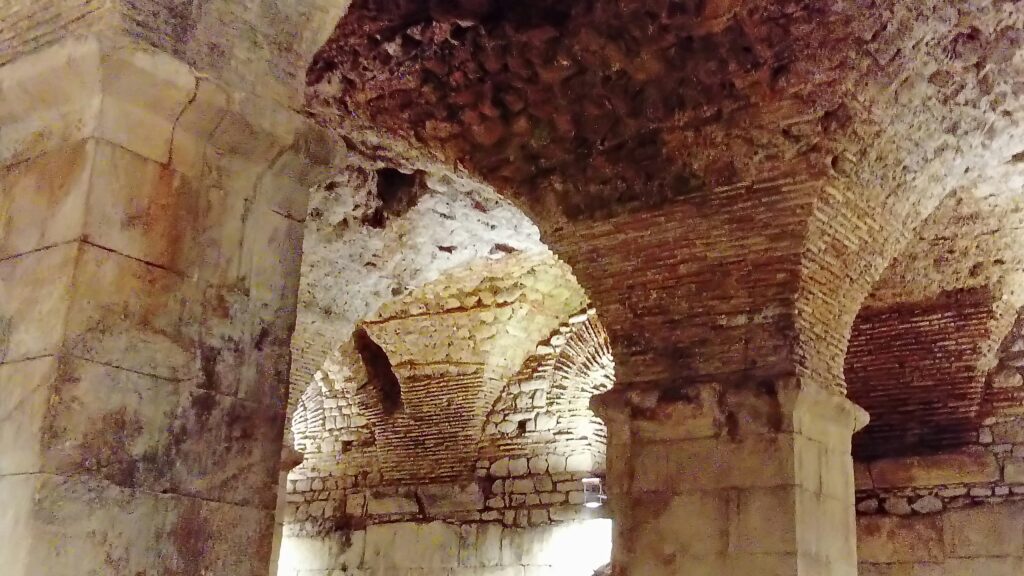
During the scorching hot summer months, these cellars can get very crowded by not only people passing through but by those seeking shade and cooler temperatures, so it’s worth taking advantage of spring and autumn to experience them in their full glory. From the cellars, if you’re coming from the Riva direction, you will then take the ancient stairs to one of the most beautiful squares in all of Split: Peristil.
four towers still bearing their ancient roman names
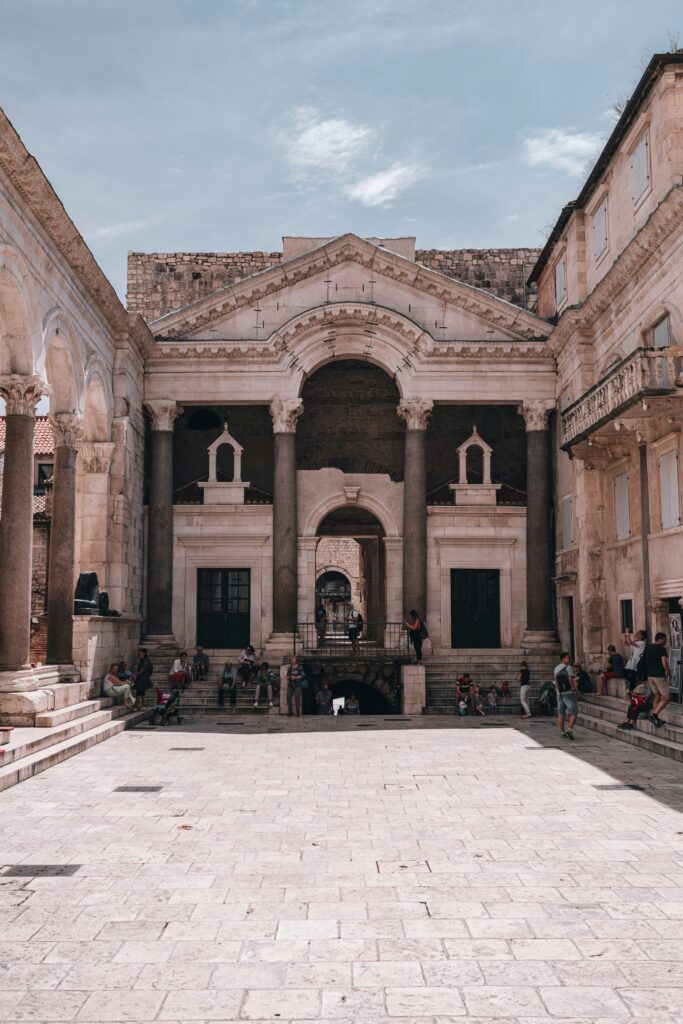
Croatia being home to the world’s only Roman palace that people still live in is truly monumental. The actual structure itself is more than imposing in both its size and shape. It was designed as a rectangle, which is not entirely regular due to issues with the terrain during its construction. From the air, it looks like a fortress, with four towers and gates on each side. Its gates still bear names from Roman times: the Brass Gate, the Golden Gate, the Silver Gate and the Iron Gate. The Peristil is definitely the real heart of the palace, the square where people gather in the summer, sing, drink coffee and take pictures with modern day “Diocletian’s soldiers” dressed from head to toe in full Roman gear.
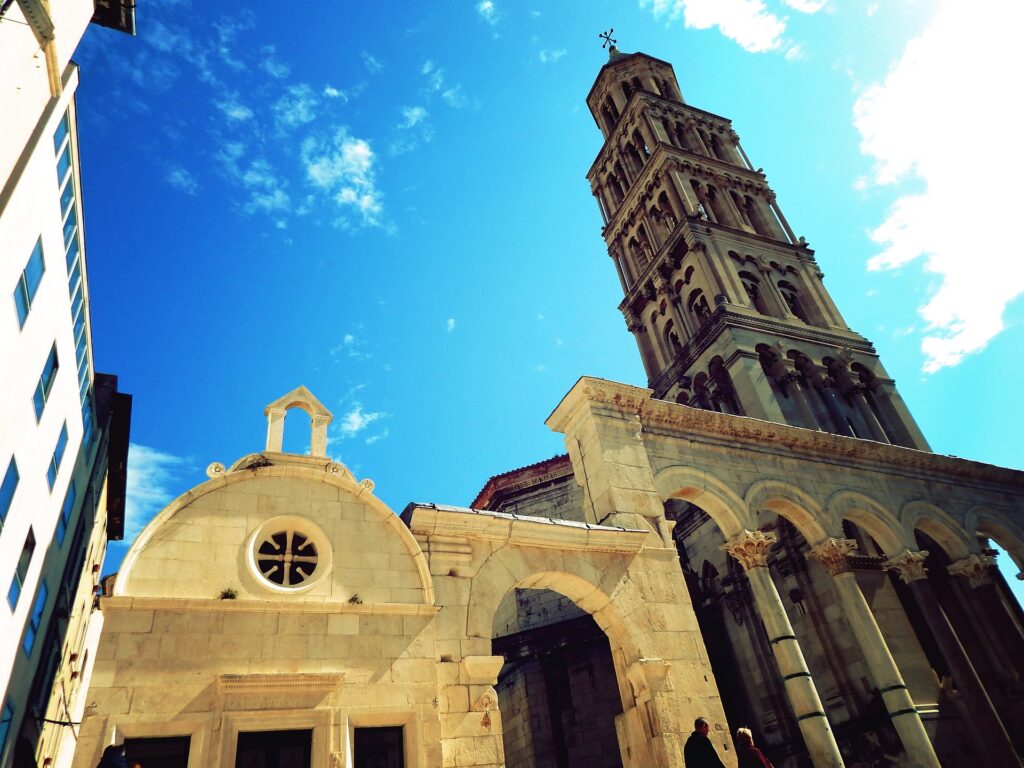
Then we come to what’s perhaps the biggest attraction of the palace, and of all of Split: the Cathedral of St. Domnius and its campanile, which has always been instantly recognisable to the world as being in Split. The cathedral dates back to the 7th century, and the iconic bell tower was added during the 13th century. It has been completely restored and is a popular tourist attraction, with many climbing up to the top and enjoying the panoramic views of the entire city and the sparkling Adriatic Sea.
the temple of jupiter and an ancient egyptian sphinx
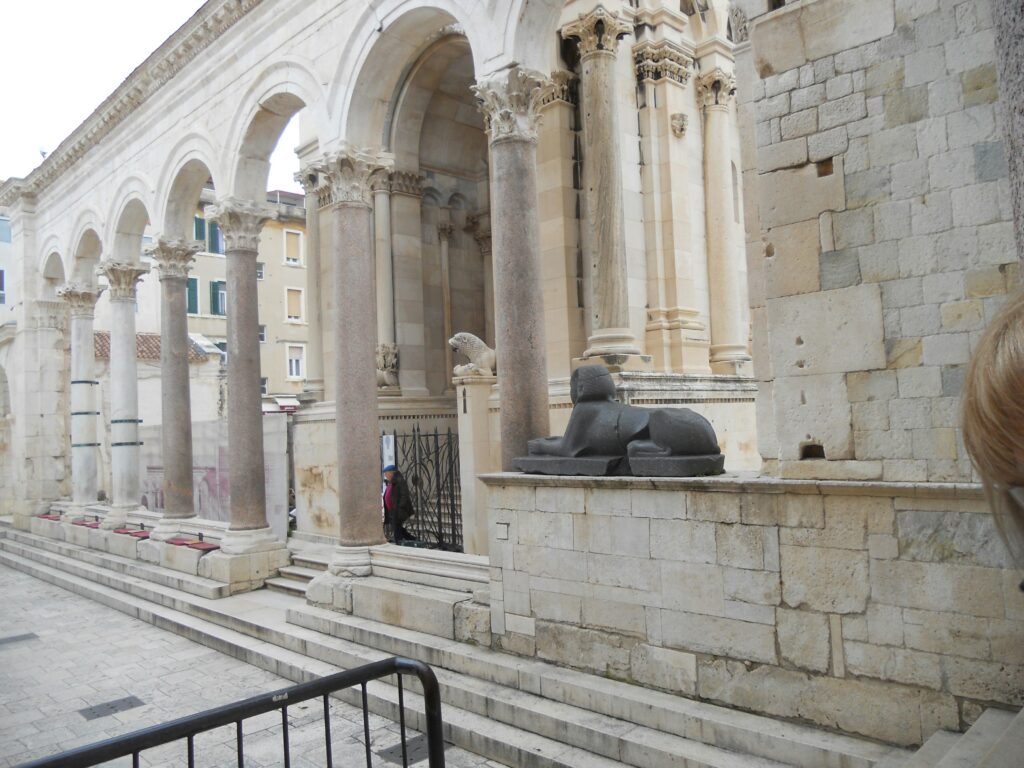
One of the reminders of the ancient times in which the palace was created is the fascinating Temple of Jupiter, which you will find within the very walls. It is located in the western part of the palace, and was built at the same time as the palace itself, dedicated to the main deity of the ancient Romans – Jupiter. As early as the 6th century, with the strengthening of Christianity, it was dedicated to Saint John the Baptist. In front of the entrance you’ll also see a sphinx, brought straight from Egypt at the request of Emperor Diocletian himself.
The original part of the residential part of the palace is the Vestibule, a circular hall with a dome reaching 17 metres in height and 12 metres in diameter. During the summer months, you can enjoy the performance of traditional Dalmatian klapa songs in this remarkably special location.

Every single ancient street, alley and square within the palace walls is special and preserves a historical story, while still living and breathing in the modern era. Another unique Split attraction is located here: the narrowest street in all of Split. Since it is impossible for two people to pass each other on it, the name “Pusti me proć” (Let me pass) has become established, because this is what you should shout to someone coming from the opposite direction so that they don’t start heading down it at the same time.
Subscribe to our newsletter
the fields marked with * are requiredRelated posts:
 City of Split Continues to Improve Accessibility in Diocletian’s Palace, Old City Center
 Palace of Life, City of Changes: Project to Help Restore and Improve UNESCO-protected Split
 New Netflix Crime Film with Leighton Meester Set Almost Entirely in Split
 International Meeting of Travel Influencers Kicks Off in Split (PHOTOS)