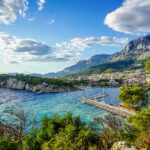
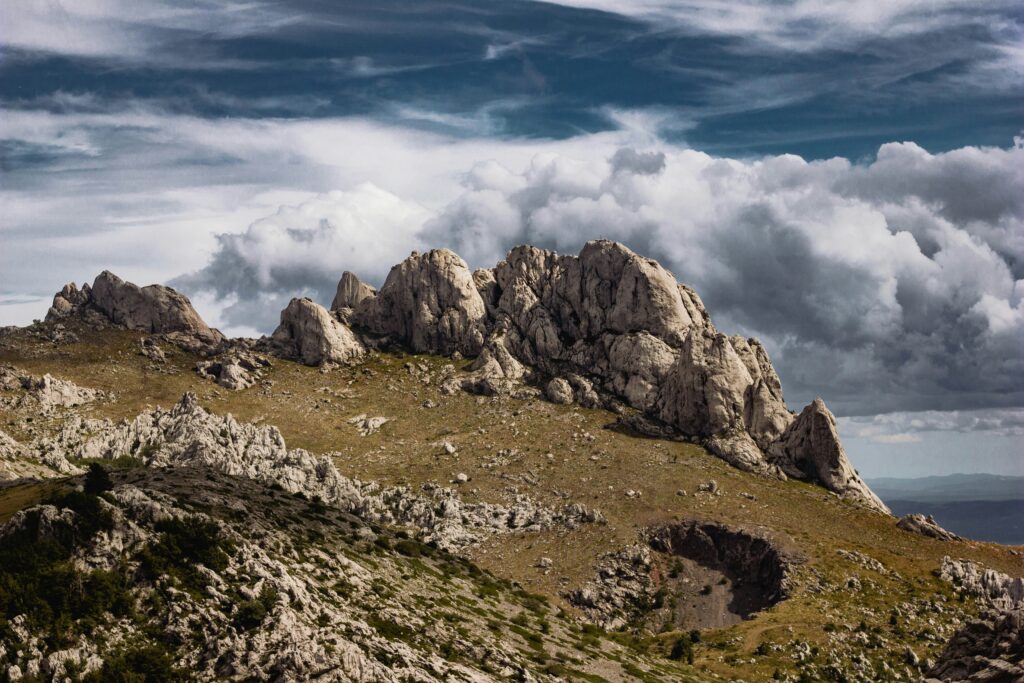
March the 16th, 2026 – The longest Croatian mountain range isn’t the tallest, but it does stretch across two counties, is home to the country’s deepest cave and two stunning national parks.
As Putni kofer writes, many mistakenly believe that one particular well known name is the name of the highest mountain in Croatia. This misconception is far from surprising, because it truly is a mountain giant that has become a true symbol of Croatia’s wild nature over countless centuries. However, the highest peak in Croatia is actually not located on its massif. This naturally doesn’t diminish its size and significance in any way, shape or form, because it holds another impressive record, the title of the longest mountain in Croatia. It is, of course, the magnificent Velebit.
The always imposing Velebit stretches for an impressive 145 kilometres in total, and this Croatian mountain range is home to the country’s deepest cave system. Its width varies between ten and thirty kilometres, and the mountain massif is traditionally divided into northern, middle and southern parts. The highest point of Velebit is Vaganski vrh, which towers at a dizzying 1757 metres above sea level and is among the highest peaks in the country.
velebit – croatia’s largest nature park and home to two national parks

Velebit does hold another record. It’s the largest nature park in Croatia, spanning an area of 2200 square kilometres and extending from the Vratnik pass in the northwest to the Zrmanja canyon in the southeast, spanning a length of 145 kilometres. It is the largest protected nature area in the whole country.
Velebit is also home to two national parks, Northern Velebit and Paklenica, as well as the reserve of Hajdučki and Rožanski kukovi. This magnificent Croatian mountain range is also home to the country’s deepest cave, Lukine jame. In addition, Crnopac, which is the southernmost part of Velebit, is the location of the longest Croatian cave, the Kita Gaćešina-Draženova puhaljka system. It contains 24.5 kilometres of deep, dark passages.
The youngest national park in Croatia, Northern Velebit National Park, was placed under protection only in 1999. Within the park’s borders are also the aforementioned reserve of Hajdučki and Rožanski kukovi, and two botanical reserves: the Visibaba botanical reserve and the Zavižan-Balinovac-Velika kosa, within which lies the Velebit Botanical Garden.
paklenica
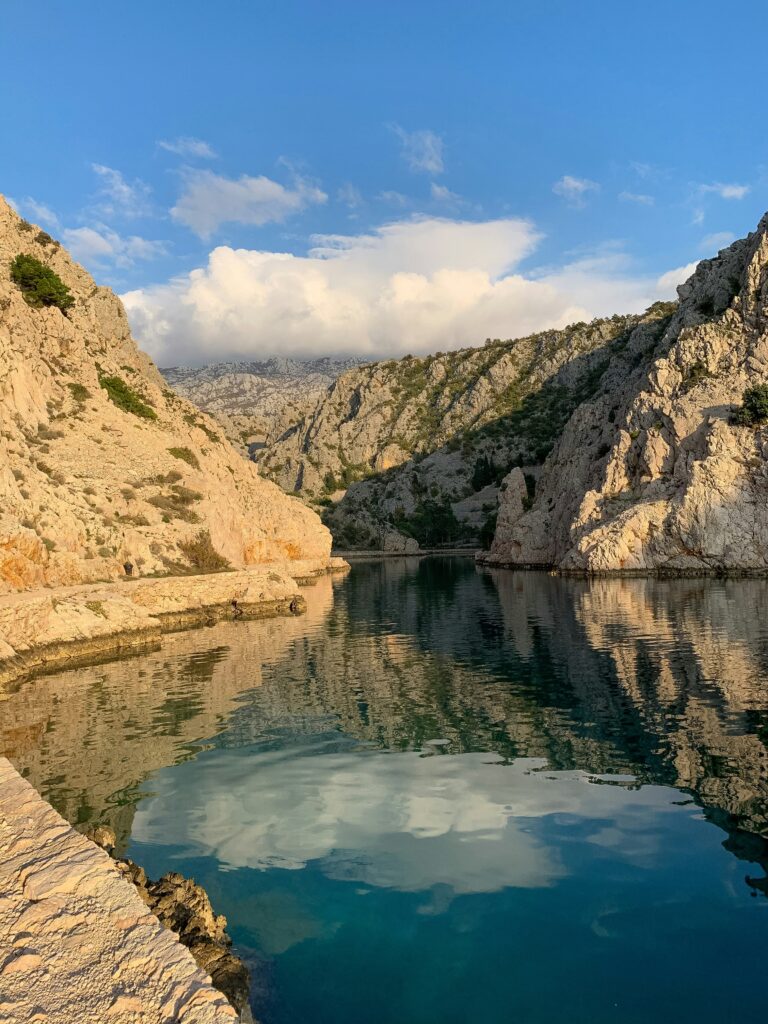
The beautiful Paklenica National Park lies on the steep slopes of Southern Velebit, and is home to the highest peaks of this entire mountain range. It was placed under protection in 1949, and its name comes from the name for the resin of the black pine, or paklina, which the inhabitants of the area used to heal wounds, coat ships, and even to provide lighting.
In this park, natural life is largely shaped around the canyons that have been carved out over millennia by the Mala and Velika Paklenica, the only permanent watercourses on southern Velebit. The Velika Paklenica Canyon stretches for 14.5 kilometres, while its width varies between 500 and 800 metres. The Mala Paklenica Canyon is 12 kilometres long and 400 to 500 metres wide. In certain places, the space narrows to just ten metres, while impressive cliffs rise up to 650 metres high above it.
if it isn’t velebit, where is croatia’s highest peak?
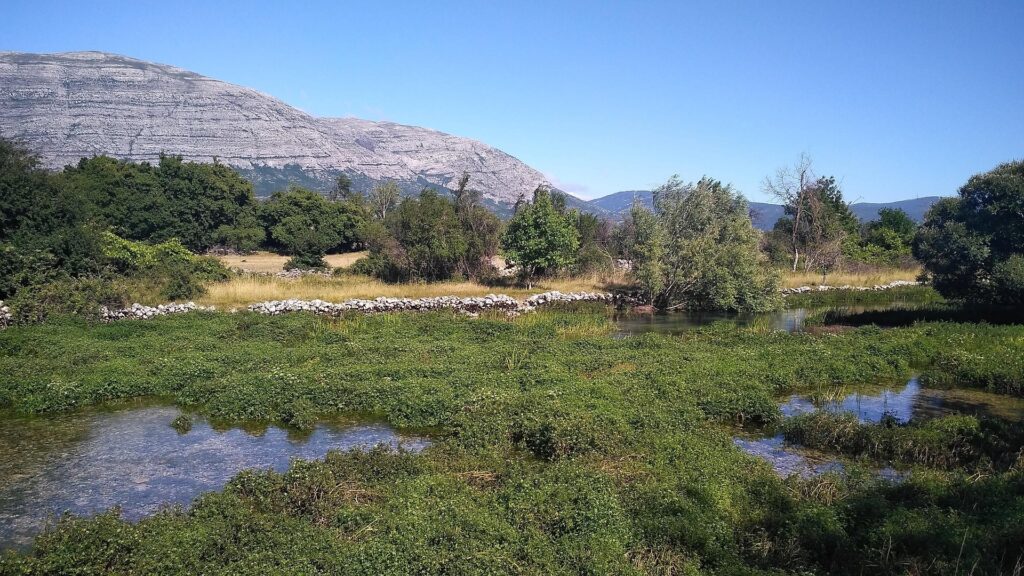
Croatia’s highest peak can be found within the dangerous Dinara mountain range, which stretches for about a hundred kilometres along the border of Croatia and Bosnia and Herzegovina. It’s right there that the highest point in Croatia rises up to the clouds. The peak of Dinara, or Sinjal as it is named, towers above everything at a massive 1,831 metres above sea level.
The very top of this particular mountain is adorned with imposing cliffs reaching several hundred metres high, and the massif is a habitat for as many as 750 plant species, 110 of which are strictly protected and 50 are endemic. The Dinara Nature Park was officially declared only in February 2021.
Subscribe to our newsletter
the fields marked with * are requiredRelated posts:
 UNESCO World Heritage: Primeval Beech Forests – Northern Velebit and Paklenica National Parks
 Intangible Heritage of Croatia – Cheesecloth Cheese – Sir iz Mišine
 Croatia to Gain New Tourist Destination with 68 Million Kuna Project
 Was There Once a Submerged River on Velebit and an Estuary in Pag Bay?