September the 14th, 2025 – There’s an old Dalmatian village on a popular island that has zero permanent inhabitants and is the perfect escape from the daily stresses of life.
Hvar collects international accolades and is known worldwide for its beauty, earning titles like the “Croatian Ibiza” among party goers and being known for its incredible beaches. Croatia’s premier island is actually home to an old Dalmatian village with no permanent inhabitants, with memories of the past echoing on the bura.
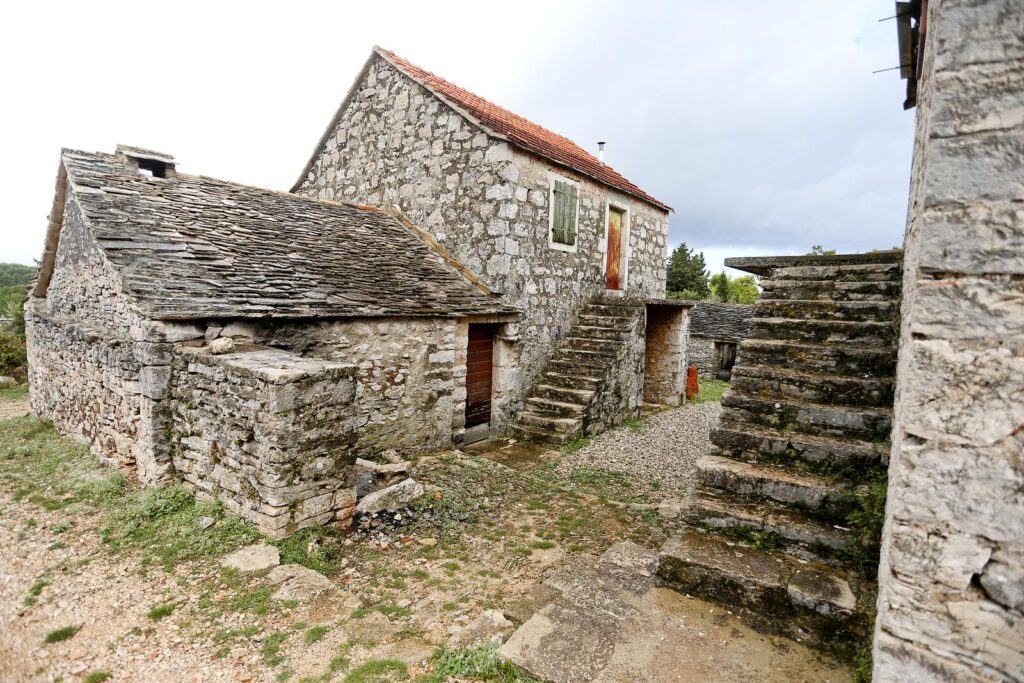
As Putni kofer/Antonio Ivcevic writes, the old Dalmatian village of Humac was founded back during the 17th century. Its charming stone houses, narrow little streets and the church of St. John and Paul still preserve the memory of times long gone by and the former life of the islanders. The stone houses of Humac on Hvar, with their traditional tiled roofs and old courtyards, showcase a perfectly preserved example of Dalmatia’s rural architecture.
Hvar has been on the tourism map for decades as an island drenched by the sun and with a gorgeous coastline, with beaches that attract visitors from all over the world. Its quaint towns and ports often feature prominently in all kinds of travelogues, with glossy photos of the Hvar waterfront or sunsets over the nearby Pakleni islands regularly appearing in magazines and guidebooks. Despite the international fame, the actual story of Hvar doesn’t begin and end with the sea and the sun. Behind the first image of tourism and the popular coastal towns, the island hides another face, a quieter, almost introspective one. One such place, where you can fully experience the beauty of the Mediterranean as it once was, is the aforementioned Humac.
a former shepherd’s settlement, now long forgotten…

This old Dalmatian village with no permanent inhabitants is located on a gentle slope above Jelsa, at 350 metres above sea level. The people of Hvar like to say that the air there is cleaner, the scents more intense, and the view infinitely beautiful. Although Humac is only seven kilometres away from the bustling coastline, which is teeming with life during the summer, it seems like its own detached, special world, secluded enough to provide a feeling of complete detachment from everyday life and the accelerated rhythm we have become accustomed to today.
Humac is often referred to as a “time capsule”, because the spirit of past centuries still echoes through its stone walls and quiet, now totally empty little streets. What especially captivates visitors is the panoramic view that opens up from here. The gorgeous horizon encompasses the deep, endless blue of the sea, the island of Brač and the entire Makarska Riviera across on the mainland. At sunset, the entire landscape takes on a golden, almost unreal colour.
Humac began to take shape back during the 17th century, at a time when shepherds and winegrowers sought refuge above the coastline, in a position that offered safety and good connections to the fields. Since then, the village has retained its original appearance, making it one of the most complete examples of rural architecture on all of Hvar.
though abandoned, peace and stability remains in each old house
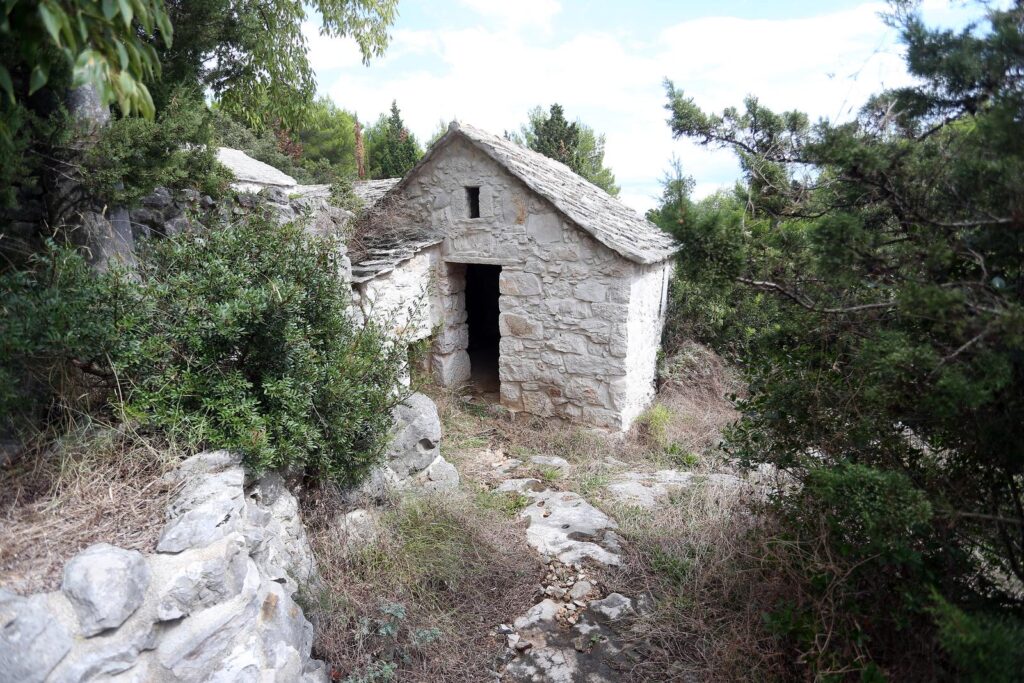
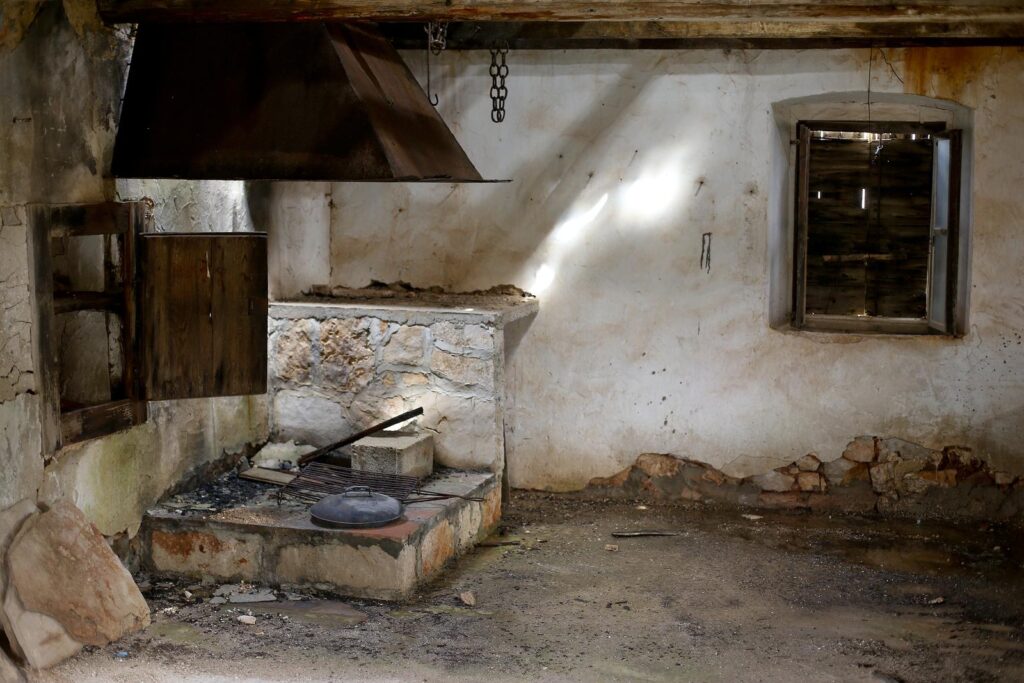
The houses are built of local Dalmatian stone, with small balconies and thresholds that reveal the modest dimensions of life in the former village long ago. The quaint courtyards, bordered by dry stone walls, were the centre of everyday affairs, and even today, you can still sense the rhythm of times now long gone by. Although empty, the buildings don’t truly seem abandoned, it’s as if they have retained the peace and stability they bore centuries ago.
The Church of St. John and Paul, built at the beginning of the 20th century, stands at the entrance to the village as a symbol of community. It was constructed during the period when local inhabitants still regularly came to Humac to carry out their field work. Today, it is the main gathering place for the feast of the village’s patron saint. Every single year, at the end of June, many Hvar residents return here and the village briefly comes alive again, with songs, gatherings and old customs honoured.
Just a few minutes’ walk from the village is the fascinating Grapčeva špilja, a cave that is also one of the most important archaeological sites in this part of Croatia. Traces of life in it date all the way back to the Neolithic Age, and the ceramics and wall engravings found speak of the long continuity of life on the island of Hvar. In addition to this very special cave, there are several circular dry-walled houses scattered around the area, some of which have foundations that are thousands of years old.
autumn on hvar is a different experience entirely

During the cooler autumn months, the island of Hvar shines in a completely different way than the one most visitors get to know during the scorching heat of July and August. The temperatures are much more pleasant, the days are still long enough for all kinds of excursions, and the crystalline sea retains its warmth, making swimming possible even in October. Additionally, the bays are quiet, stripped of their crowds, the beaches are half-empty, and strolls through the ancient streets become unhindered. Instead of the hot, sweaty summer murmur of tourists, you can instead take in the ins and outs of the daily lives of the islanders.