September the 12th, 2026 – The highest fortress of the former Dubrovnik Republic (Ragusa) isn’t even located within the city. It’s a very unusual, irregular fortification that once played a vitally important defensive role.
Nestled against the rock sits one of the most monumental fortification systems in the south of Croatia, and it was once an important cog in the defence of the powerful Republic of Dubrovnik. Putni kofer writes that anyone who looks at Dubrovnik clearly sees that this city is teeming with incredible history. Even without any prior knowledge, the gaze will stop on the monumental walls, fortresses, palaces… Today one of the most beautiful cities on the Mediterranean, it was once a powerful force. The Dubrovnik Republic was small in a territorial sense, but politically, commercially and diplomatically, it was extremely influential.
Lovrijenac, Revelin, Minčeta, Bokar and St. John are fortresses that line up in the defensive ring of the city or next to it, but none of these fortresses was the largest defensive fortification of the powerful republic. It is located about forty kilometres from the city, among the hills of Konavle. Sokol Grad is, according to official sources, the largest single fortress from the time of the Republic of Dubrovnik.
sokol grad towers on a natural 25-metre rock
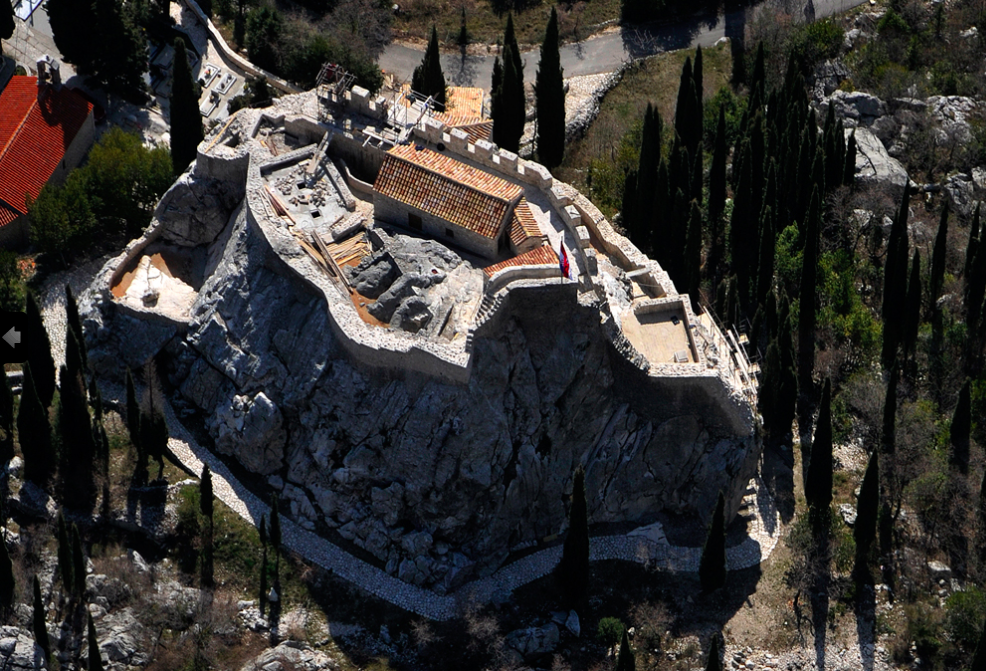
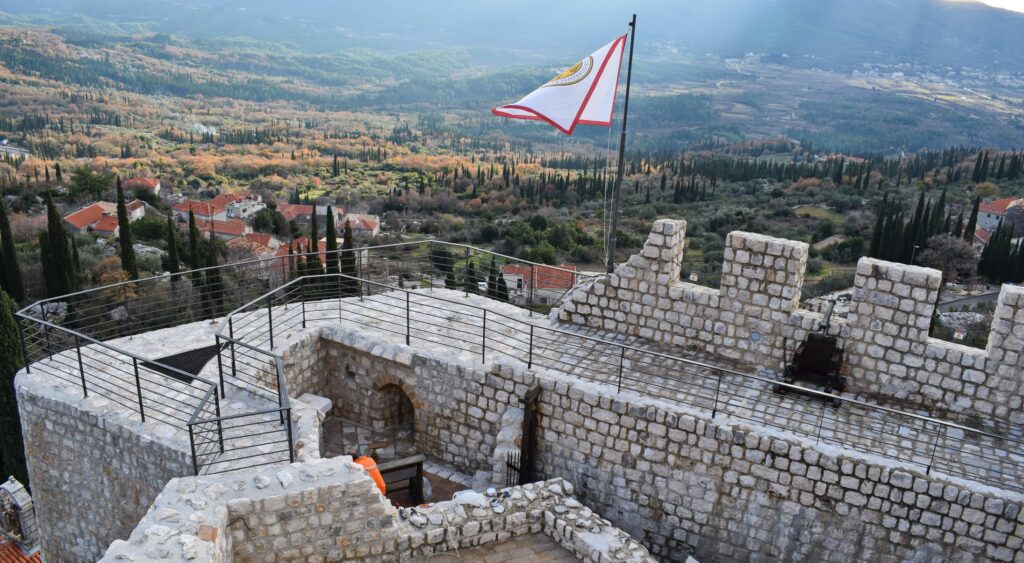
Sokol Grad was built above the small place of Dunave, on a natural rock that rises more than 25 metres above the surrounding terrain. Its walls so faithfully follow the shape of the rock and blend in colour with the karst that from a distance the fortress looks almost like its extension. The position was not chosen for beauty, although the view today is spectacular. From this point the Konavle field and an important road that led from the hinterland towards Dubrovnik were monitored, and official sources state that from Sokol one of the most complete views of the entire Konavle opens up.
a hillfort existed there all the way back to prehistoric times
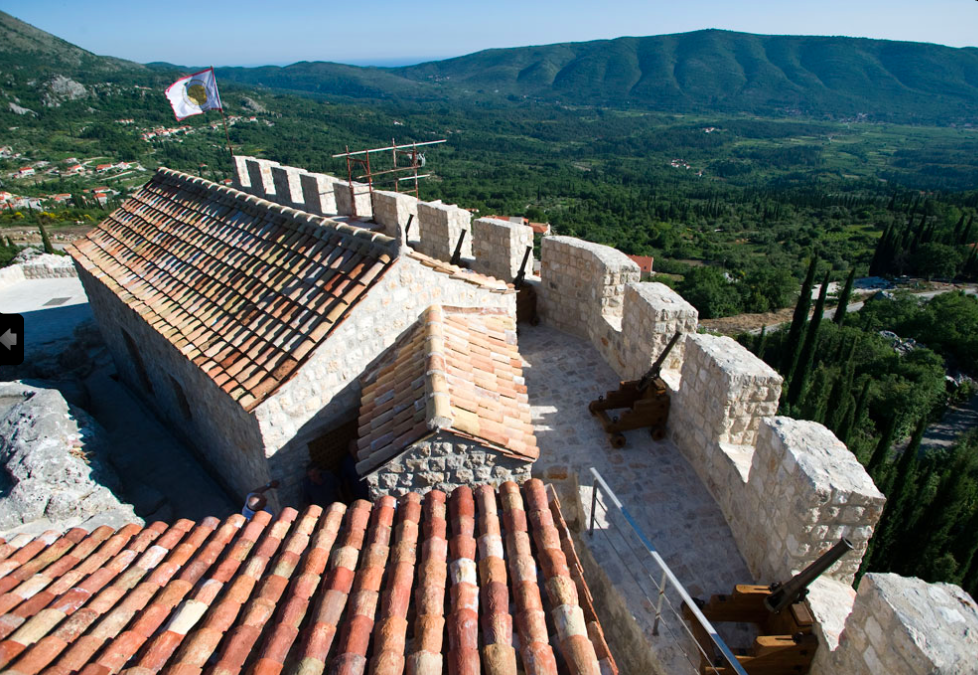
The fortress did not originate in the time of the Dubrovnik Dubrovnik. Traces have been found in this area that point to much older fortification of the position, from a prehistoric hillfort through ancient and late antique fortifications. It is mentioned in written documents at the end of the 14th century, and at the beginning of the 15th century its Dubrovnik story begins. The people of Dubrovnik briefly entered the fortress in 1420, and from 1423 it came under their control again and remained part of their defensive system for the next two and a half centuries. Its task was clear: to protect Konavle from enemies who could arrive from the hinterland. Precisely for this reason the Republic of Dubrovnik did not spare on its maintenance. During the 15th century the walls were repaired, expanded and strengthened, and construction works continued in the 16th and 17th centuries. Sokol also protected an area of vital economic importance, including the area of the river Ljuta and the mills that participated in the supply of Dubrovnik.
a three-level fortress
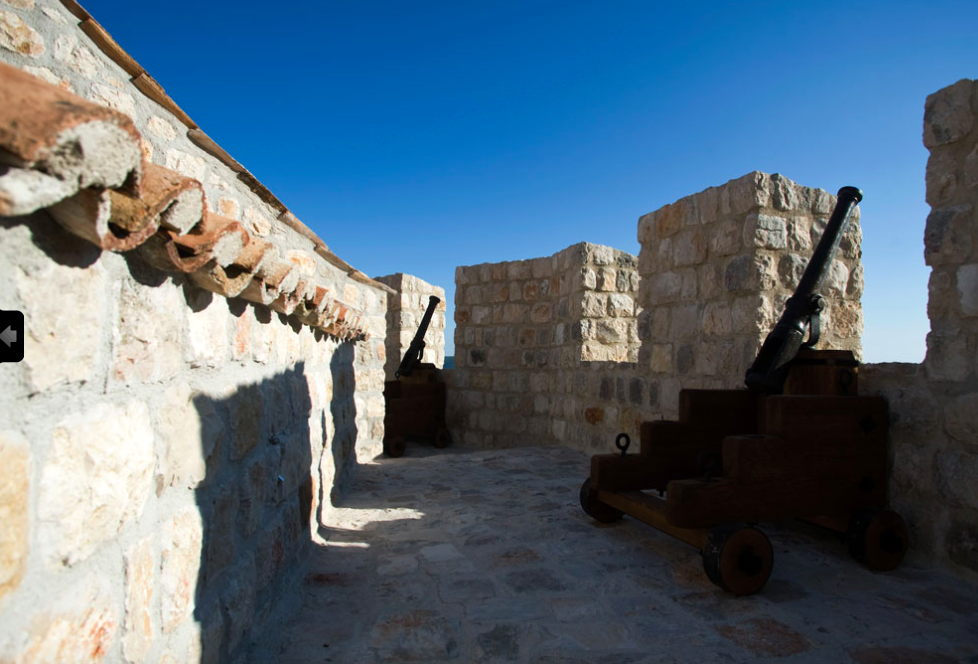
Sokol Grad has an irregular shape and that is no coincidence. The ramparts follow the morphology of the rock, and the entire fortification is organised on three levels. The lowest part, called Kamen (Stone), was arranged as a space into which the surrounding population could take shelter in case of danger. In the outer bailey were the fortified main entrance, kitchen, food stores, rooms for soldiers and crossbowmen, a guard tower and sanitary facilities.
The safest part was at the very top. In the citadel there was a large cistern, stores of food and weapons, grain supplies, the castellan’s residence, a church, a blacksmith’s workshop and a furnace. The system for sheltering the population was precisely determined: children under the age of ten were to be housed in the upper fortress in case of danger, while women and those unfit for combat were housed in the outer bailey.
it survived the devastating 1667 earthquake
Sokol survived the great earthquake of 1667, but after 1672 it is no longer mentioned in the Dubrovnik archival records, so it is considered that it was abandoned at that time. For centuries it decayed, and the surrounding population used its stone as building material. The Society of Friends of Dubrovnik Antiquities took it over in 1966, after which decades of conservation and restoration followed. Intensive works lasted from 2007 to 2013, when Sokol Grad was reopened to visitors. Today, instead of guards on its walls, there are day-trippers, and the former military position has become one of the best viewpoints in Konavle. Sokol Grad is open to visitors, and in the current period the official website lists opening hours from 08:00 to 19:00; tickets can also be purchased online and the price is 10 euros for adults and 5 euros for children.