
August the 9th, 2026 – Beautiful, secluded Krapje is often called the wooden Croatian village, and it is hidden deep within a beautiful nature park, far from the coast.
Despite being relatively unheard of abroad, Krapje is actually one of the best-preserved traditional villages most people will ever see. It holds the status of a cultural heritage monument of the Republic of Croatia and is considered one of the pearls of the gorgeous Lonjsko Polje Nature Park.
Posavina is one of the rare parts of Croatia where traditional wooden villages can still be seen today, the kind that were once a common sight along the course of the Sava. Putni kofer writes that charming oak houses, wide courtyards, farm buildings and a way of life adapted to the river have shaped this region for centuries, and one of the places that has preserved this valuable heritage almost in its original form is Krapje. Located in the municipality of Jasenovac, on the left bank of the Sava in Sisak-Moslavina County, this picturesque village is today counted among the finest examples of traditional architecture in Croatia.
most of the houses in the croatian wooden village are over 100 – and still standing despite their construction style…
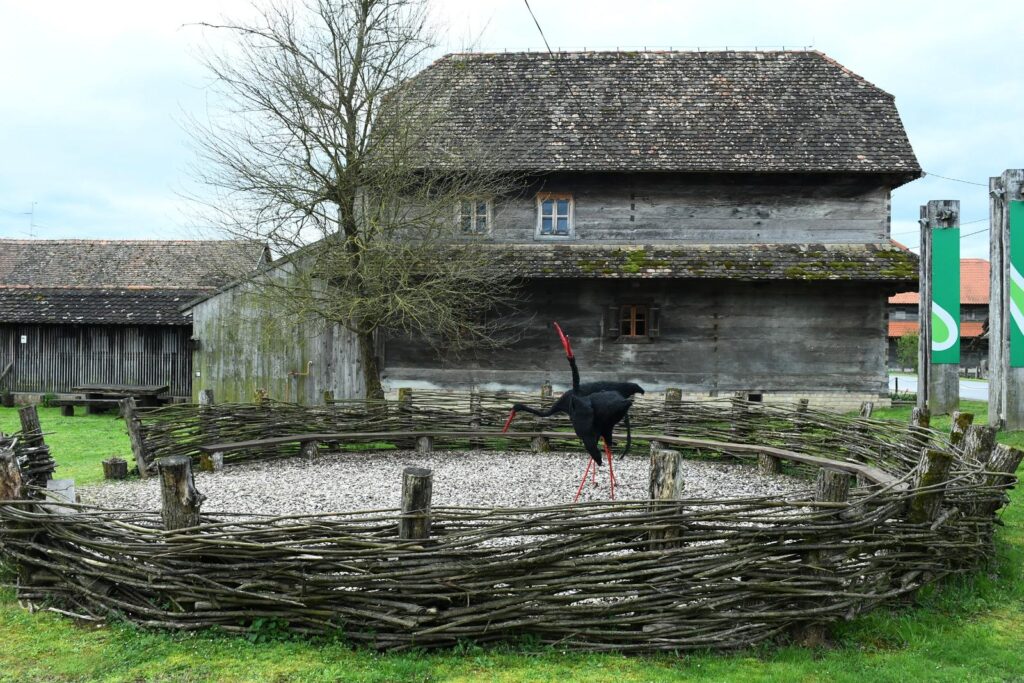
Only about a hundred people actually live in Krapje, and because of its exceptionally well-preserved architecture it was declared a village of architectural heritage in 1995. It is first mentioned in written sources as early as the 14th century and got its name from the fish krap (carp). But Krapje’s greatest hallmark is the traditional Posavina architecture. The village has more than 80 wooden houses typical of central Posavina, holds the status of a Category A cultural heritage monument and is considered one of the pearls of Lonjsko Polje Nature Park.
Most of the houses are more than a hundred years old. They were built from oak planks joined with wooden pegs and are recognisable by their covered external staircases, porches, protective canopies and richly decorated railings and columns. Their facades all face the street, while farm buildings, stables, haylofts and storerooms, are located at the rear.
a true haven for all kinds of birds
Even the method of construction was no accident. Because the Sava frequently flooded the surrounding area, durable oak wood that could withstand water was used for the houses, while living quarters were placed on higher floors. Besides its architectural heritage, this part of Posavina is also known for its unspoiled nature.
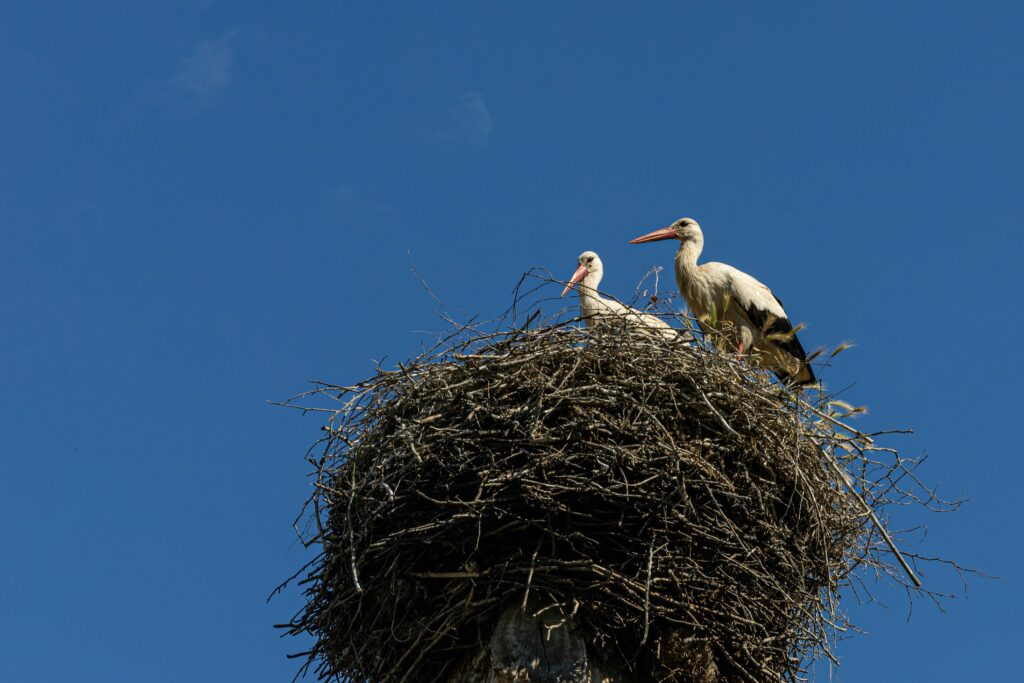
Between Krapje and nearby Drenov Bok lies Krapje Đol, a special ornithological reserve spanning an impressive 25 hectares. It has been protected since 1963 and includes an old branch of the Sava and a valuable wetland habitat overgrown with lush vegetation. Thanks to this environment, more than 500 pairs of birds nest there, among which spoonbills stand out in particular.
One of the must-see places in the village is the Krapje Visitor Centre, located in a complex of restored wooden Posavina houses. It houses a multimedia hall, a gallery and a souvenir shop, and you can also rent a bicycle or canoe and set off on the Border Guards’ Trail that begins in the centre’s courtyard.
At house number 48 you can view the ethnographic collection of the Palaić family with more than 170 items that show the everyday life of the former border guards and the traditional crafts characteristic of Posavina. Every year the European Heritage Days in Krapje are also held in the village, dedicated to the preservation of its rich architectural and cultural heritage.
a rich natural world awaits visitors

While you’re there, be sure to try the biggest local speciality, carp on a spit (šaran na rašljama). Finally, a stay in Krapje can easily be combined with exploring Lonjsko Polje Nature Park, one of the largest and best-preserved floodplain areas in Europe. The park is known for its rich plant and animal life, especially storks. It also includes the famous village of Čigoč, which was declared the first European Stork Village back in 1994.