
March the 11th, 2026 – Marmontova is known for being the most famous street, but how much do you really know about the history behind one of Split’s main arteries?
As Putni kofer/Ivana Vasarevic writes, it’s the beautiful city at the foot of Marjan that everyone knows about. Dalmatia’s “capital” is famous for its gorgeous Cathedral of St. Domnius (Sv Duje), Bačvice Beach and the game picigin, and it has been attracting travellers for centuries with its unique and relaxed atmosphere.
Split is a place where history emerges at every single turn, from ancient ruins to lively squares and narrow stone streets that intertwine like the most beautiful labyrinth. The heart and soul of the largest city in Dalmatia is the impressive Diocletian’s Palace, one of the best-preserved Roman monuments in the world (and the only one people still live and work inside), and among the streets surrounding it, Marmontova Street stands out in particular.
Marmontova connects the beloved Riva (promenade/waterfront) with the theatre and the cultural part of the city, where the Croatian National Theatre is located, while also leading to Prokurative Square. Marmontiva has a long history behind it, having been constructed back during the 19th century when the French reigned over Dalmatia. That period lasted from 1806 to 1813.
marmontova – a piece of french history in the heart of split
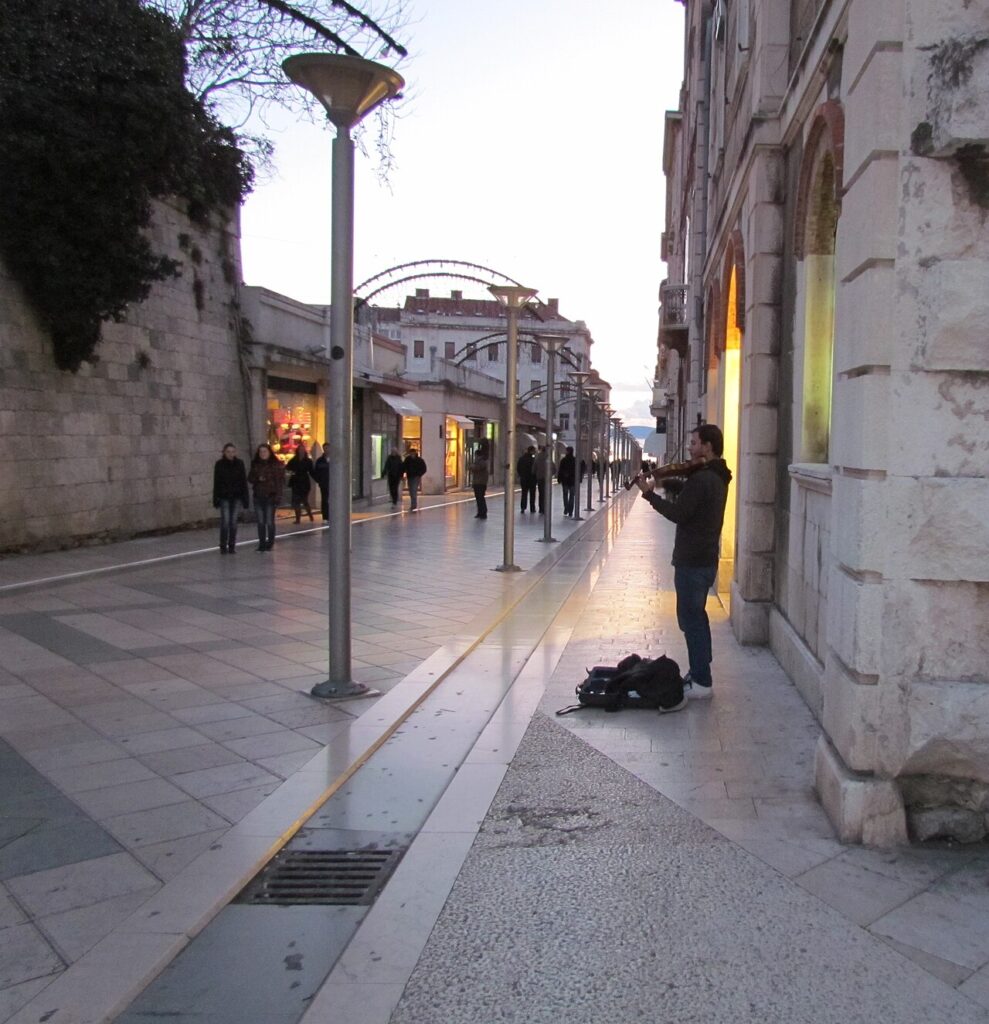
The name will likely be a curious one for many who aren’t that familiar with this period of Croatian history. Marmontova was actually named after French Marshal Auguste Marmont, Napoleon’s military commander and conqueror, who strongly encouraged the modernisation of Dalmatia’s old cities. It was during his time that the construction of this iconic Split street and tourist attraction initially began.
After the orthogonal arrangement of streets around Diocletian’s Palace, the truly magnificent Marmontova was the first planned rectilinear street in all of Split. Oriented in a north-south direction, it was designed to parallel the main ancient street, the cardo, thus symbolically connecting the ancient structure with the later urban development of the city.
Because of Marmontova Street, part of the western rampart from the 17th century was demolished, as well as part of the medieval city structure. Its current appearance dates from the 19th and first half of the 20th centuries. During that period, buildings were initially constructed along the eastern side of the street, and only later on did they appear along the western side. They’re all of different heights and styles, which gives Marmontova a very special charm.
split’s 20th century economic development
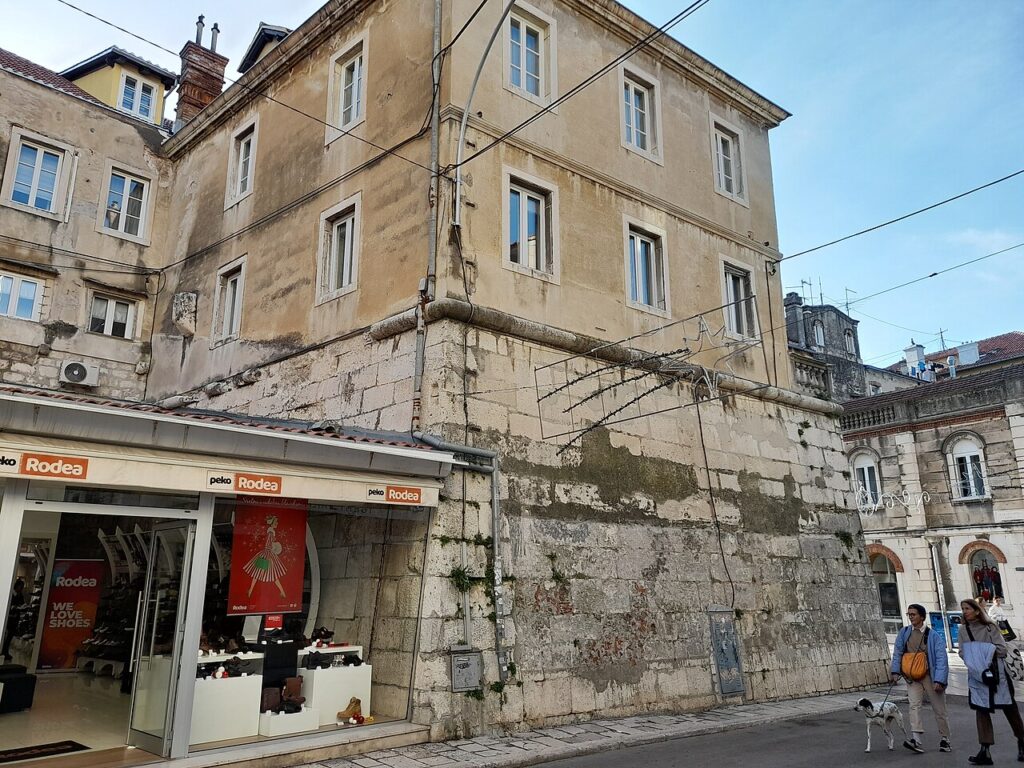
The Art Nouveau houses of Duplančić and Tončić stand out particularly, given that they bore witness to the strong urban and economic development that marked Split back at the beginning of the 20th century. Their grand architectural framework was accompanied by the city’s cultural development, when numerous important institutions began to open and operate in the city.
One of them is the Francophile library and reading room, today’s branch of the Alliance Française organisation, founded back in 1922. Marmontova is also home Split’s very first cinema, Karaman, an important and now cult part of the city’s cultural scene.
There is also the famous peškarija or fish market, one of the longest-standing facilities on the street. The Roman emperor Diocletian, who was plagued by rheumatism and its accompanying issues, had his palace built near it.
In the modern day, this famous street is full of shops, cafes, restaurants and galleries. It is bursting with life throughout the year, and thanks to the architect Vjekoslav Ivanišević, it was converted into a pedestrian zone in 1996. Thousands of people, from locals to tourists, pass this promenade every single day. A wander along Marmontova is like embarking on a journey through Split’s fascinating history. It takes you from the Napoleonic era to the urban development and cultural boom of the early 20th century, all the way to the modern Split that everyone adores so much.