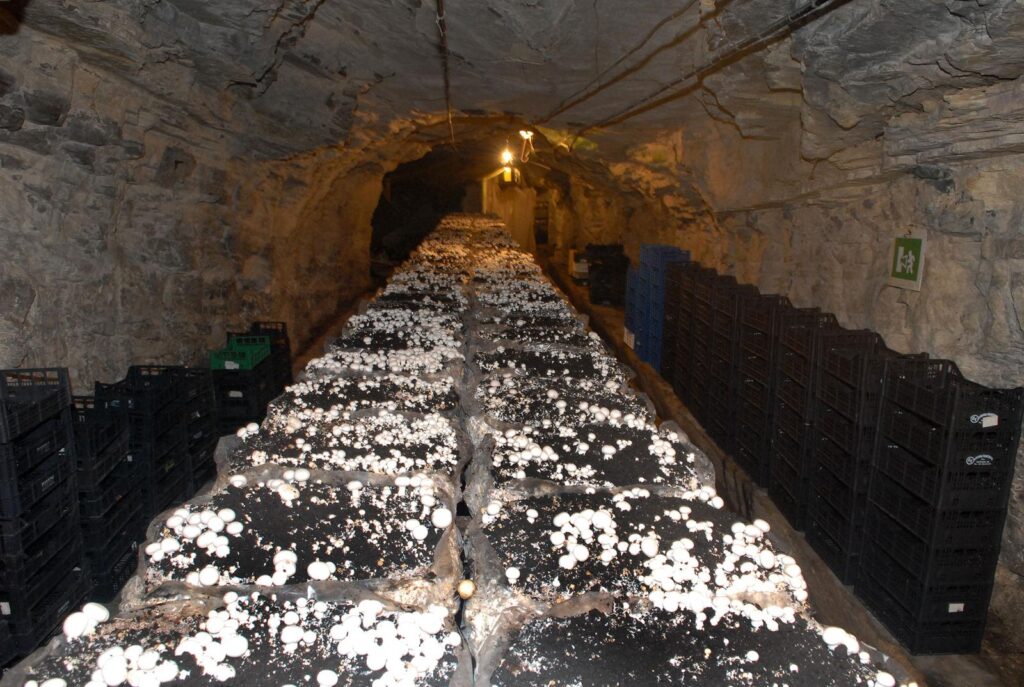
March the 13th, 2026 – Pula is home to underground tunnels that can fit an impressive 50,000 people inside them. They were dug out over 100 years ago, and are now a popular tourist attraction.
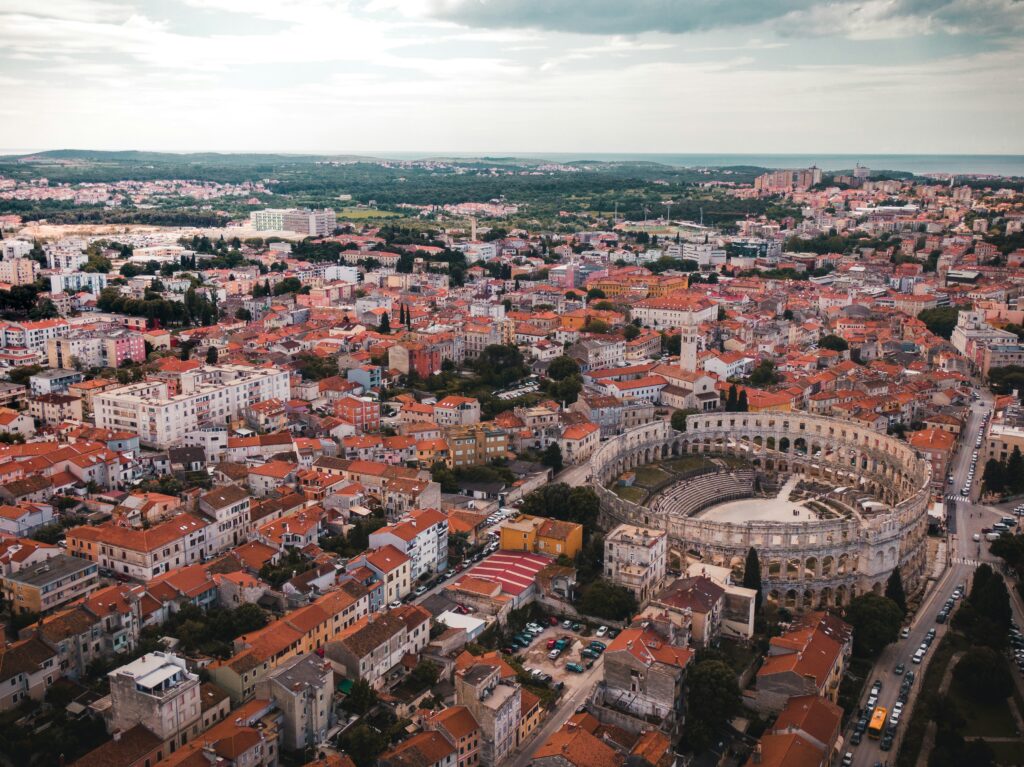
As Putni kofer writes, Pula, the Istrian peninsula’s biggest city, is a Croatian gem far from the more popular southern destinations. A huge part of its special beauty lies in the fact that it is a city with countless faces. It is best known for its exceptionally rich Roman heritage, primarily for the Pula Arena, the sixth largest Roman amphitheatre in the world. It’s also home to a whole number of other impressive witnesses of that glorious period. The city also delights all those who pay it a visit with its beautiful beaches, as well as the illuminated Uljanik cranes, which have become one of its recognisable symbols. Pula is also home to interesting stories deep beneath its surface. Pula’s underground tunnels are always worth a visit.
turning the clock back to the pre-WWI era…
The beginnings of Pula’s underground tunnels and shelters date back to the period immediately before the outbreak of World War I. Back during that time, Pula was the main war port and an important stronghold of the Austro-Hungarian Empire’s mighty fleet. Its military and strategic role was very significant, which is not at all surprising. That is why a great deal of special attention was paid to the defence of this ancient city. The protection system consisted of numerous fortifications and positions that lined the Istrian coastline and vigilantly monitored all possible approaches to Pula.
However, life did not stand still within the city itself, where, in addition to the civilian population, a large number of soldiers also resided, as stated on the website of the Historical and Maritime Museum of Istria. This is precisely why the Austro-Hungarian authorities, on the eve of the war, and during the war years, initiated the construction of an extensive system of tunnels under the Pula hills. The tunnels were intended as shelters in the event of air raids and formed an important part of the city’s defense infrastructure.
This interesting tunnel complex consisted of various galleries and different dark passages, and they were used, among other things, to store ammunition. Not one single hill in Pula in the inner city core was spared from drilling and digging. As such, a highly extensive network of deep underground tunnels and shelters was created, the largest of which are those under the hill of Monte Zaro, at the foot of Kaštela and Monte Ghira.
a venetian fortress with a secret hidden beneath it

On this central city hill, there was, and still is, the imposing Kaštela, which was originally a Venetian fortress that the Austrians used as a warehouse, barracks, observation post and even a prison at one time. Inside, deep in the bowels of the hill, there were underground rooms. There were even two tunnel shelters constructed there, one located directly below the fortress itself at the top of the hill, and the other at its foot. The latter connected parts of the narrowest city core and stretched for a length of about 400 metres.
There are four entrances to this interesting underground complex, and its corridors connect at a single central point. The entrances are designed to allow constant air flow through the underground passages, which is why they maintain a fairly even temperature. Depending on the season, it ranges between 14 and 18 degrees Celsius. The corridors are three to six metres wide, while their height reaches about two and a half metres. Approximately 6,000 people could find shelter in these tunnels.
The war finally drawing to a close failed to mark the end of the line for Pula’s underground tunnels. They continued to be used by the Italian authorities, who further improved and expanded them, and over time, atomic shelters were also constructed. After all these interventions, the capacity of Pula’s underground tunnels increased significantly. It’s estimated that at least 50,000 people could have taken shelter there, about 6,000 in the new atomic shelters, and another 45,000 in the tunnels themselves. Simply put, almost the entire city’s population could have found shelter there had it been required.
from protection to tourism
Fast-forwarding to the modern day, this underground world has taken on a completely different role. The Pula Zerostrasse tunnels not only bear witness to the rich and layered history of this ancient and gorgeous city, but have also become a space where all kinds of events and cultural events are held.
In Kaštela, there are now two institutions worth visiting. These are the Historical and Maritime Museum of Istria, which in turn houses the Fort Centre Pula, a visitor centre that introduces people to the ancient fortification system of Pula, of which the building itself was once a part. This impenetrable system once included around 28 forts and at least 200 different military facilities.