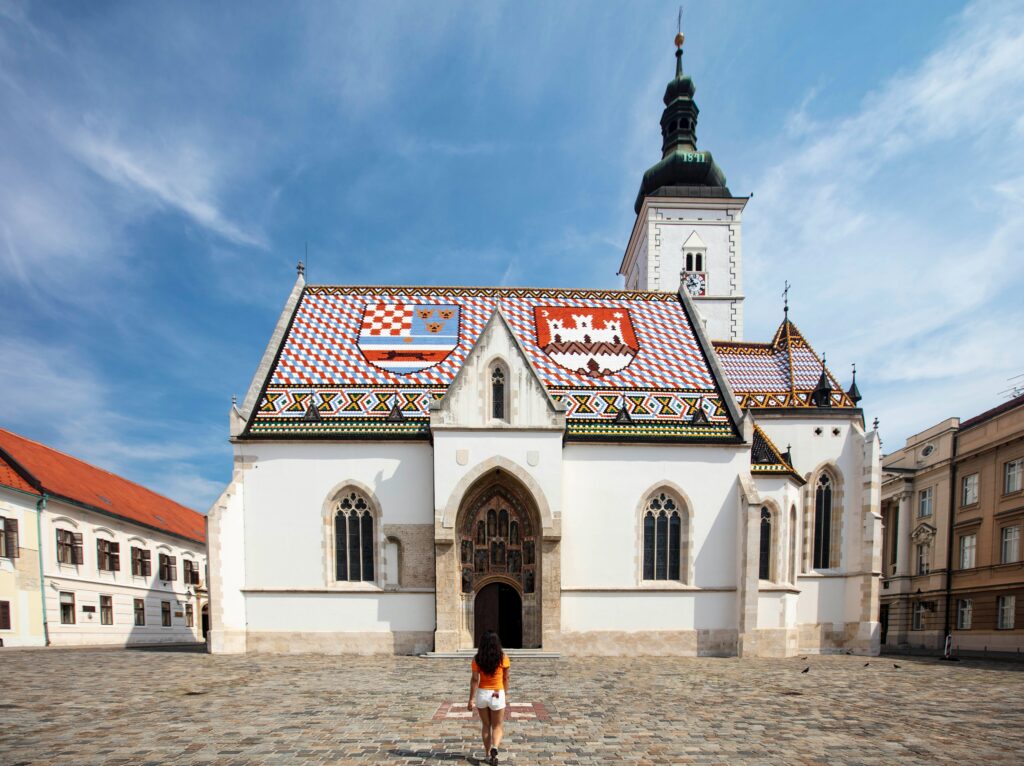
November the 9th, 2025 – Today, it’s one of the most iconic churches of not only Zagreb but all of Croatia – it nearly suffered quite a different fate, however. Here’s how Zagreb’s stunning St Mark’s Church was almost destroyed.
As Putni kofer writes, when you first think of Zagreb, the mental images most conjure up are those of the bustling Ban Josip Jelačić Square, Zrinjevac, the (forever under construction) cathedral, the magnificent building of the Croatian National Theatre, Medvedgrad on the southern slopes of Medvednica… the list goes on.
It’s true that the Croatian capital is full of interesting things, but one of the most photographed symbols in all of Zagreb is certainly the magnificent St Mark’s Church. It’s also one of the oldest buildings in the entire city. Its full name is the Church of St. Mark the Evangelist, it is located at St. Mark’s Square (Markov trg) 5, just like the Croatian Parliament, and it was mentioned in the list of parish churches in the Kaptol Statute as far back as 1334. This stunningly beautiful church is now protected cultural asset of the Republic of Croatia.
zagreb’s st mark’s church – croatia’s most unique
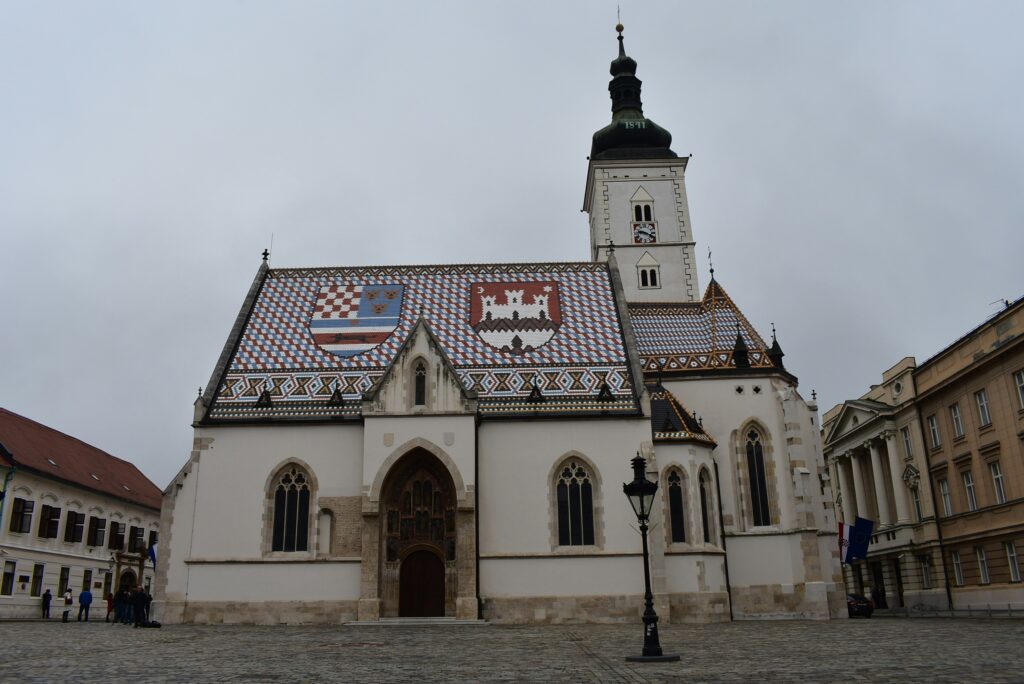
Its most recognisable part by far its unique and truly picturesque roof, which is covered with colourful, glazed tiles and depicts the coats of arms of the Triune Kingdom of Croatia, Dalmatia and Slavonia and the coat of arms of the City of Zagreb. It dates from the period from 1876 to 1882, when, following the devastating earthquake of 1880, the church was re-Gothicised according to the initial designs of the Austrian architect Friedrich von Schmidt. The extensive works were carried out under the supervision of his colleague and compatriot Hermann Bollé.
Romanesque elements were also found on the facade of Zagreb’s St Mark’s Church, which actually confirms the fact that it is truly one of the oldest buildings in the capital today. The interior of the church itself is divided into three naves by four enormous round columns, and it can be entered through both its western and southern portals.
To the northeast of the church sits the bell tower, to the west of it is the sacristy, and next to it stands the chapel of St. Fabian and Sebastian, which can also be entered from the outside. Zagreb’s St. Mark’s Church was initially constructed way back during the 13th century. From that first Romanesque phase, a window in the southern wall and the base of the bell tower have been preserved. The fascinating Gothic vaults and sanctuary date from the second half of the 14th century, when the church also received its most valuable part, the sumptuous southern portal in the Gothic style.
constant careful restoration spanning centuries, and thoughts of destruction…
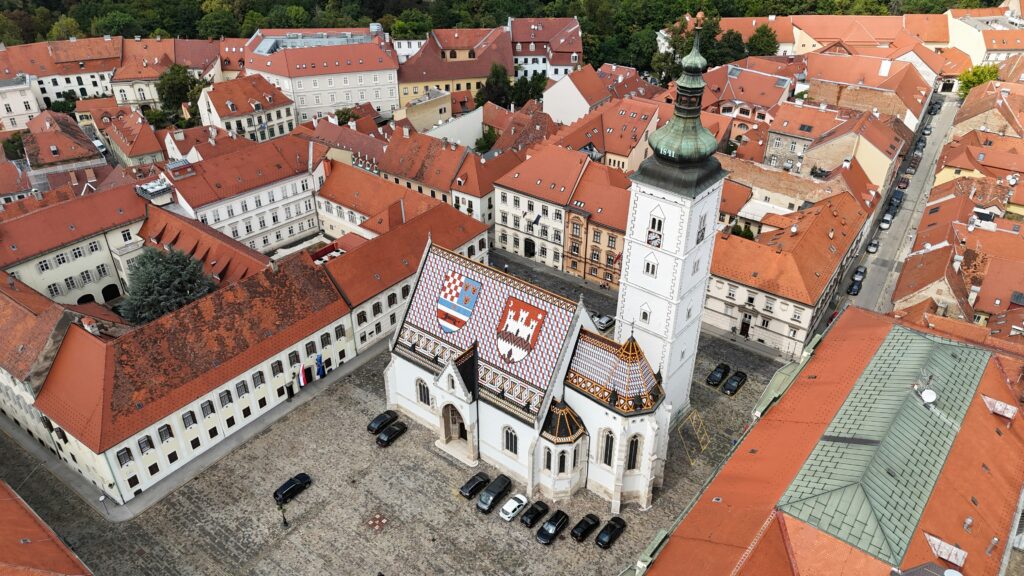
These were the careful works of craftsmen from the family of Petar Parler, who had one of the most famous medieval sculptural workshops. On the northwestern wall of the church there is also the oldest Zagreb coat of arms from 1499. The church was severely damaged in fires on several occasions from 1645 to 1707, and in 1771 there was even consideration of its demolition because, according to sources, it had become too small. The church was then rescued by Joseph II, who claimed that it was a “solidly built monument that must be preserved”.
Another restoration followed during the first half of the 20th century. The walls of Zagreb’s St Mark’s Church were painted with beautiful frescoes by the famous painter Jozo Kljaković, the oil paintings were the work of Ljubo Babić, and the altars feature works by the famous sculptor Ivan Meštrović, “The Crucified Christ” and “Madonna with Jesus”.
This beautiful building is also known for its long tradition of organ playing, which dates all the way back to the 14th century. An organist simply referred to as Nikola was mentioned as early as 1359, which is also the first written mention of an organ and an organist in all of Croatia. Much later on in 1740, the Zagreb canon Juraj Rees acquired an organ with 22 stops, which means that it, along with the organ of the Zagreb Cathedral, was the largest in the country.
severe damage in 2020 – once again
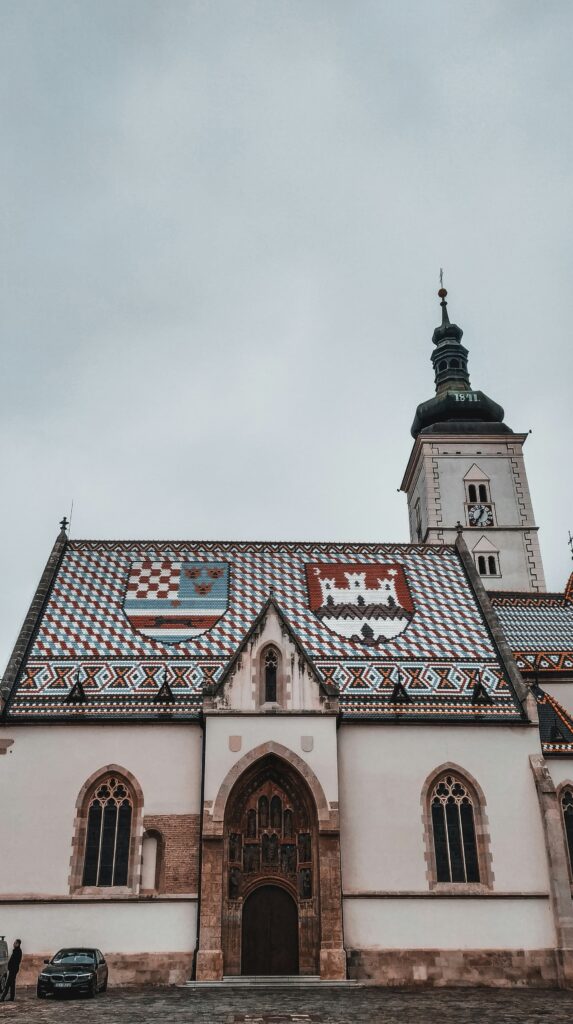
Unfortunately, in the earthquake that hit Zagreb in March 2020, the St Mark’s Church, along with the Zagreb Cathedral, was severely damaged once again. Its vaults and Gothic ribs incurred damage, and the ceiling even separated from the wall in some parts. The keystone of the south portal also fell. However, after careful and extensive renovation, on December the 3rd, 2023, more precisely on the first Sunday of Advent, the first Holy Mass was celebrated in the church yet again, much to the great joy of the faithful.