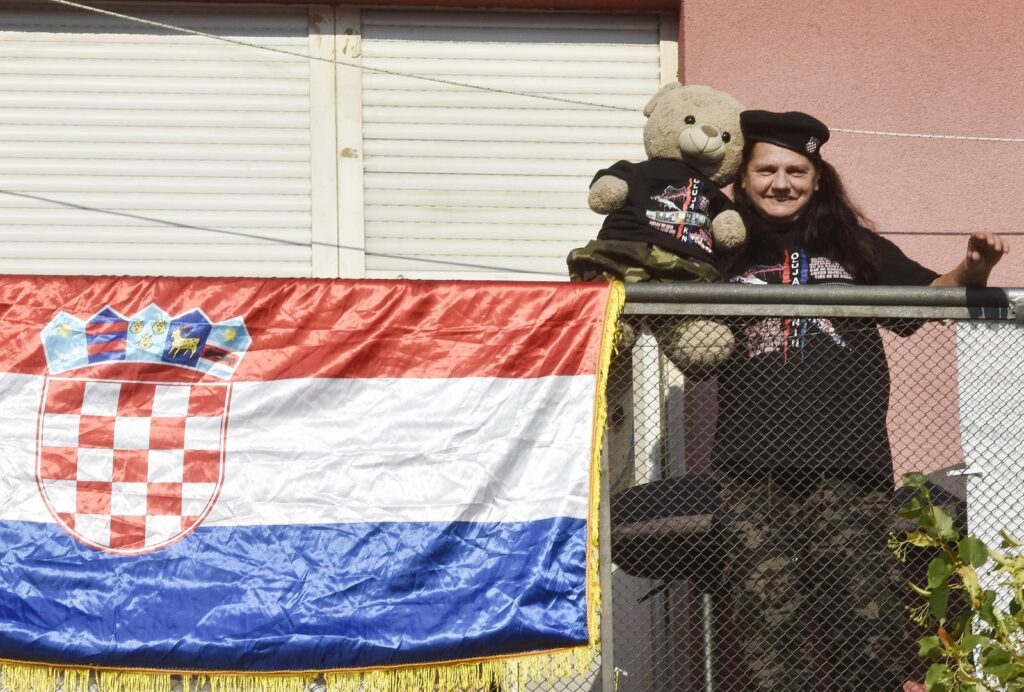
August the 5th, 2026 – 31 years have passed since Operation Storm (Oluja) altered the course of the Croatian War of Independence, and veterans have recalled the fierce battle for Knin.
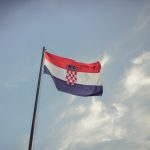
Today, Croatia marks Victory and Homeland Thanksgiving Day, the Day of Croatian Defenders, and the 31st anniversary of Operation Storm, the military and police operation that became a turning point in the country’s modern history. Launched on August the 4th, 1995, Operation Storm saw Croatian forces manage to regain control of areas that had been held by rebel Serb forces, opening the path toward the final stages of the Homeland War.
Over three decades later, those who took part in the operation continue to remember the days that changed the course of Croatia’s modern history. Among them is Perica Prpić, president of the Association of Special Police Units from the Homeland War “Sharks”, who recalled the moments before the operation began while stationed with fellow soldiers on Velebit Mountain.
He remembers hearing the announcement from Croatia’s first president, Franjo Tuđman, before the operation began, while artillery fire could already be heard in the distance. “The moment I remember the call from President Tuđman, I still get goosebumps. We heard the artillery preparation in the distance. It had begun. You cross yourself, hug your fellow soldier, and start moving down Velebit. It’s just a unique feeling when you know there’s no turning back now,” Prpić said in an earlier interview.
The Battle for the “Igla” Position
Josip Bebek, a member of the 4th Guards Brigade who participated in Operation Storm, also recalled the beginning of the operation.
His unit advanced toward Knin from the direction of Bosansko Grahovo in the early hours of August 4, but encountered heavy resistance along the way. The obstacle was a strategically important hill known as “Igla” (“Needle”), which was held by rebel Serb forces. “We got about halfway there and then we stopped. We faced strong resistance. They held a position called Igla. It was extremely difficult to capture. Once we took Igla, everything moved forward more smoothly,” Bebek recalled. Taking control of that position became a key moment in the advance toward Knin.
Entering Knin
The following morning, after artillery preparation, Croatian forces entered Knin. “We literally walked into Knin,” Bebek said, describing the city at the time. He recalled that the city was largely empty and that his unit encountered no significant resistance after entering. “The 7th and 4th Guards Brigades never killed anyone, there was no resistance, and thankfully there was no need for it,” he said.
Bebek also remembers a personal encounter that stayed with him. He helped an elderly man and brought him to the military barracks, where he was later able to choose whether to remain in Knin or leave for Serbia. “I don’t know what he eventually decided, but later I met his brother, who actually told me their life story,” he said.
From Adrenaline to unbelievable levels of Pride
Although 31 years have passed since Operation Storm, Bebek says the emotions connected to those days remain strong and the memories vivid. “The dream of every Croatian soldier was to reach Knin. After every liberation operation we were happy, but we knew entering Knin would mean the end. That was the finish line,” he said.
At the time, he remembers the feeling of adrenaline and youthful determination. Today, those memories are replaced by pride and gratitude. “When I think about it today, I feel happiness and tears still fill my eyes with pride. We have our own country; we achieved that dream. May God ensure this never, ever happens to anyone again,” Bebek said.
After the war, Bebek remained a professional soldier. In 2003, he moved from Split to Knin, where he still lives today. For him, life in Knin is now simply everyday life.
As Croatia marks 31 years since Operation Storm, veterans continue to remember not only the military victory, but also the experiences, sacrifices, and personal stories behind one of the most significant events in the country’s history.