

January the 6th, 2026 – Croatia has a lot of ambitions for 2026, from setting more tourism records to joining the OECD and seeing futuristic robotaxis hit Zagreb’s streets – it’s set to be an exciting year ahead.
As Poslovni Dnevnik writes, the new year brings fresh goals for the economy, both at the state and company levels. For Croatia, there’s a lot to be ticked off the list throughout 2026. As far as the actual government is concerned, the concrete goals were recently formulated by Andrej Plenković. In the coming year, he said, the key goal is Croatia’s entry into the OECD and the continued growth of overall living standards. He stated that the implementation of the government’s programme will continue throughout 2026, with a focus on stable public finances, economic growth and maintaining an A investment credit rating.
changes for businesses in croatia in 2026

This year also begins the application of new regulations that will change the daily lives of business owners. On the first day of 2026, business owners across Croatia will once again have to change the way they issue and receive invoices. This is because Fiscalisation 2.0, a system developed and introduced by the Tax Administration, began functioning on January the 1st. This new system brings mandatory fiscalisation for invoices issued in business between businesses (B2B), with the implementation of electronic invoices and the possibility of cashless payments through a standardised digital channel.
The aim of this project is to increase business transparency, reduce administrative burdens and enable the faster, safer and more efficient exchange of invoices and data between businesses.
tourism broke records in 2025, but what about 2026?

Tourism in 2025 across Croatia saw it hailed a record year, with more than 21.6 million tourists and around 110 million overnight stays registered. As things currently stand, it’s looking as if 2026 may be similar, with price stabilisation remaining a top priority. Tourism Minister Tonči Glavina announced the publication of the results of a new TOMAS survey on tourist behaviour and consumption across Croatia, which has been conducted in Croatia for years by the Institute for Tourism. It revealed that “the majority of Croats support tourism”, which is important for introducing sustainable policies, as well as increasing salaries in tourism.
He also expects that improvements in the law on foreigners will contribute to easier employment of foreigners who are still needed in tourism, and by the summer of 2026, a new law on hospitality should be ready. That law, according to the minister, “will, among other things, address the biggest problem of unregistered activities in private households and prevent such activities from advertising or selling services on platforms.”
Trends across Europe and the world for 2026 have announced fewer trips with smaller budgets and shorter stays, as well as greater demand outside the summer due to the better climate and prices. In addition to that, lesser-known destinations are also in the limelight. As a result, both Glavina and the director of the Croatian National Tourist Board, Staničić, have identified Croatia’s price competitiveness as the most important thing for tourism in 2026, which “must be strong if we want the same number of overnight stays as in 2025.”
what awaits croatia’s businesses and companies in 2026?

Croatia Airlines is currently busy preparing for a “demanding” 2026 as it plans to complete the bulk of its ongoing fleet renewal process. The carrier will retire five current aircraft from its fleet, while also taking delivery of an additional seven A220 jets, bringing the total to 14. The A320 operations will end in February, with the last flight of the type currently scheduled for February the 15th between Zagreb and Paris. The carrier is also preparing to announce a wet lease partner to support the replacement of its Dash 8 turboprop aircraft, although they are currently scheduled to remain in service over the next year. The airline also has four A319s in its fleet.
Končar expects steady growth throughout 2026, with new contracts worth over €2.5 billion guaranteeing stability for its business “for at least the next two years”. Over the next three years, it plans major investments of more than €500 million, of which more than €140 million will be earned in 2026, which will significantly expand production capacity. In addition to expanding production facilities, the plan is to build new factories, including one in Texas over in the USA, which, as CEO Gordan Kolak said, is perhaps the most important step forward in expanding into the global market and for business growth “because they see much greater potential in the USA than in Europe”.
They plan to build the factory across the pond within about a year, more specifically by 2027, and will cooperate with a partner, the company Sanmina Corp., with whom they recently signed an agreement on the joint development of a customised medium-voltage transformer. This will allow them to have products closer to their customers in this new market. The focus for that company in 2026 will also be on the Middle East market, namely Saudi Arabia, although Europe, especially Sweden and Germany, remains the most important market for Končar, to which it exports the most.
the robotaxis are coming!

This year should also be marked by robotaxis, at least that’s what Mate Rimac recently announced on Facebook. In the video, he called it the “Verne show”, but so far no details are known about where they will be operating. The main news that Rimac shared is that the vehicles that have been talked about for a long time actually do exist. According to him, the goal set by December has been met. The vehicles are currently being used for safety testing, wind tunnels, and checking comfort, vibrations, longevity, and consumption. Although he is convinced that autonomous driving is safer than the human factor, Rimac emphasised that accidents can never be completely ruled out.
Although the project is starting in Zagreb, the ambitions are global. Rimac sees the Croatian capital as only the first step in expanding the Verne robotaxis service to other European cities, and then to the rest of the world.
valamar is steaming ahead

Valamar Riviera should be singled out from the tourism sector. The Valamar Supervisory Board has approved investments worth 228.1 million euros, which, together with the approved investments in Imperial Riviera of 117.4 million euros, brings the total investments at the Valamar Group level to 245.5 million euros.
Valamar’s planned investments in 2026 are largely focused on completing the construction of the Pical 5* resort in Poreč, the most significant project in Croatian tourism, which is scheduled to open in spring 2026. The investment in the Pical zone is worth a total of around 200 million euros. Additional approved investments by Valamar throughout 2026 include the reconstruction of the former Crystal Hotel and Diamant Apartments into the new Sunny Poreč 4* and the renovation of the Valamar Diamant Hotel in the Brulo zone in Poreč. Valamar will continue to invest in sustainable tourism and socially responsible business, digitalisation and in improving the quality of service, beaches and sports facilities in all destinations.
infobip will mark 20 years of success
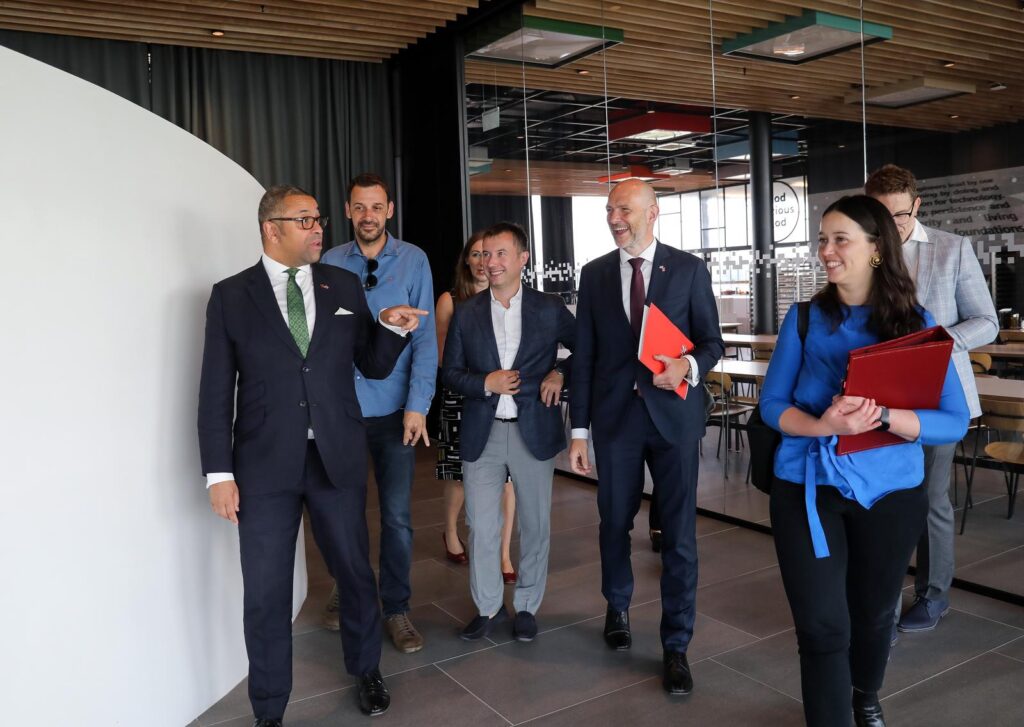
Croatia’s unicorn Infobip will celebrate 20 years of business in 2026. During that period, they have gone from a small startup from Vodnjan in Istria to the largest technology hub in the entire region with thousands of experts who have grown with them and shaped the industry worldwide. Next are the challenges in the context of AI.
podravka seeks an international audience
Podravka’s strategic plan focuses on the food segment, in which the company plans to further strengthen the presence of its brands in international markets. Vegeta, the Group’s most famous brand, occupies a central place in the internationalisation vision – the goal is to position it as a global brand with an expanded range and innovations tailored to consumer preferences in different markets. In parallel, the presence of the Lino, Lino Lada, Podravka, O’Plant and Zik Zak brands is being strengthened, especially in the markets of Germany, Austria, Switzerland, the USA and Australia.
Special emphasis is being placed on categories with high growth and profitability potential – universal food additives, soups, cereals, cream spreads and tomato-based products – as well as on the development of healthier products. In the Agriculture segment, the newly formed Podravka Agri sets ambitious goals – by 2030, investments of almost 200 million euros are planned in the modernisation of production, energy efficiency, construction of new farms and expansion of irrigation systems.