
September the 22nd, 2026 – Croatia is exceptionally vulnerable to climate events, yet it is remains among the EU countries with the lowest share of insured climate losses.
Even before the catastrophic fire in Omiš, Croatia already had a 75 percent larger burned area in 2026 than in the comparable period back in 2025. Poslovni reports that the European Commission estimates that today. only around 25 percent of catastrophic losses across Europe are covered by private insurance, which is why national budgets too often become the “insurer of last resort.”
the number of fires in croatia increased
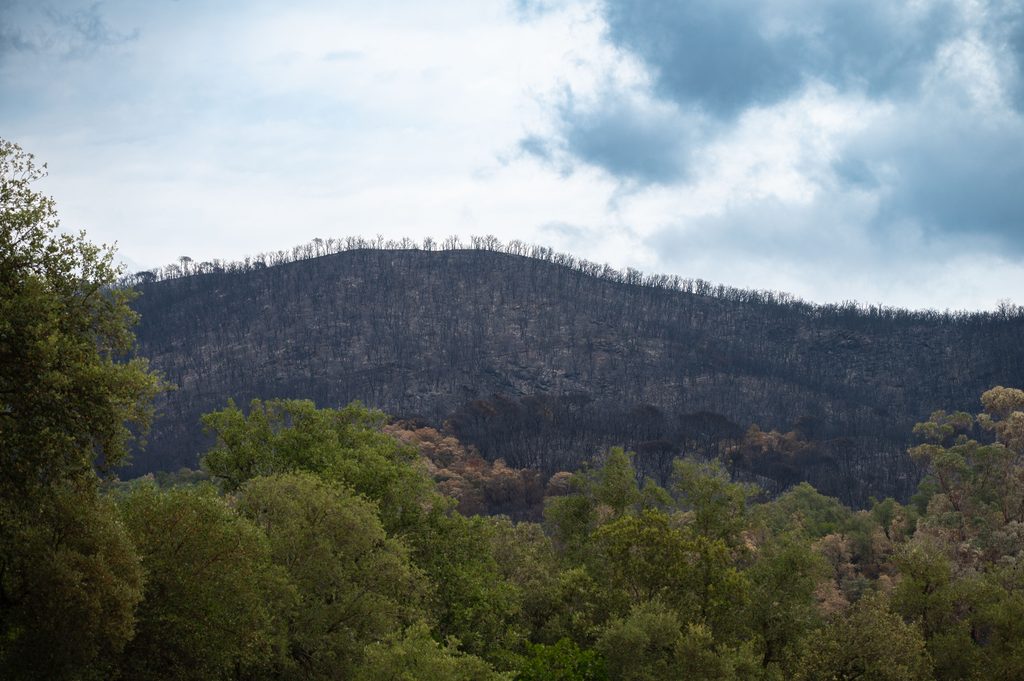
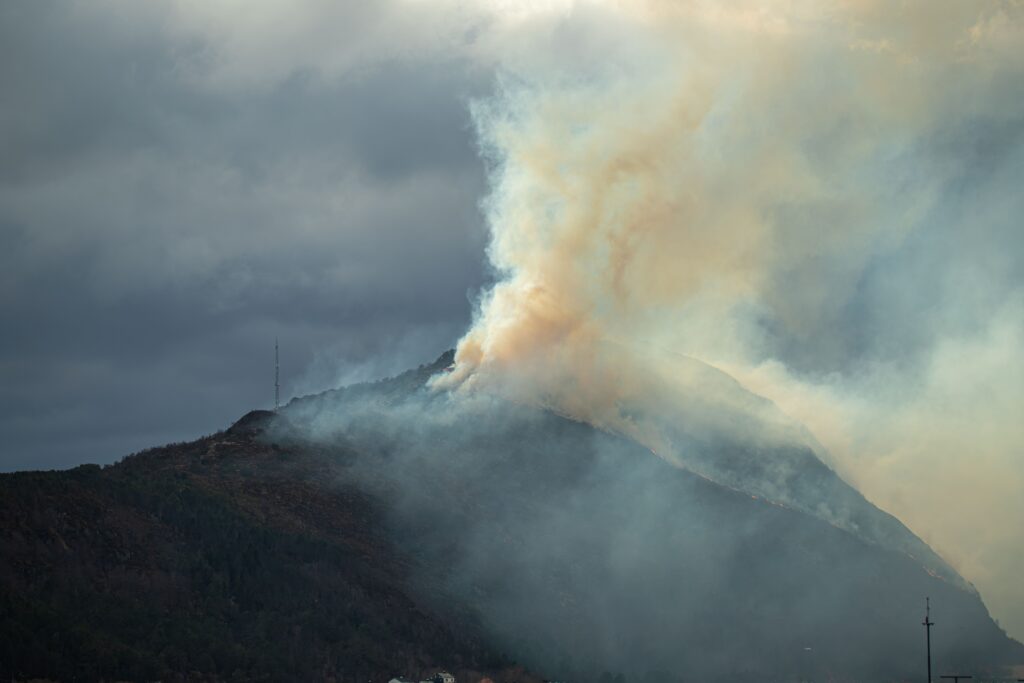
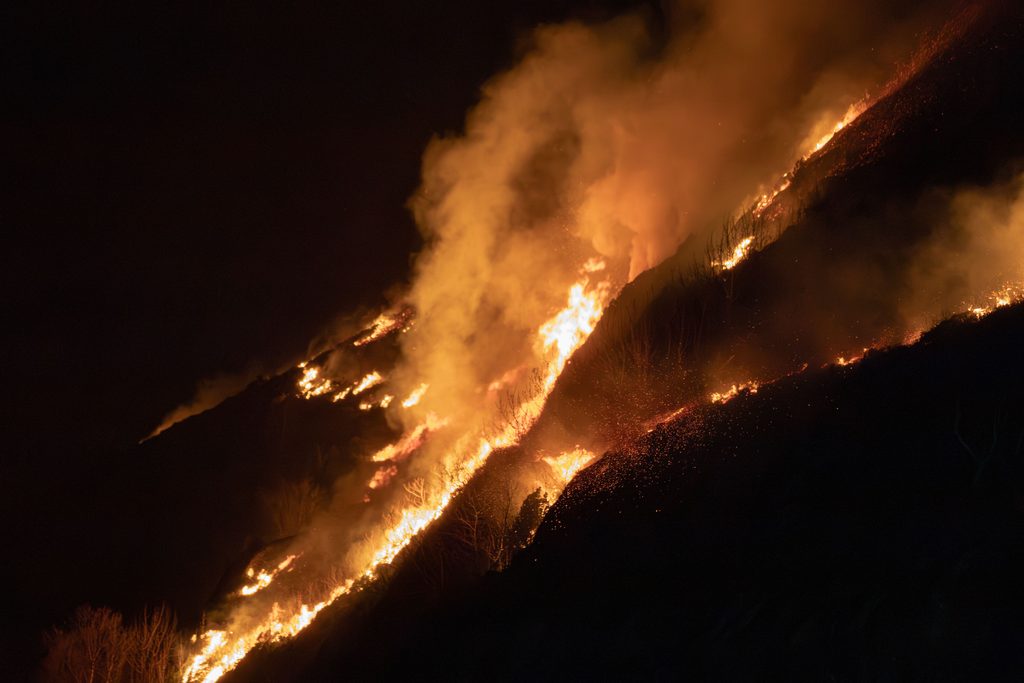
The number of fires in Croatia rose by 7.62 percent, while the burned area rose by 75.06 percent compared to the same period last year. That difference says more about climate risk than any single image of a burning hill; an individual event today simply carries greater damage than a few years ago. Recent fires near Omiš, on Pelješac and Brač further confirmed this. The Omiš fire affected more than 1,000 hectares and led to the evacuation of around a thousand people. By mid-September, around 668,000 hectares had burned in fires across the European Union, almost twice the twenty-year average for the same part of the year, although less than the record 2025. The figures from across Europe warn that this season was not an exception but a continuation of a trend that Croatian companies, banks and insurers still need to take more seriously. Behind the scenes of burning hills lies the statistics about money, about premiums, damages and about who ultimately pays the bill when one decides to gamble with climate risk.
“Climate risk is increasingly becoming everyday life and the question is whether we have an idea of how much it can cost us. Companies that today assess their exposure only through last year’s damage are building a false sense of security,” believes Jasminka Horvat Martinović, President of the Management Board of Marsh Croatia, warning that this is a major trap of the moment in which a large part of the Croatian business sector finds itself.
A Reuters analysis, based on data from the European Environment Agency, shows the scale of the problem at the level of the entire Union: climate disasters and extreme weather conditions cost the European Union around €822 billion in the period from 1980 to 2024, and as much as a quarter of that amount occurred in the last four years. According to the latest EEA data, less than 20 percent of total losses in that period were covered by private insurance. For Croatia the gap is even larger: less than three percent of total economic losses linked to weather and climate extremes were insured.
unsurprisingly, croatia isn’t doing anywhere near enough
Croatia is thus among the European countries with the lowest share of insured climate losses. The floods in Spain in 2024 imply reconstruction costs of around 0.7 percent of GDP in the period 2024–2026, which is approximately €11 billion, while the German floods of 2021 cost the state treasury around €30 billion because insurance covered only a smaller part of the damage.
“The problem is no longer in the cost that disasters bring but in the fact that they are becoming regular. As long as they are treated as one-off budget burdens, the system does not adapt. The result is that an ever larger part of the bill ends up with taxpayers,” emphasises Horvat Martinović.
Some countries have already gone a step further than considering new models. Portugal in April, after major floods at the beginning of 2026, announced a fund for natural disasters and earthquakes and a system of compulsory insurance of housing and business infrastructure, with a public assistance mechanism for lower-income households. In Greece, from 1 June 2025, insurance against forest fire, flood and earthquake has been compulsory for companies with annual turnover greater than €500,000, with coverage of at least 70 percent of the value of the assets covered.
In the meantime a new step has also been taken at the level of the European Union. European Commission President Ursula von der Leyen on 16 September announced the establishment of the Climate Insurance Alliance with the aim of reducing the large gap in insurance against climate disasters. The Commission estimates that today only around 25 percent of catastrophic losses in Europe are covered by private insurance, which is why national budgets too often become the “insurer of last resort.” The new initiative should include insurers, investors, risk modelling experts, public institutions and policyholders and encourage solutions such as group and parametric insurance.
croatia’s fire risk is enormous
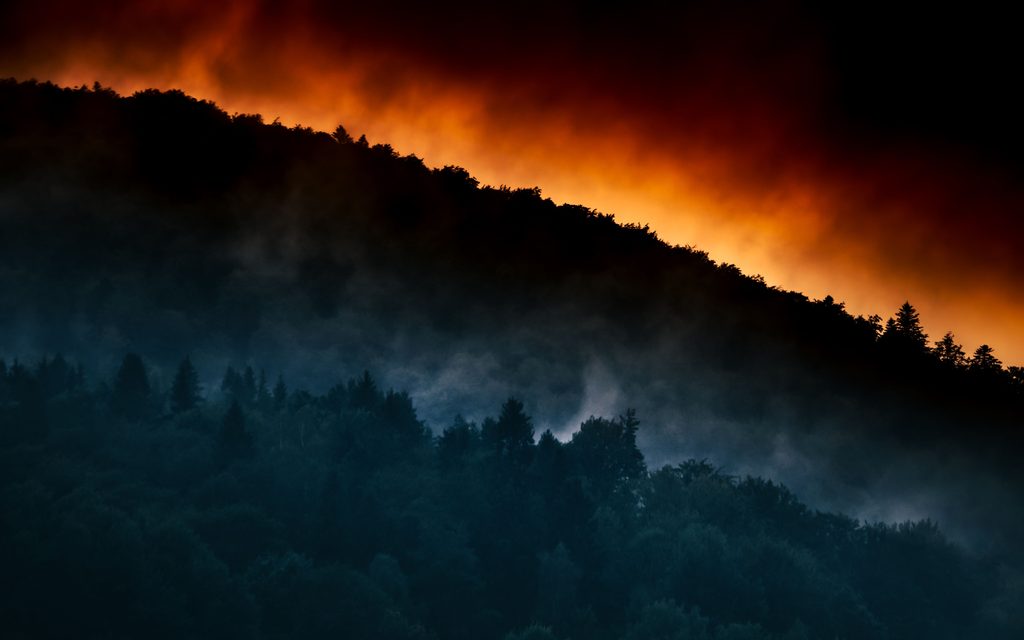
That European statistic primarily reflects floods and storms, but the same pattern of underinsurance also applies to fires, and the Croatian 2026 season shows this on its own local example.
According to data from the State Firefighting Operational Centre 193 of the Croatian Firefighting Association, in the period from 1 January to 10 August 2026, 29,358 firefighting interventions were recorded in Croatia, of which 8,832 were fires. Of that, 5,575 open-space fires and 3,897 vegetation fires were recorded, and 9,646 hectares were burned. Compared to the same period in 2025, the number of open-space fires rose by 12.99 percent, the number of vegetation fires by 23.40 percent, and the burned area by 75.06 percent. What makes that statistic particularly relevant for the business community is the relationship between the two figures. On the day of that cut-off the total number of fires rose by 7.62 percent, and the burned area by 75 percent. The risk, therefore, does not grow so much by frequency as by consequence. An individual event today carries a significantly greater loss than a few years ago. The Omiš fire shows this precisely; it was not the largest by area – the Split one from 2017 was four to five times larger. In addition, fires are no longer exclusively a coastal story. The risk, in other words, is moving from a seasonal to a permanent category.
The Croatian business sector mostly reacts to risk after it materialises, instead of structuring it in advance. “A strategic approach is important, and that means recognising the risk before it becomes damage,” emphasises Horvat Martinović, adding that companies should carry out in-depth analysis of exposure to climate risks, scenario models and adapted insurance solutions, from parametric covers, where the payout is activated automatically on the basis of pre-defined parameters such as the amount of precipitation or wind speed, to solutions for critical infrastructure and renewable energy sources. For example, in the energy sector, better mapping and prevention can reduce risk by 20 to 30 percent.
In the meantime newer data from the Croatian insurance market are also available. In the first seven months of 2026 the total collected premium rose by 6.9 percent to €1.3 billion, while the non-life insurance premium rose by 7.3 percent. Insurance against fire and elemental damage accounted for 9.5 percent of the non-life insurance premium. At the same time the amount of settled claims in non-life insurance rose by 15.9 percent, and 9.7 percent of that amount related to fires and elemental damage.
croatian companies need to ask themselves some serious questions

The growth in the number of policies on the Croatian market looks like a sign of maturity. But if a large part of property still remains uninsured or underinsured, that growth only means that the bills tomorrow will be larger than today. What distinguishes companies that survive a major loss is a pre-set risk management strategy, not the policy itself.
Croatian companies, Horvat Martinović believes, need to ask themselves the practical question of whether their risk assessment has been made on the basis of what happened last year, or on the basis of what is already now visible as coming. Climate risk is entering insurance prices, property values and public budgets ever more strongly; waiting for the next major event to show where the system is vulnerable, concludes Horvat Martinović, is becoming an ever more expensive strategy.