
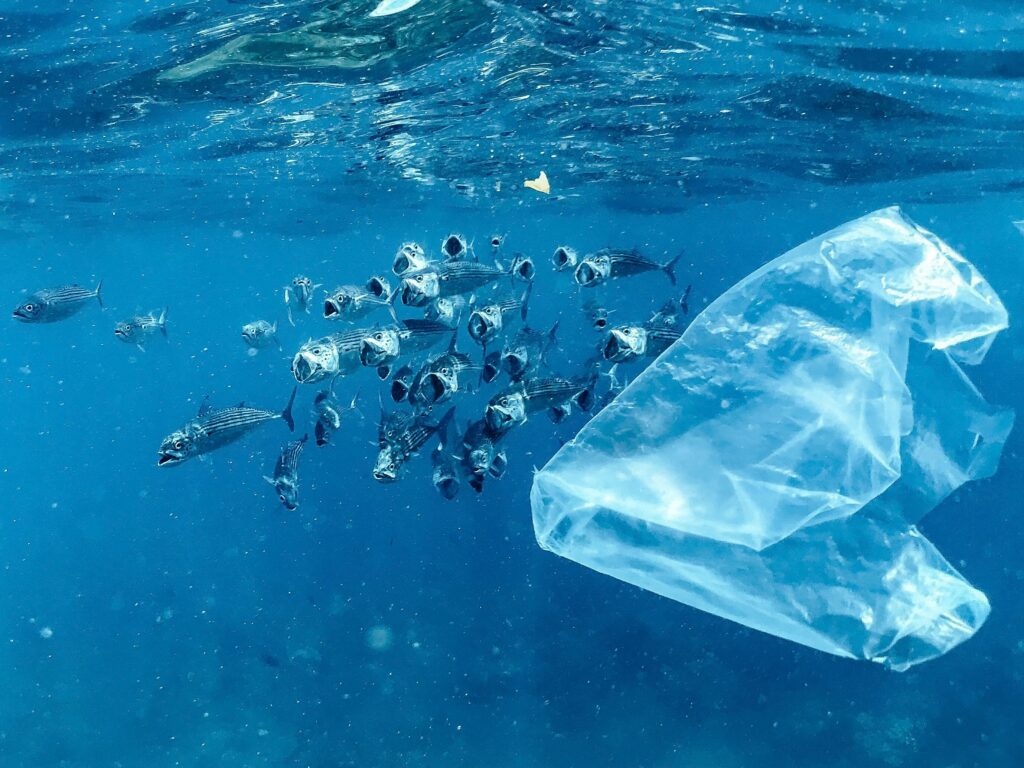
February the 6th, 2026 – Croatia’s Fibryion is a startup which could be the thing that makes our current (and harmful) use of plastic a thing of the past.
When you throw away a plastic wrapper, it will take around 1000 years for it to break down. We’ve now become aware of the damage done by plastic, and yet it’s still everywhere…
As Katarina Kusec/Poslovni Dnevnik writes, Professor Vanja Jurišić from Zagreb’s Faculty of Agronomy, and Professor Nikola Španić from the Faculty of Forestry and Wood Technology, have developed an innovative piece of tech for biodegradable, bio-based film.
Their packaging primarily pertains to the type used for fruit and vegetables. Fibryion says that their idea is green, sustainable and organic, and they’re not just buzzwords either. This tech has attracted the attention of curious minds across the food industry.
The idea appeared as a lightbulb moment after reading scientific papers that were being used in preparation for a doctoral dissertation.
“There was information about biocomposite materials, and that’s where the concept came into my head. My colleague Vanja then pushed it and turned that lightbulb moment into what it is today,” Professor Španić revealed. In 2021, the first prototype was created, followed by the third and fully functional one in 2023. Opening a company and giving it a try was a no-brainer by that point.
Croatia’s Nuqleus startup programme was eye-opening
“The Nuqleus programme opened our eyes. In 2024, we participated in the Startup Builder that operates within the Nikola Tesla Innovation Centre in Zagreb, and it was there where we participated in workshops on innovations, intellectual property, how to get funds to take things further, and so on. We decided on the startup then,” explained Jurišić, noting that the constant development of tech like this was in itself an obstacle to overcome.
Fibryion’s biofilm is made of cellulose, derived from forest and agricultural biomass residues. Španić added that the point of the process was to break out of the established framework, given that we already know everything about cellulose. He wanted to have those established rules studied from another angle.
In the end, the tech was created, which is currently in the proof-of-concept phase. It has been proven at the lab level and its parameters meet the limits that the film must have. What’s important now is that it is superior to what’s already being offered on the market as a competitor.
“Compared to similar materials, biofilm has superior characteristics. In terms of raw materials, it’s totally independent of the purity, source and origin of the raw material, meaning that it’s better than most of the materials currently on the market”, says Španić, adding that PLA is the only available alternative. It’s “a commercially available film, the production of which is based on starch as a raw material, and it is obtained from plants that are used in human nutrition. That means that it is food and it’s therefore not actually sustainable because it collides with the food chain and this is where our added value comes in – our film doesn’t have that issue.”
Is biodegradable packaging that extends an item’s shelf life on the horizon?
“We’ve confirmed that it is biodegradable in smaller tests, but a larger test needs to be carried out to determine the exact time it takes for it to break down. This depends on the enzymes present in the waste in which it’s disposed. If we throw it into nature, it will break down, but it will take longer than it would in a bin. That’s because of the different enzyme levels. Essentially, it breaks down into water and carbon dioxide (CO2), nothing more,” the innovative duo explained.
“Our product doesn’t interfere with the food chain, the film is sustainable, there’s also a lower carbon footprint, and it has greater thermal stability and transparency. On top of that, the material can be functionalised, which is a massive advantage because additional properties can be achieved. If we’re packaging a certain food, we can ensure that our film extends its shelf life,” the pair added.
This startup’s business model implies continuous improvement depending on the needs of the client and the product being packaged. This means that the tech has been developed, the commercial manufacturer can then take over what needs to be done and then continue to use this biomaterial on their existing equipment. In short, no new capital costs are involved.
low production costs
The co-founders add that production costs are lower compared to the competition because the competition is cellophane, which is “regenerated cellulose with a high carbon footprint, and it is also an non-ecological product because carbon disulfide (CS2) is used for its production. It’s therefore not a long-term sustainable option.”
This product may not only extend the shelf life of certain food products, but also remove any harmful properties from the equation – which in itself would revolutionise the food industry’s damaging impact on the environment.