February the 18th, 2026 – The giant Rijeka Gateway project has employed 410 new workers as opposed to the planned 320, of which 83% are Croats.
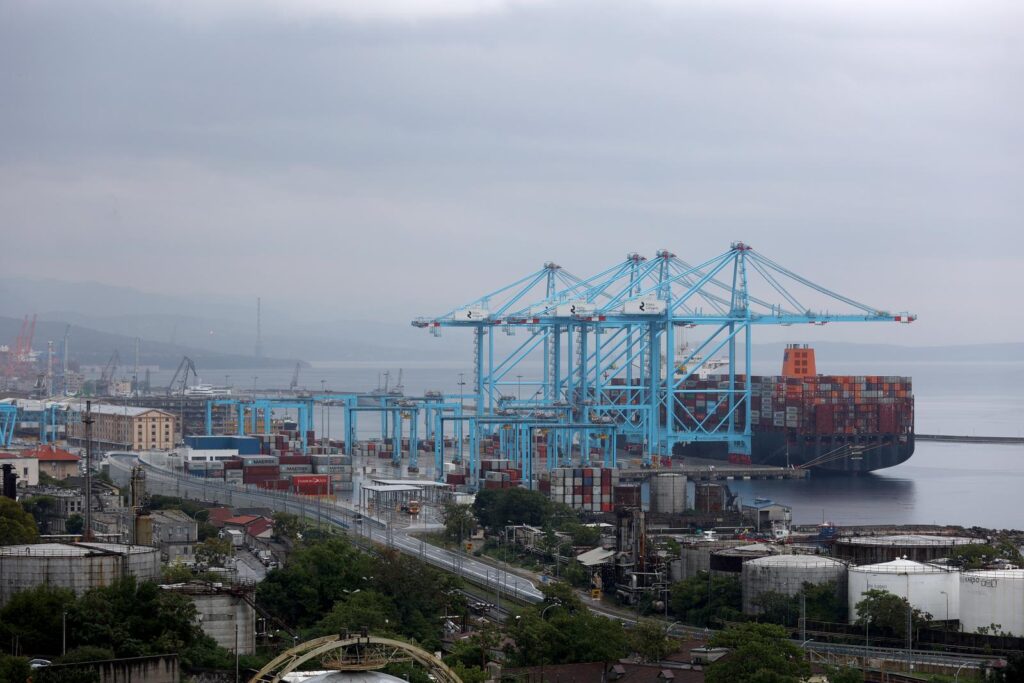
As Sinisa Malus/Poslovni Dnevnik writes, six months after its commercial launch, the massive Rijeka Gateway terminal is currently making significant progress. Built from the ground up as a greenfield investment by APM Terminals and the large Enna Group, this new terminal stands out as one of the most technologically advanced in the entire region, with a range of automated systems enabling fast, safe and reliable operations.
After initial obstacles and challenges, which is very much to be expected for a project of this scale, the terminal has made significant progress. It has created a solid foundation for further improvement, growth and a primary focus on operational excellence.
“The terminal is still in its initial phase of operation, which is the so-called ramp-up process, during which full capacity is not expected until all operations are in place. So far, it has received 26 container ships, most of which are motherships, i.e. the largest container ships, making it an important link in the ocean supply chain. Clients particularly highlight the advantages of the automatic gate system with an application for drivers, where the average time a truck spends at the terminal is around 20 minutes, which significantly increases the efficiency of all stakeholders,” Tomislav Rosandić, a member of the Rijeka Gateway Management Board, revealed.
excellent results already
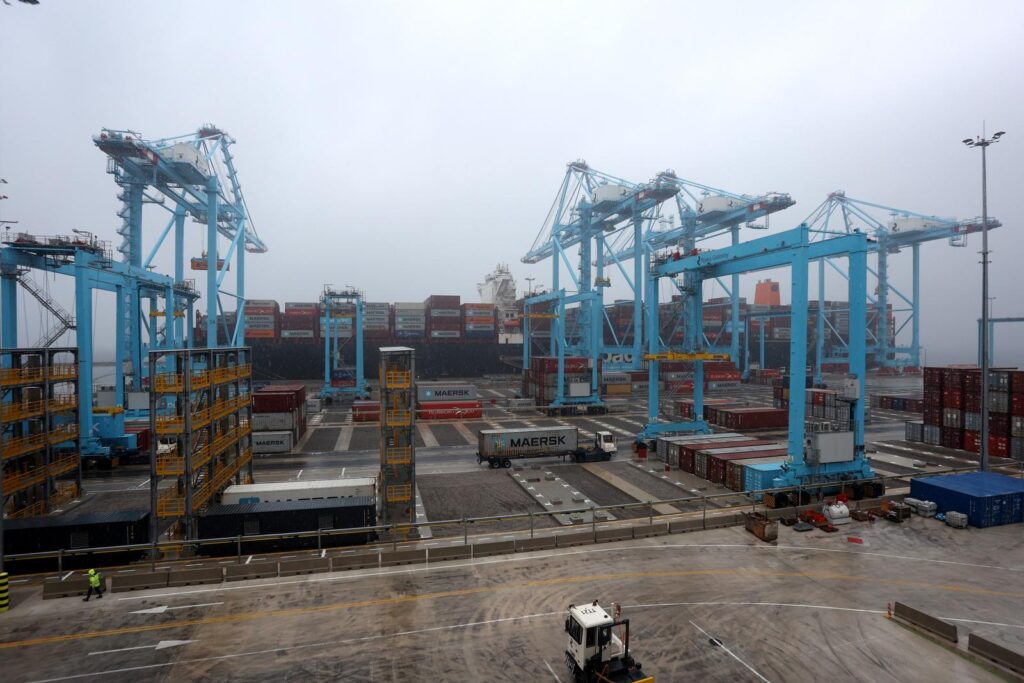
Rosandić particularly highlights the term “happy flow”, known in the port business, and says that Rijeka Gateway has already achieved great results in this context. In logistics, “happy flow” refers to the ideal, most efficient path a product takes through the supply chain – from order to final delivery. Container ships function like “buses at sea” – they sail on regular routes and arrive at ports on certain days. There is cargo on board for several ports, and in each one only the containers intended for that destination are unloaded, similar to how passengers disembark at their desired station.
Rijeka Gateway is also important as one of the ports of call in the context of the Gemini partnership between Maersk and Hapag-Lloyd on the AE12/SE1 line. This places the Croatian port as a key terminal on one of the world’s most important shipping routes between the Far East and the Mediterranean. The line coming into Rijeka Gateway connects massive Asian ports, including Shanghai, Ningbo and Tanjung Pelepas. That’s all carried out via the Egyptian ports of Port Said and Colombo, all the way to the Mediterranean.
“At the beginning of February, smaller feeder ships began arriving at the terminal, serving the transshipment segment which involves the transshipment of cargo from large ships to smaller feeder ships. These smaller ships then transport imported cargo to smaller Italian ports like Ancona and Ravenna.
83% of rijeka gateway’s employees are croats
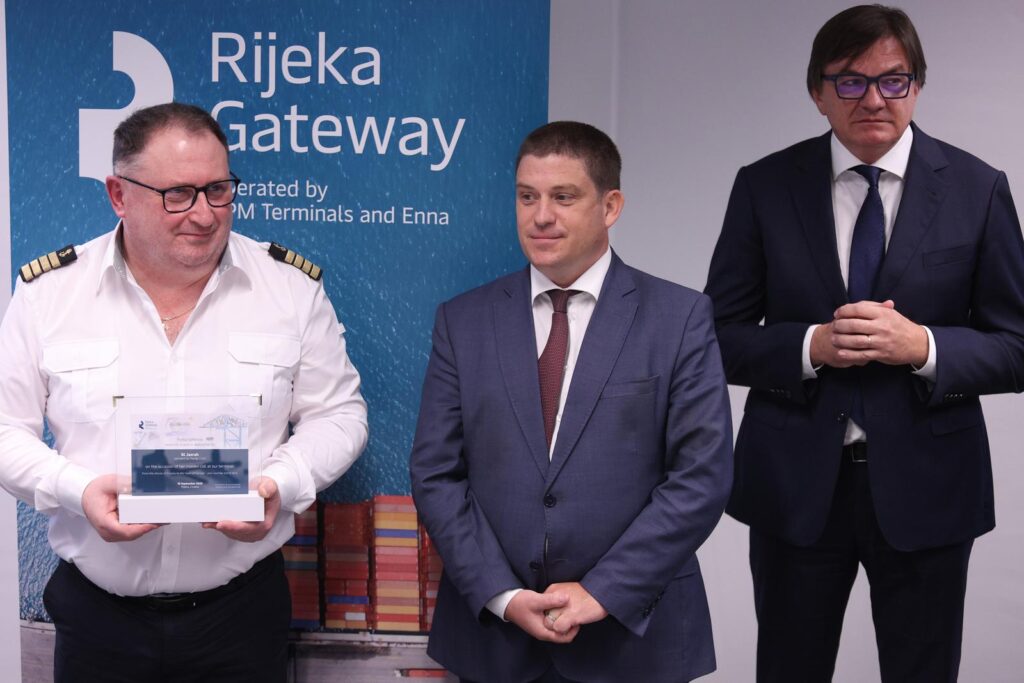
Rijeka is an important entry point in the ocean network, and the development of new infrastructure and logistics facilities further ensures the security of supply chains towards the hinterland. This makes the terminal a crucial link for the markets of Hungary and Serbia,” explained Rosandić. Last year was a record for Rijeka Gateway in terms of employee training and recruitment. The internal team of the human resources department conducted between 1,300 and 1,500 interviews, reviewing up to 3,000 CVs, which corresponds to almost 27 days continuous conversations.
“The biggest waves of employment took place in spring and after the terminal opened at the end of the year. At the end of 2025, Rijeka Gateway had more than 380 employees, and at the beginning of February 2026, it recorded over 410 employees, with around 83% of them being Croats from the local population. Since many jobs in the logistics sector were introduced in Rijeka, the key segment was adequate education and investment in the team,” revealed Rosandić.
This is a significant success because at the terminal opening in October, it was stated that the goal was around 320 employees. However, the greater need for labour, due to the specific conditions on the labour market, also caused significantly higher employment. It’s rather remarkable that employees spent more than 130,000 hours in training last year, which is an average of 190 hours per person, including theoretical and practical modules.
“The operators of the largest cranes, the so-called ship-to-shore cranes, received the most training, with a total of 943 hours. That’s due to the complexity of these operations. The results showcase the terminal’s strong focus on developing competencies, safety and quality of operations, as well as continuous employment growth,” said Rosandić.
For the further growth of Rijeka Gateway, additional investments are naturally going to be necessary. This involves the modernisation of the existing route and in the construction of a new Zagreb-Rijeka lowland railway line. That would enable the long-term development of the terminal and strengthen Rijeka’s entire traffic route. The lowland railway is a key prerequisite for the full development of the Port of Rijeka. The study “Economic Impacts of the Port of Rijeka”, which was presented a little less than one year ago, quantified just how much the Port of Rijeka could gain from the construction of a railway from Rijeka via Zagreb to Budapest.