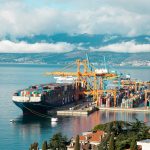
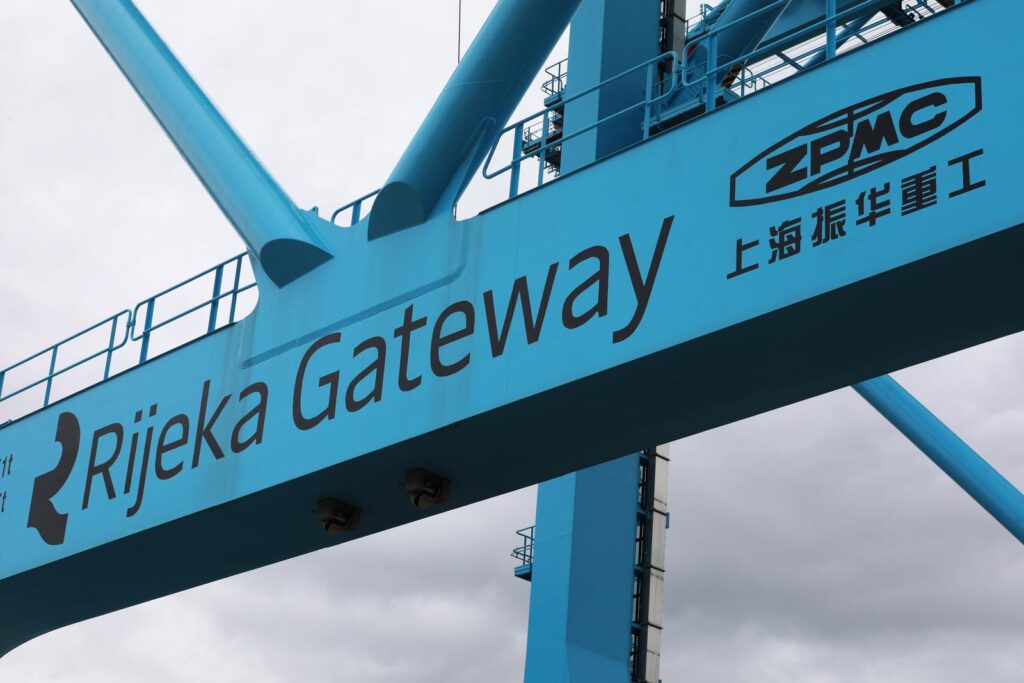
August the 16th, 2025 – The massive Rijeka Gateway project set to redefine Rijeka Port on the cargo map of Europe is now entering its final phase.
As Poslovni Dnevnik/Ana Roksandic writes, Croatian seaports recorded an increase in the number of arriving ships over the last three months. That said, there has also been a marked decrease in the volume of transported goods. 100,032 ships entered Croatia’s ports over the last three months, representing a 1.4 percent increase compared to last year, while the volume of goods transported fell from 5.68 to 5.45 million tonnes, according to data from the Central Bureau of Statistics (CBS).
The aforementioned information illustrates the mixed picture of port operations at the moment. Croatia does have somewhat higher maritime activity in terms of the number of ships present, but weaker cargo traffic overall. The tourism and passenger segment is more than likely to grow, while the industrial-logistics segment remains under slight pressure. The hope is for the enormous Rijeka Gateway project to alter that in the most positive of senses.
Alen Jugović, professor at the Rijeka Maritime Faculty, an expert in the field of port economics and president of the Supervisory Board of Rijeka Port, claimed that the statistical decrease in the total volume of goods transported is not a sign to panic. This is because, according to him, the volume of the goods transported in tonnes alone doesn’t actually reveal enough about the real economic performance.
He explained that if the volume of low-value goods (for example, grain, scrap metal) falls, this doesn’t necessarily mean a consequent decline in overall port revenues. If the volume of high-value goods (such as container goods, cars) increases, then the given port can earn more despite the overall decline in volumes.
“It’s really important to be clear about what structure of goods we’re talking about. Sometimes there is a statistical decline in the volume of goods, but what’s actually more important is what goods are actually involved. I don’t think that the decline is significant or that it’s sounding a warning of any bad periods looming. It’s far more important that we focus on higher-quality goods, such as containers, cars and so on. The size of the ships that arrive is more important,” explained Jugović.
The largest turnover was achieved by Omišalj, followed by Rijeka, Ploče, Bakar and Split. The five largest ports in Croatia therefore carry around 90 percent of the total cargo traffic. Omišalj and Rijeka together account for more than half, which means that movements in these two ports strongly reflect overall national statistics. At the same time, all eyes are on Rijeka these days as a result of the Rijeka Gateway project.
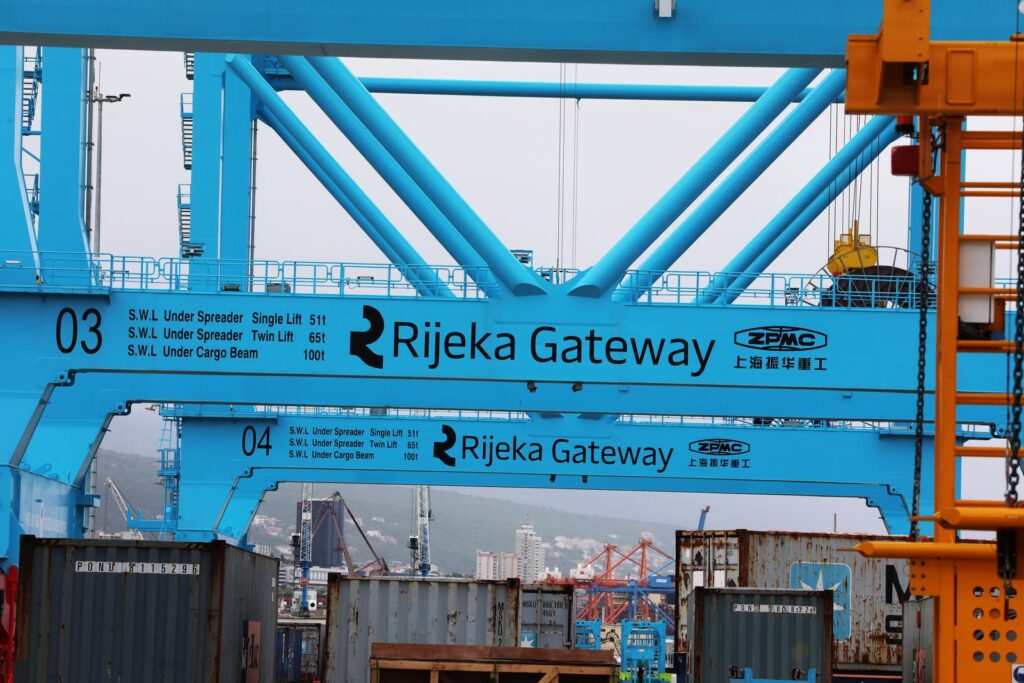
The Rijeka Gateway project is by far the most technologically advanced container terminal in not only Croatia but the entire immediate region. It has now entered the final phase of testing with the arrival of the first container ship, the M/V Cape Fulmar, which arrived from Port Said in Egypt. It is 170 metres long, 25 metres wide and has a capacity of approximately 1,440 TEU. The ship will remain at Rijeka’s terminal for a period of four weeks and serve as a platform for comprehensive training and testing of operational processes in real conditions. This includes planning, loading and unloading of all types of containers, securing cargo, as well as coordination and transportation by terminal vehicles.
The first trucks and trains with export goods are expected in early September, while the arrival of the first commercial ship is planned for September the 12th as things currently stand. Along with the ship’s arrival, the terminal also welcomed its first test train from operator ENNA Logic. The 500-metre-long train, divided into two trains on two tracks, delivered empty containers for testing RMG cranes.
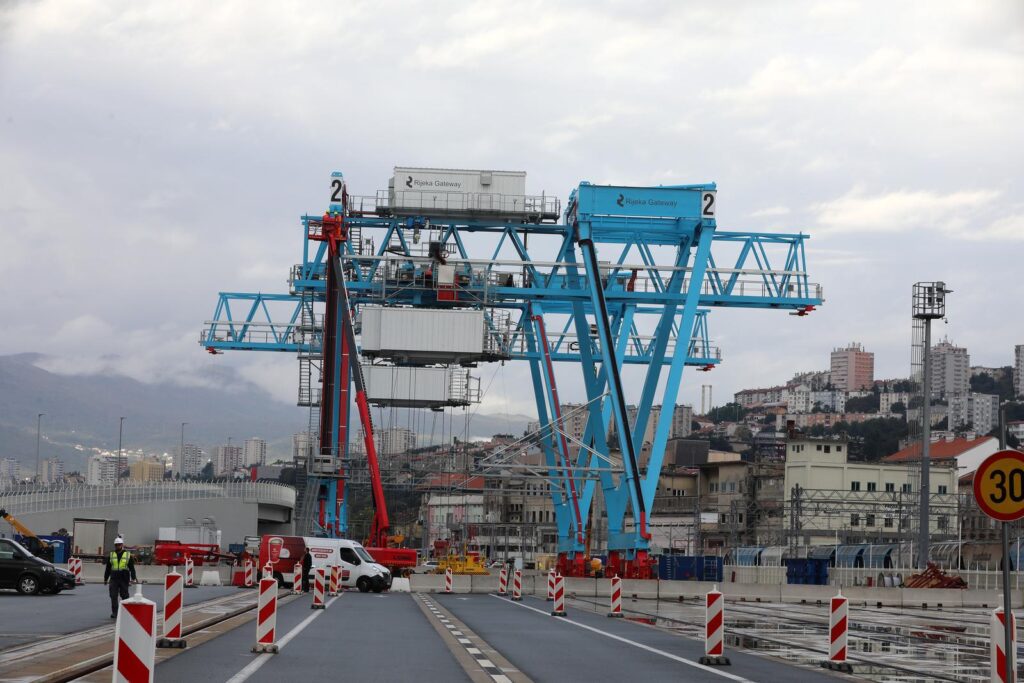
As a reminder, the huge Rijeka Gateway project is one of the largest investments in logistics infrastructure in Croatia, worth a total of 380 million euros. Back in 2021, ENNA Logic, together with its international partner APM Terminals (part of the Maersk Group), founded the Rijeka Gateway company, which will develop and operate a modern container terminal in Rijeka, repositioning the northern Adriatic city and Croatia as a whole on the cargo map.
“The terminal isn’t yet operational, it’s currently in a trial phase. A ship has arrived to check on the loading and unloading, so I expect traffic to grow in the future. I believe that there will be a consolidation of part of the ship and cargo traffic towards the main ports of Croatia,” Jugović assured. He also believes that in the first part, cargo traffic will shift from terminals in the surrounding area, primarily from Koper in Slovenia or AGCT in Rijeka, but these terminals will also need to orient themselves towards other shipping companies.
“AGCT will certainly look for other shipping companies to whom it will give other conditions to compensate for this. I see it as a positive thing, I believe it will encourage competition and the overall effects will be good for the entire port system environment, as well as for the local economy in the county, and Croatia as a whole,” concluded Jugović.