March the 24th, 2026 – Tourism across Croatia is looking safe and secure this year, with Istria in particular predicting a good season despite Middle East concerns.
As Zadarski list/Drazan Katalinic writes, tourism is once again faced with an uncertain situation ahead of the start of the main summer tourist season. Just over two weeks ago, everything seemed more or less totally fine and Croatia’s tourism sector was busy preparing to welcome the first guests for a slightly earlier Easter, but then the US-Israeli attack on Iran disrupted plans for all destinations across the Euro-Mediterranean region. This reached the point that for the first time since the global financial crisis in 2009, excluding the COVID-19 pandemic, Croatia actually recorded a slowdown in bookings. That quickly picked up, however, with bookings for Croatia on the up.
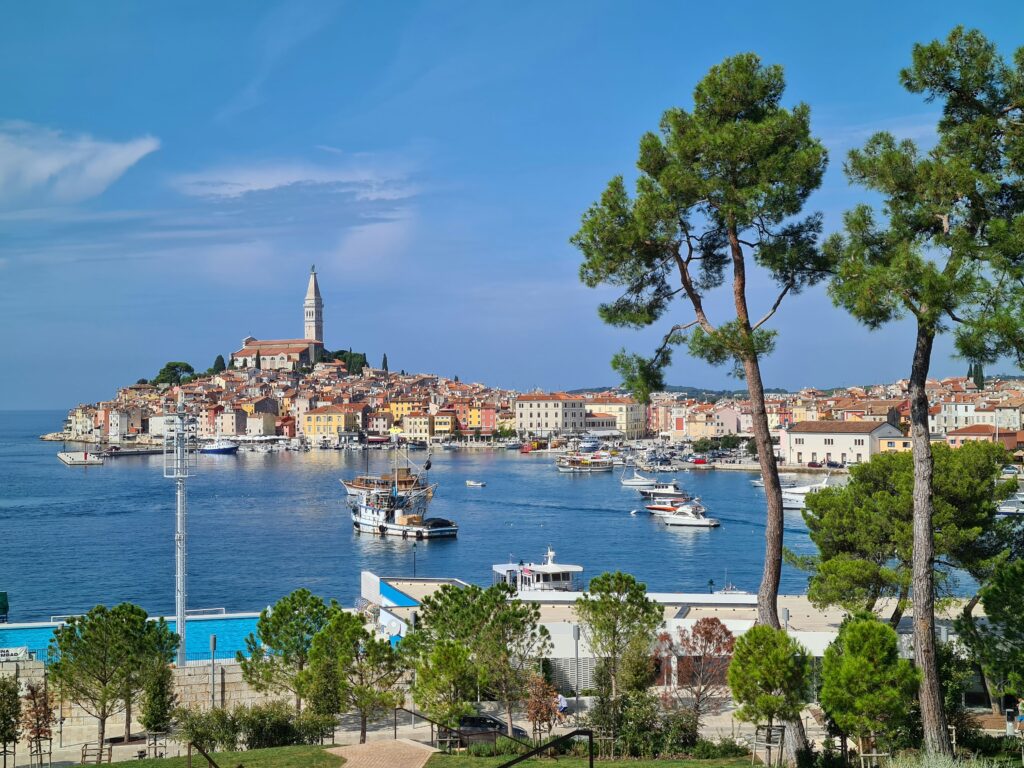
In terms of bookings for Croatian tourism this year, Istria is currently doing better than the rest of the coast because it is a destination easily driven to and relatively close to many foreign guests, while southern Dalmatia, as an air destination, is still experiencing a slowdown in bookings at the moment. Tourists are waiting for the situation to develop, which is creating uncertainty across the entire sector, explained Boris Žgomba of the European Association of Travel Agencies.
last minute bookings will be king this year
“For Croatian tourism, this season will likely be decided in terms of last minute bookings. That will also probably be the case with the country’s tourism competitors. It’s important to note that just because tourists aren’t choosing to travel just yet due to the situation in the Middle East, that does not mean that they will give up on their travel plans entirely. I’m pleased by the fact that according to relevant research, the last thing a person will give up is travel,” explained Žgomba. At the same time, he noted that as a tourist destination during the pandemic, Croatia came out as an absolute winner across the whole Mediterranean.
Due to the escalation of the conflicts in Iran and the Middle East, tourism is losing at least US$ 600 million a day in spending by international travellers due to disruptions in air traffic and regional connectivity, warns the World Travel and Tourism Council (WTTC). This is because the region accounts for five percent of global international tourist arrivals and 14 percent of global international transit traffic.
“Croatian tourism is not recording losses for now, in the first two months of 2026 we had slightly better results than last year with two million overnight stays, but compared to the 120 million overnight stays we’ll achieve throughout the year, this isn’t going to have a significant impact on the overall tourism year,” assured Žgomba.
“I don’t know how prices in tourism will be this season, but the fact is that inputs are growing, such as airline tickets, and prices are also growing for the competition. With that being said, rest assured that there will be a price war and a fight for every guest,” warned Žgomba, adding that we’re entering the season with a slightly higher number of beds than last year.
“I have spoken to colleagues from Italy, Spain and Greece and they all confirmed to me that they’re seeing roughly the same situation as us – a good pre- and post-season, and a slightly worse peak season. This is a trend among guests who have started to avoid the peak season due to the huge crowds and heat and have decided to go on holiday later in order to avoid the crowds. This is an absolutely new trend across the entire Euro-Mediterranean area. Visitors will come during that time, but at the last minute,” explained Žgomba.
everything depends on preparations and the message of safety sent out
Minister of Tourism Tonči Glavina confirmed at the end of last week that reservations have slowed down, but also said that we can still have a good tourist year thanks to Croatia’s advantages, such as proximity to markets, quality of offer and value for money. He also said that more significant inflation across Europe, with rising travel and package prices, would certainly affect Croatian tourism.
In its spring macroeconomic projections, Croatian National Bank stated that the risks to Croatian tourism due to the war in the Middle East “appear to be two-sided.” As a result of that, uncertainty could redirect some European travellers to Croatia instead of their previously planned Asian destinations, which would result in stronger-than-expected growth in services exports, but at the same time could reduce demand for tourism services.
Despite the challenges, the World Travel and Tourism Council has assured that travel and tourism are one of the most resilient economic sectors in the entire world, and research on previous crises shows that tourist demand after security incidents and with the right response can recover in just two months, provided that governments and industry act quickly to restore traveller confidence.