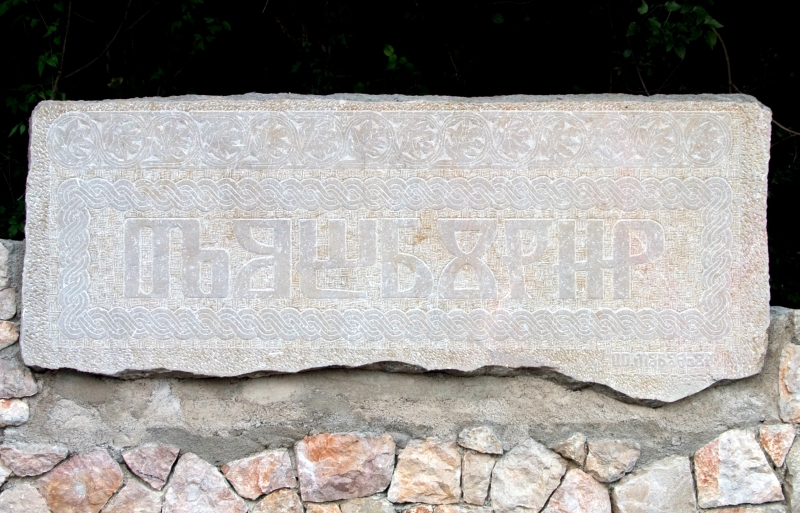
September the 16th, 2025 – Think you know all there is to know about Krk? Think again. Next time you’re there, skip visiting just the beaches and check out Dobrinj, the cradle of the Glagolitic script and literacy.
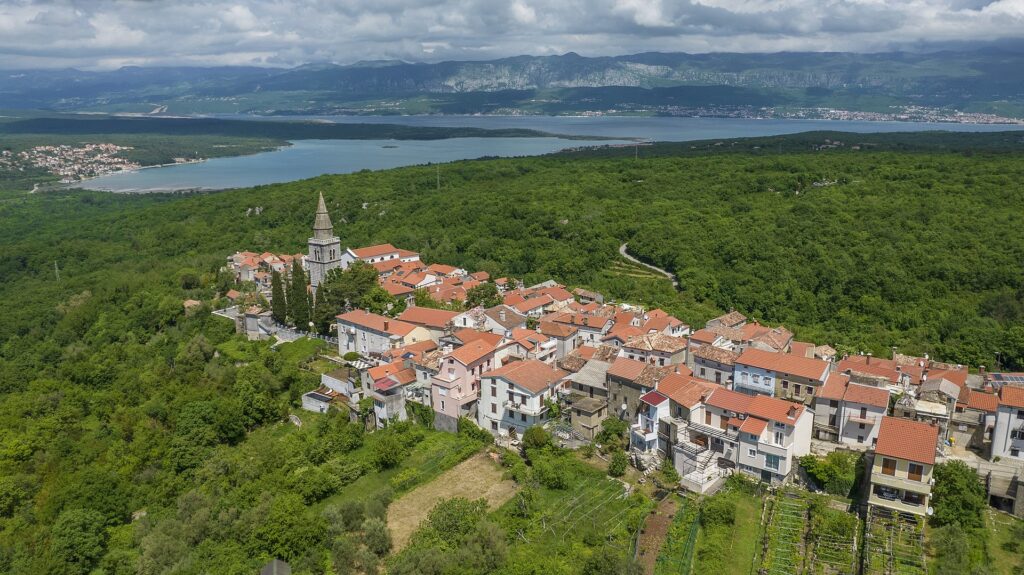
As Putni kofer/Martina Hrupic writes, a tall bell tower with many red roofs dotted around it, like children crowding around their mother. Dense greenery surrounds them, and a little further away, an abundance of blue stretches out as far as the eye can see. Beautiful Dobrinj on Krk looks like a painting, the sight of it evokes associations with Istria, yet it’s the jewel in Krk’s crown. It beckons with its ancient stone houses and narrow little streets, tells interesting stories from its long history, invites guests to immerse themselves in its secrets and surrender to its charm. Dobrinj should absolutely be on your list, with an entire list of lures in addition to it being the cradle of the Glagolitic script.
dobrinj and the ancient glagolitic script
It is located in the northeast of the island of Krk high atop a hill. Rising up some 200 metres above sea level, it keeps a proverbial watchful eye over its surroundings. It has always been loved. First by the Romans, and then by the Illyrians, who once built their own settlement on the very spot where the more modern settlement currently stands. In essence, Dobrinj is one of Krk’s historical pillars. It is one of the oldest medieval city centres on the island, along with the far more famous Baška, Vrbnik and Omišalj.
Although it is similar to them in this respect, it has always been special in its own right. Out of all of them, it was the only one not located on the coastline itself. Likewise, it never had ramparts. it therefore isn’t really very surprising that it was often the target of attacks, including by marauding pirates.
First mentioned way back in 1100, Dobrinj was an important Glagolitic centre and the very heart of literacy, with the local registry books located there being the oldest in all of Croatia, having been written in 1559. However, the main source of income for Dobrinj was not related to the Glagolitic script. Much like Ston much further south, its economic value was tied up in salt. Today, Dobrinj is on the map of Krk’s tourist destinations, but it is still very much in the (long) shadow of the more famous places on the island.
a cursed bell tower…
When in Dobrinj, it’s worth taking a closer look at the most impressive building in the entire place, which is the bell tower. There’s a strange legend associated with it, as it is said that during its construction, a curse was placed on it that would ensure constantly collapsed. Judging by the fact that it has indeed suffered throughout its history, there may actually be something to it. It has suffered two lightning strikes, and was totally destroyed in World War II.
The rest of the city also weaves some very interesting stories. For example, on the stretch from the Plaza to the Jardin, there are two openings and a figure that resembles a horse’s head. It was once used as a measure of length, in essence it is a construction support, while the openings were measures for grain and oil in which taxes were paid. The Maskeron from 1738 also reminds us of the past, and even today, it isn’t actually known who carved that stone head of a man. Or why.
For those who want to delve deeper into the history of this Krk town, beyond a leisurely stroll, there are plenty of options. For example, the Ethnographic Museum with one of the largest ethnographic collections in Croatia and the ethnographic collection owned by the Barbalić family. There is also a valuable sacral collection and the Infeld Gallery, which is located in the house of the sailor Franjo Vušković.
Dobrinj might not be situated along the glorious coastline of this popular island with no vowels, but it is packed with history, wonder and a hefty dose of mystery.