
November the 8th, 2026 – Zagreb engineers managed to turn a garage hobby into a truly global tech business, and it all started with hiding cigarettes from inspectors…
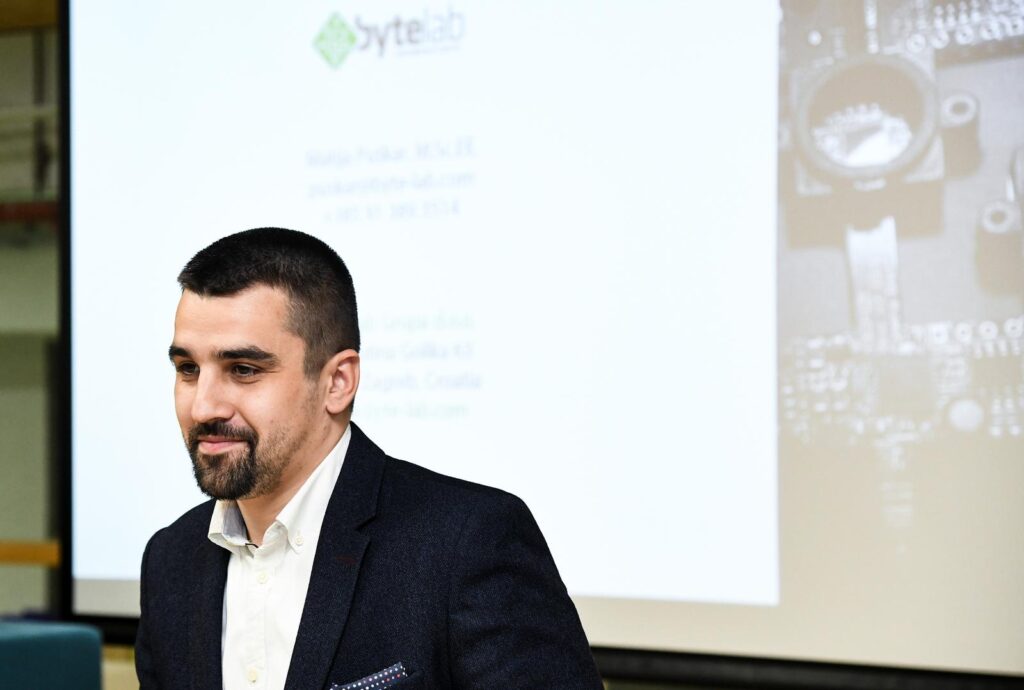
In a smaller industrial zone in Rudeš, a Croatian technology company has been working on innovative solutions that are used in the products of large global companies, from Europe to the USA. Paula Hadjur reports for Index that Matija Puškar, one of the founders of Byte Lab, revealed more about exactly what their team is engaged in. Their job is not to create finished products, but to develop technological solutions that make them smarter, simpler and more accessible to customers. For example, after receiving a specific request, their team designed a device that measures performances in motocross, which is then placed on the drivers’ helmets.
“we’re currently working on an electronic nose…”
“The most successful path to a good product is to talk to people who are deep in that niche. We’re exclusively an engineering company that carries out their own ideas. Someone has a problem and from that, a technical solution arises,” he explained.
They are currently busy working on a so-called electronic nose, an idea that arose in their innovations department in which an entire team works on all projects that seem interesting and useful to them for companies that have not yet developed those ideas themselves. “The idea evolved to the level that we went to our standard clients and showed them the technology. Some clients said it wasn’t particularly interesting to them, but there were those to whom it was very interesting. For example, that the nose, just from the smell of the coffee, understands which brand it is and how much it is roasted and on the basis of that automatically adjusts the coffee preparation process,” he says.
cooperation with the rest of europe and even the usa
They cooperate the most with the USA, Puškar explained, but also with European countries such as Switzerland, Germany, the Benelux countries and the United Kingdom. They also work with Middle Eastern countries. “That distribution is quite natural. We are part of the EU so we give the greatest value to clients in Europe. Prototypes that are produced today in our ground floor can already tomorrow at 9 o’clock be delivered to them,” he says. However interesting and abstract the innovations are, perhaps the most valuable thing in this story is the way it arose. In a garage in Špansko two friends, still as kids, started learning about electronics over the summer.
“The whole story started 10 years before the company was founded. Danijel Babić and I were kids from Špansko who were playing around with electronics,” he says. The first more concrete projects Danijel and he carried out still during their studies at the Faculty of Electrical Engineering and Computing (FER), when they developed a system intended for medical diagnostics, such as gait analysis in persons with amputation, because of which they also received the Tesla’s Egg recognition of the VIDI e-novation competition back in 2007. As their desire for innovations did not diminish even with the years, and the projects became larger and larger, both decided to finally open their company, which somewhat later was also joined by their friend and colleague from FER Ivan Dodig.
“In 2011, we came to the situation that the colleague was finishing faculty, I was in the final year. We saw that we already had some revenues and came to the conclusion that we need to formalise so that the whole story would have its head and tail,” he says.
from smart bikes to electric gas meters…
We also went down into Byte Lab’s production plant. Everything starts from an empty board, Puškar explained to us while he was leading us, on which electronic components are placed that are then soldered in ovens, after which additional controls and correctness tests follow, with the help of human hands. That is how some of their most recognisable solutions arose – electric gas meters, smart bicycles and even devices that track performances of motocross races. “If you do motocross, you don’t know how you’re managing to ride, unless you have a friend who times you while you’re passing. We made a device that tracks the complete analytics of entering corners, jump heights, speed tracking,” Puškar says, and subsequently it was interesting for him to hear from clients that that product was later also used among skiers.
“From the standpoint of data, what’s the difference?” Puškar asks himself.
their first product was a cigarette controller
Today, the Byte Lab team, which achieved around 4.5 million in revenue last year alone, still keeps the first product they ever sold as part of the company, in the drawers of the office in which today they close most of their deals with world-famous brands. “We were making cigarette controllers,” Matija laughs. “Advertising of cigarettes was already banned then, and we got the task to make a controller that by pressing a button opens and automatically closes the shutters under which the cigarettes stand, so that traders would reduce the risk of fines.”
Today, they’re a company with around 90 employees, with their own plant, production and a whole series of long-term partners. But, Puškar says, they never thought that the whole story could reach such proportions. “We like to joke that for us the development of new products is like running is for Forrest Gump: you ask yourself where you’re running, you don’t know, but it doesn’t matter. We love creating something new, we strongly nurture that curiosity and it motivates us. The nicest thing is that we work really broadly, from appliances to medical devices. It’s nice to see your products on shelves in shops, in concert halls and at airports,” he concluded.