
December the 2nd, 2025 – The most famous Zagreb bridge of all was once a European record holder, and it’s often referred to by three different names.
As Putni kofer writes, if you were to try to picture the Croatian capital without this particular bridge, it would look entirely different. This Zagreb bridge is one of the city’s iconic structures, both because of its colour and its cult status. It’s a part of Zagreb that everyone knows as the Hendrix bridge, but it also has other names. It got its name because of the graffiti that once appeared on it and which, no matter how many times the municipal services tried to remove it, keeps on coming back…
a story from 1862 (and also from 1939!)

This Zagreb bridge has been watching over the Sava River for decades, and it was actually once a European record holder. It’s the second oldest “living” bridge in Zagreb and the oldest one for vehicle traffic, in this case, for trains. It was opened to traffic on December the 3rd, 1939. In essence, it was a replacement, a new, improved version of the previous railway bridge that was also included in the protected cultural assets of Zagreb back in 2011.
That first bridge, which the Hendrix bridge eventually replaced, was built back in 1862. It had one track and in the 1930s it was no longer able to meet the demands of increased traffic. It was also in a dilapidated state. For these two reasons, the decision was made to finally build a new, better bridge that would have two tracks, an arch span of 135 metres, and be two and a half metres higher than the old one was.
the zagreb bridge that was once a european record holder
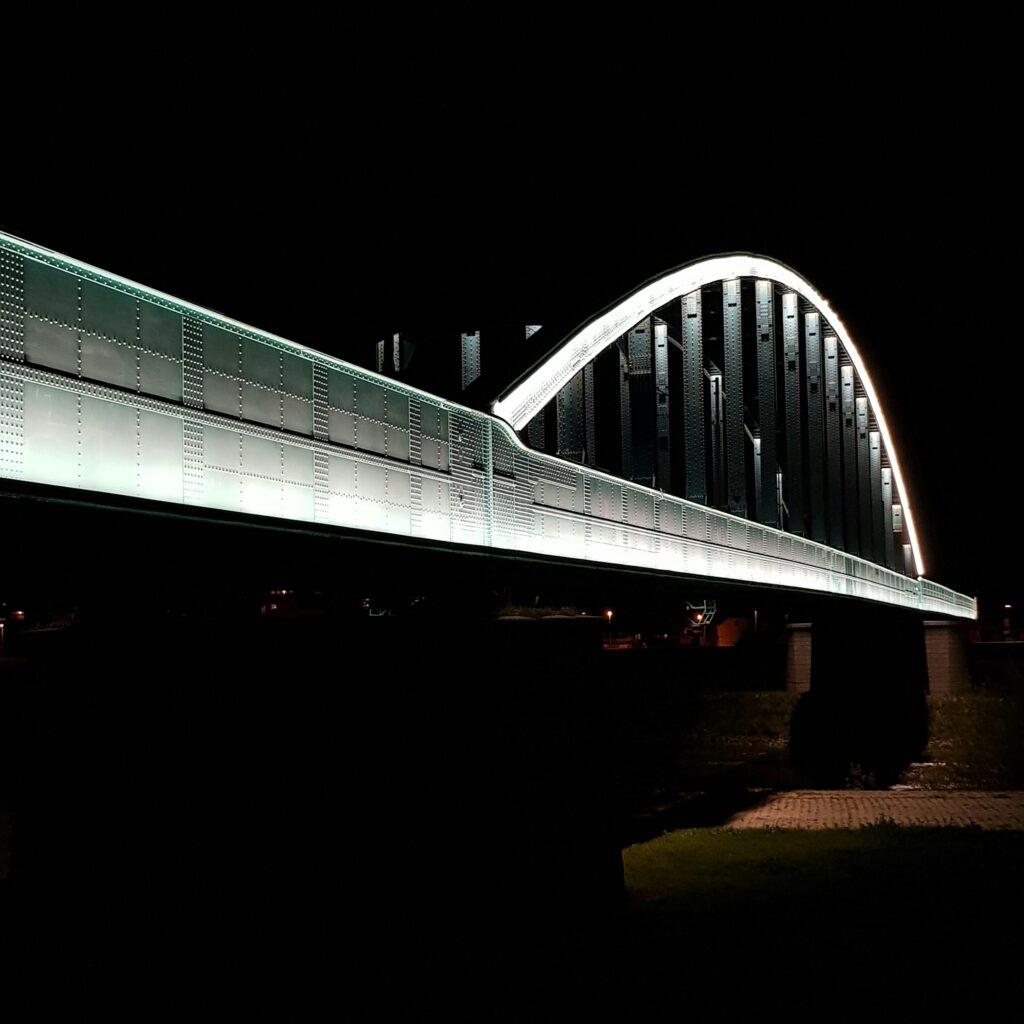
When this Zagreb bridge was built, it was a European record holder. It had the largest arch span of all railway bridges on the European continent. Its total length spans 306 metres, its main beams are made of steel and fastened with rivets. It was also one of the first large welded bridges.
Eventually, the graffiti “Hendrix” appeared on it, in memory of the legendary rock star Jimi Hendrix. Since then, things have never been the same for that bridge or for the city. The Green Bridge (Zeleni most) or New Railway Bridge (Novi želježnički most) became widely known as the Hendrix Bridge, and no matter how many times the authorities tried to get rid of it, the graffiti kept on coming back.
an eternal ode to a rock legend – starting with duct tape

“The first graffiti on this bridge was put there by connecting two pieces of paper with duct tape, and at the very end, a brush was taken. The people who did it hung upside down to do it, and the biggest problem was forming the letter “R” from that position.
In 2015, Večernji list spoke with one of the authors of the graffiti, the famous letter “R”, whose name is still unknown. “We can’t even agree on whether we did it in 1994 or 1995. We were in the second and third grades of high school, we had a band, and our role models were Led Zeppelin, Deep Purple and, of course, Jimi Hendrix,” he told the newspaper.
“I remember how difficult it was, hanging there from above, to make that round part of the letter “R”, so it turned out a little boxy. Whenever the bridge was repainted, we felt a responsibility to renew the sign. But as we got older, more careful and smarter, someone else would beat us to it and “Hendrix” would reappear, and we would be relieved,” stated the author. The legendary connection with Hendrix was confirmed in 2017 when, on the occasion of the 50th anniversary of Hendrix’s first album release, decorative lighting was installed in the bridge; and a passing train can trigger multi-coloured lights.
There have been works carried out on it over the years, with the first works stretching from 1956 to 1958, when it was repaired from damage caused during World War II. It was renovated and additionally strengthened in 1961, as well as during the period from 2013 to 2015. During the latter of the works, its carrying capacity was increased to 22.5 tonnes, and the maximum speed was upped to 80 kilometres per hour.