
March the 2nd, 2026 – The Croatian deep-tech startup Digicyte has been developing innovative tech for rapid tumour diagnostics. The result would speed up a part of pathology that has lagged for decades.
Cancer is a word that causes distress among everyone, and for nobody more than those who have been touched by it. Medicine evolves quickly, and while cancer’s old reputation remains its primary one, oncology has developed at lightning speed. No longer is that dreaded word a death sentence. Oncology diagnostics is facing a paradox: treatments are becoming very precise and personalised, but basic diagnostic processes still require time-consuming, destructive sample processing.
That’s where a Croatian deep-tech startup called Digicyte comes into play. ZICER (Zagreb Innovation Centre) stated that this company is developing an innovative piece of tech that speeds up the tumour diagnostic process and enables the analysis of fresh biopsies without incurring tissue damage. In wide use, this would provide doctors with a rapid insight into a given patient’s very individual condition, which is incredibly important as cancer is not just one disease – but thousands.
Tportal has revealed that Digicyte’s solution allows for the rapid and non-destructive analysis of freshly taken biopsies. This shortens diagnostic waiting times and preserves samples for further medical procedures.
The only company in Croatia systematically engaged in microscopy development research

Digicyte is the only company in Croatia systematically engaging in microscopy research and development. This tech’s development began in the right place – a clinical environment. The startup’s first office was actually located at Zagreb’s Faculty of Veterinary Medicine.
“The whole process began from within the heart of this environment. We had an office at the Faculty of Veterinary Medicine, and we developed the software alongside feedback from pathologists. We aren’t engineers who built a product by rote. Instead, we solved genuine problems and the everyday frustrations pathologists are often faced with,” revealed Digicyte’s co-founder and director, Krunoslav Vinicki. This approach set the stage for the development of solutions that are clinically applicable from the start.
Histopathological procedures have lagged behind medicine’s lightspeed development
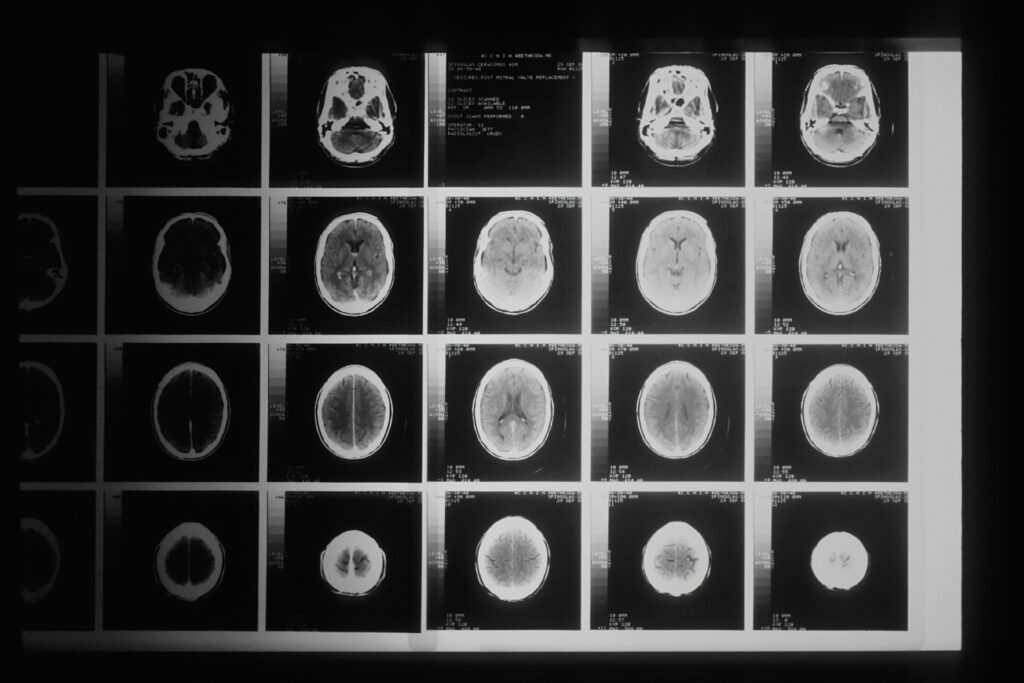
Medicine is constantly advancing, but destructive, time-consuming histopathological procedures have more or less remained unchanged for decades. To this day, standard biopsy processing involves fixing and embedding samples in paraffin, beginning a process that can drag on from 24 to 72 hours. “During this period, everything is on ice, treatment options can’t be looked into until the results are defined. On top of that, the quality of the taken sample often remains unknown in itself until the processing is complete,” explained Vinicki.
Another obstacle lies in the development of personalised medicine, which requires conducting a constantly increasing number of diagnostic analyses on ever smaller tissue samples. Each destructive step in the processing of these samples reduces clarity, diagnostic potential, and increases the risk of an incomplete diagnosis. In the case of cancer, this can have catastrophic consequences.
Digitcyte cuts that time down to a mere 30 minutes
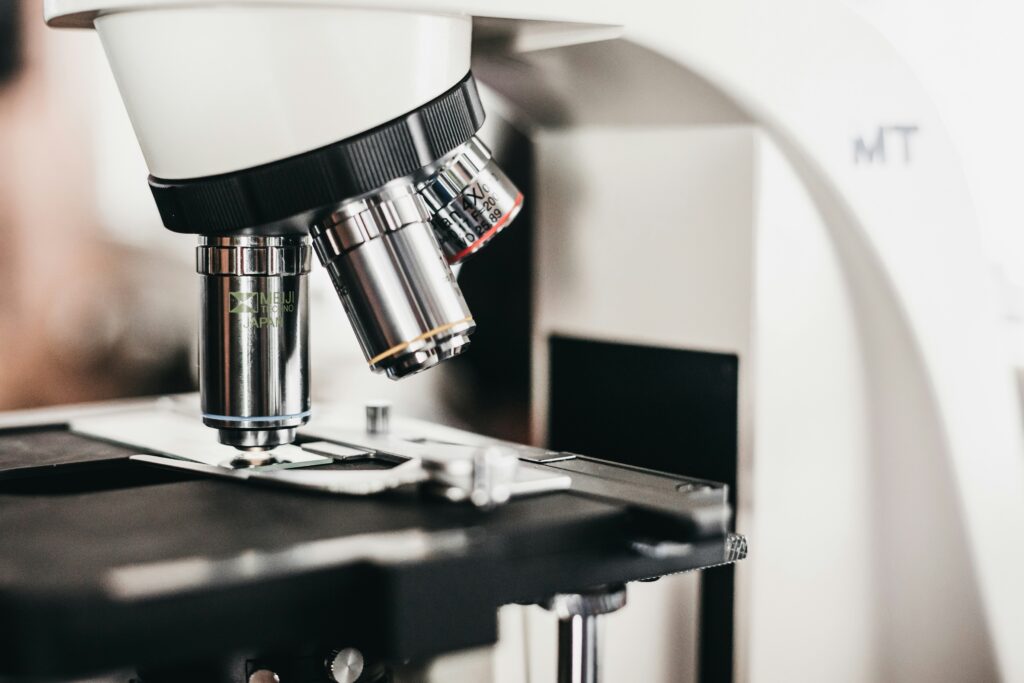
Digicyte is changing the game by developing a microscopic method that permits the analysis of fresh tumour biopsies in about 30 minutes. This is done without causing damage to the sample. After the analysis is complete, the sample can be used in standard diagnostic procedures. This tech works by combining infrared fluorescence microscopy, AI, and computer algorithms. What’s crucial here is an algorithm that reconstructs an H&E image from the infrared image. This is a standard format used by pathologists in diagnostics and provides them with a familiar diagnostic context, but in a time that was previously not possible.
A futuristic light in the dark for pathology
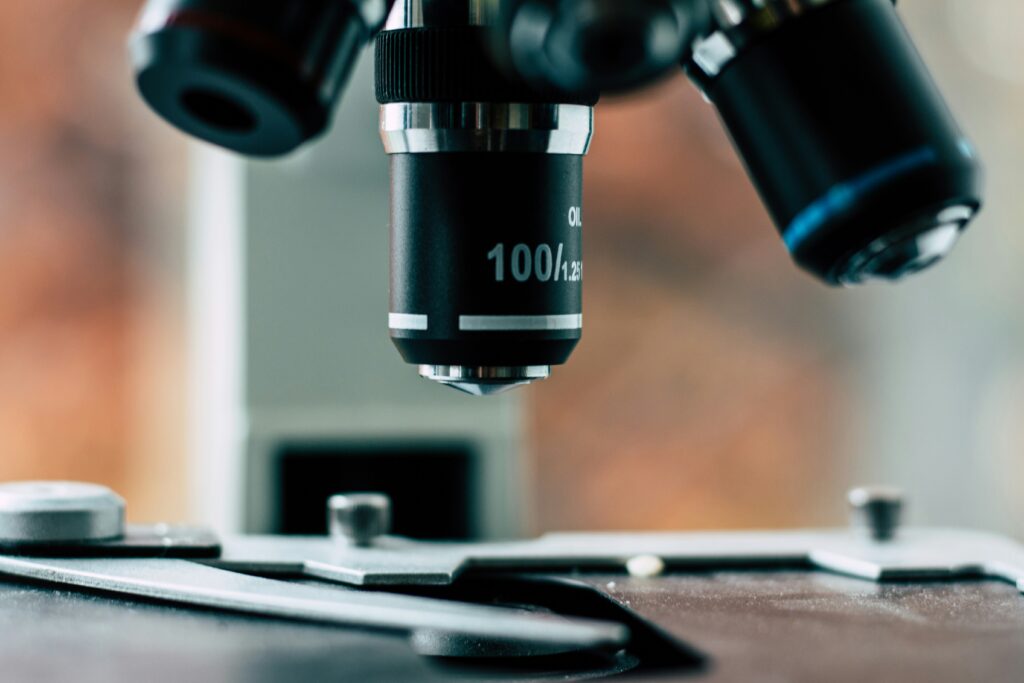
Unlike many startups that focus on AI development, Digicyte’s beginnings lie in the improvement of the daily work of pathologists. “Most startups are working on AI in digital pathology, but our aim was to focus on the user experience with the microscope and with image quality in daily routines,” explained chief software development engineer Leo Obadić, adding that the goal of software development is to reduce complex processes and enable the system to automatically optimise image quality and result reliability. Among the key pieces of innovation that Digicyte has been developing is the implementation of the so-called sparse deconvolution in light microscopy. Digicyte has revealed that this achieves up to twice the image resolution.
Digicyte has further optimised its algorithm, increasing processing speeds by around 70 times, while achieving a resolution level of about 100 nanometers in cytology and haematology. Testing conducted as part of the AI4Health project has highlighted that this level of detail can increase diagnostic reliability. More innovation relates to real-time focus stacking technology, which combines images from different focal planes to obtain a more detailed image of the preparation.
Clinical collaboration

Dr Ivan-Conrado Šoštarić-Zuckermann from the Faculty of Veterinary Medicine at the University of Zagreb was the software’s first user. He also participated in the tech’s development. “This software genuinely is something different. It’s easy to use and removes the technical aspects that used to take up my time,” he stated.
Digicyte was founded by experts in the fields of AI, microscopy and image processing. Vinicki has years of experience in the development of microscopy systems and algorithms, while Obadić has experience in the development and implementation of AI solutions and data analysis. The company’s business development is being supported by Nedjeljko Vinicki. The development of solutions also enjoys support from ZICER’s programmes. As a company involved in the activities of the European Digital Innovation Centre AI4Health.Cro., their solutions are already being used by hospitals, labs and academic institutions across Croatia, Austria and Slovenia.