May the 9th, 2026 – You’ve likely heard of Diocletian’s palace, but what about his ancient fishponds? To experience them, you need to step away from the mainland and onto the gorgeous island of Šolta.
Croatia’s 1,000+ islands are home to countless hidden stories, but few are as fascinating as the ancient fishponds lying beneath the crystal-clear waters of Piškera Bay on the island of Šolta. Hidden away near the peaceful village of Nečujam, these fascinating submerged remains are believed to date back almost 1,700 years to the time of Roman Emperor Diocletian. It’s well known that this particular Roman ruler had an intense love for the Croatian coast, and it’s no surprise that traces of his presence can be found here, too.
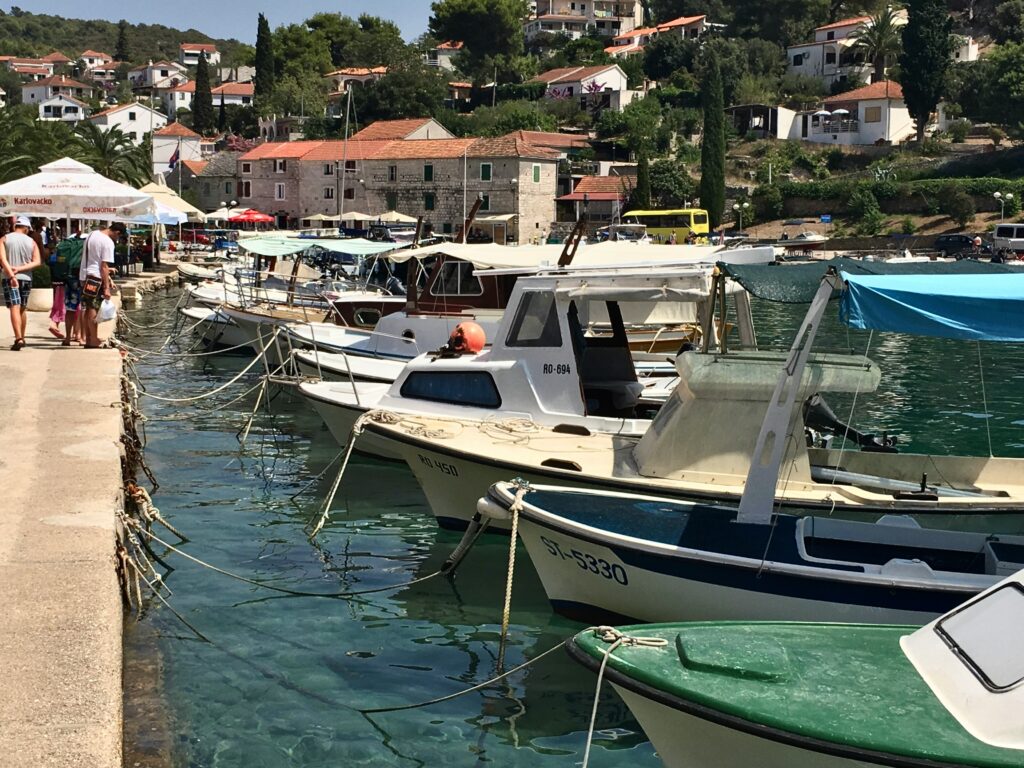
Less than an hour by ferry from Split, Šolta remains one of Dalmatia’s quieter islands, known for its authentic atmosphere, olive groves, vineyards, and relaxed Mediterranean lifestyle. While neighbouring islands often attract larger crowds, Šolta has managed to preserve a slower rhythm that many visitors now actively seek out.
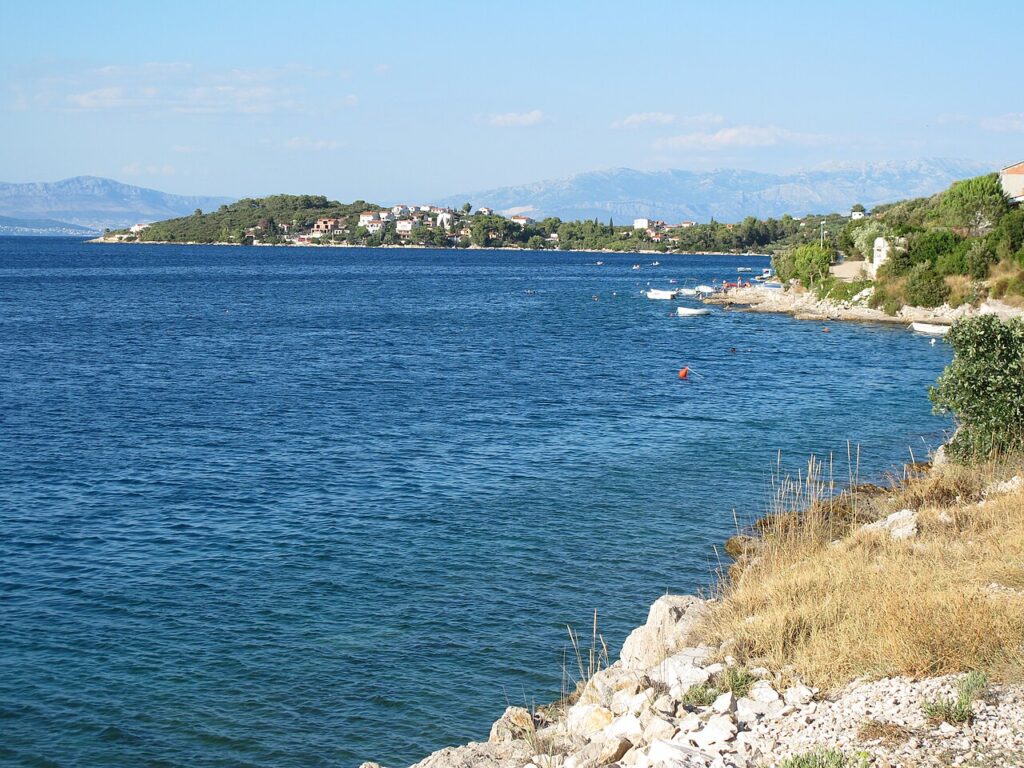
Among the island’s most unusual attractions is Piškera Bay, a small turquoise cove hidden within the larger bay of Nečujam. Beneath the sea surface lie the remains of an ancient Roman fish farm, traditionally linked to Diocletian, the emperor best known for building Diocletian’s Palace. Historians believe the sheltered bay served as part of a private economic and leisure complex connected to the emperor after his retirement in Split during the late 3rd and early 4th centuries.
The remains consist of a stone barrier approximately 64 metres long, once used to enclose part of the bay and create a controlled environment for keeping live fish. Openings in the structure allowed seawater to circulate naturally while maintaining the enclosed breeding area. This represented a real luxury reserved for wealthy Romans at the time. Today, the partially submerged walls are protected as a cultural heritage site and can still be seen through the exceptionally clear Adriatic waters.
Although the archaeological remains are historically significant, Piškera is also simply one of the island’s most beautiful swimming spots. The shallow bay attracts sailors, swimmers, and snorkellers who come to experience the rare combination of pristine nature and visible ancient history beneath the sea.
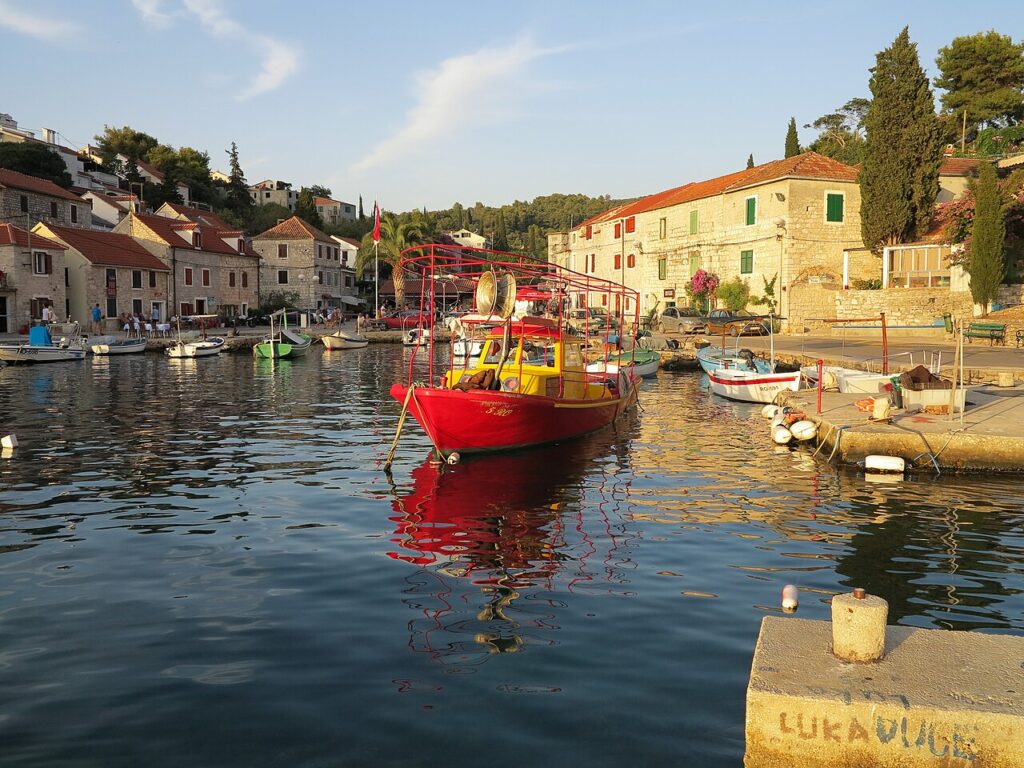
Nečujam itself has long held a special place in Dalmatian history and literature. The bay’s unusual acoustics earned it the nickname “the silent bay” or Vallis Surda in Latin. Over the centuries, it attracted all sorts of known writers, nobles, and sailors seeking shelter, zen and pure tranquillity.
Until recently, Piškera Bay was also known for the Kontesa shipwreck, which sank back in 2010 and became a popular diving attraction before eventually being removed due to environmental and navigation concerns.
The gorgeous bay now offers a rare opportunity to swim directly above visible traces of ancient Roman history while surrounded by some of the Adriatic’s clearest waters. For those wanting to experience a quieter, more authentic side of the true old Croatia, peaceul Šolta continues to prove that some of the country’s greatest treasures remain hidden just beneath the surface.