August the 16th, 2026 – There’s a Croatian river which is home to the remains of an ancient city and a 1,800 year old Roman barge. Over 9,000 fascinating artefacts have been discovered at this single location.
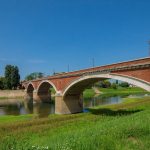
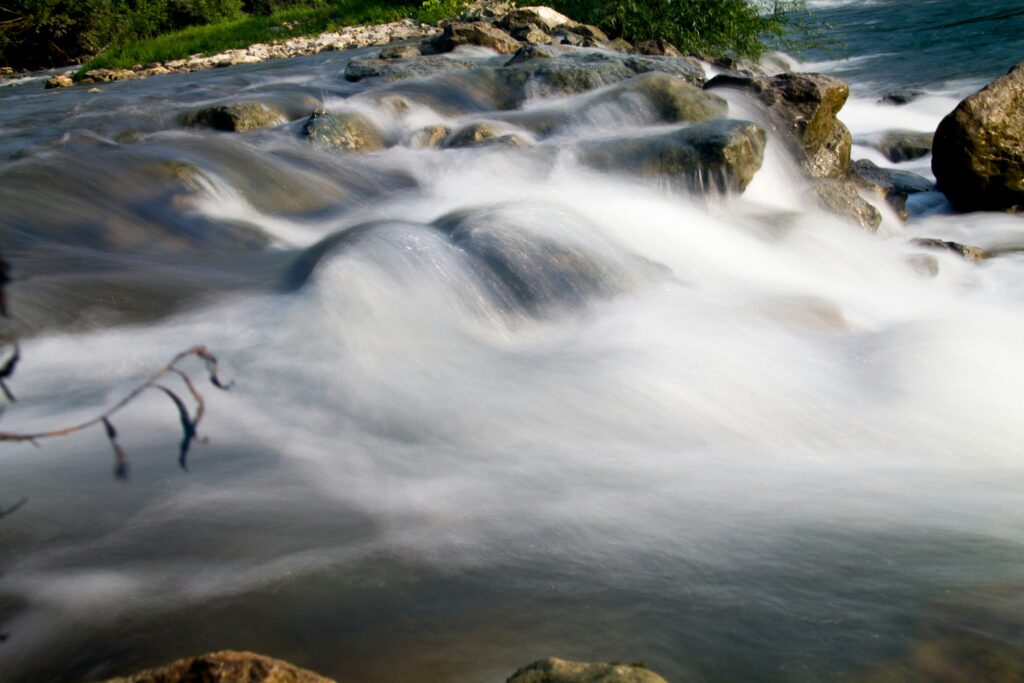
The Kupa River in Sisak is home to the remains of ancient Siscia, a Roman bridge and a cargo barge about 1,800 years old, while underwater research continues to uncover new traces of the past. The course of the Kupa River through Sisak today seems peaceful, a familiar part of the city’s everyday life. Putni kofer writes that along the banks there is a promenade and fishermen, kayaks can occasionally be seen on the river, and a few kilometres downstream it flows into the Sava. However, beneath that calm surface lies a completely different Sisak. Over the past hundred years or so, thousands of archaeological objects have been recovered from the riverbed, while underwater, parts of ancient buildings, traces of a Roman bridge and a large river barge that sailed the Kupa approximately 1,800 years ago have been preserved.
One of the most extensive archaeological collections found in European rivers
The scale of these finds is exceptional even far beyond Croatian borders. In a scholarly paper dedicated to the Roman river barge from Sisak, the collection of objects recovered from the Kupa is described as one of the most extensive collections of archaeological material found in European rivers. The objects span a long period of time, from the Copper Age to the Middle Ages, but the Roman layer is particularly rich, created in the centuries when Siscia was one of the important cities in this part of the Empire.
A large part of this collection was not found during classic archaeological excavations. It was brought to the surface by major dredging of the Kupa at the beginning of the 20th century, especially the works carried out in 1912. The monograph Urbanism of Roman Siscia states that the Archaeological Museum in Zagreb holds around nine thousand ancient artefacts dredged from the riverbed, while the Sisak City Museum mentions around ten thousand recovered objects and more than nine thousand archaeological finds in connection with these interventions. Items that at first glance have little in common were recovered from the Kupa at that time: military equipment and weapons, jewellery, coins, pottery, tools and everyday objects. Together, however, they give an unusually broad picture of the people who lived along this river for centuries and used it as a transport route, a source of food, a place of work and a connection with the rest of the world.
Segestica, then Siscia left behind enormous wealth…
The explanation for this wealth lies primarily in the location of the city. Segestica, and later Roman Siscia, developed right next to the river and an important navigable route that led via the Sava towards the Danube. Because of this, the Kupa was much more than the natural border of the city. People travelled and traded on it, a port and other facilities related to river traffic developed along it, and over the centuries objects ended up in the water in various ways. At the same time, the riverbed itself changed. Erosion of the left bank affected part of the area of the ancient city, so structures that once stood beside the Kupa are today partly located within it.
It is precisely this shifted edge of the ancient city that has become the focus of new research in recent years. Since 2021, systematic international underwater investigations have been carried out in the Kupa that no longer depend only on what the river happens to throw up or what dredging pulls out of it. Sonar, diving research and other methods have enabled archaeologists to document what still stands or lies on the bottom. The masonry remains of Siscia’s fortifications that collapsed into the water, large wooden piles connected with the Roman bridge, and parts of lead water pipes that crossed the river have been located. In 2025 the City of Sisak reported that remains of ramparts, bridges and other structures are being documented in the riverbed, so the relationship of ancient Siscia to the Kupa can now be reconstructed much more precisely.
a 1,800 year old roman barge lies in the depths…
Among all these traces, one vessel stands out whose story began long before the current research. At the Kovnica site a Roman river cargo barge was discovered as early as 1985, but the conditions at the time allowed only part of the structure to be investigated. The ship then remained underwater for decades until archaeologists returned to it in the 2025 campaign. A significantly larger part of the wreck, now known as Sisak 1, was then uncovered. The French Ministry of Culture states that the ship has so far been revealed to a length of at least twelve metres, with a preserved width of 3.34 metres, while one of its ends is probably still under bank sediment. It has been dated to the 3rd century, a time when river navigation was an important part of the transport system of Roman Siscia.
The construction of the ship itself is particularly interesting. Archaeologist Anton Divić explains that elements of local river shipbuilding can be recognised on it, as well as techniques known from the Roman maritime tradition. Sisak 1 is therefore important not only as a rarely preserved cargo ship, but also as evidence that different shipbuilding knowledge met and mixed in Siscia.
the home of discoveries from the 2nd century bc
Interestingly, the large cargo vessel is not the only old craft that the Kupa has preserved. More recent research has also revealed a series of logboats – simple boats hollowed out from a single tree trunk. Five of them have been investigated and dated so far, and the results obtained stretch from the 2nd century BC to the end of antiquity. Because of such a wide time span, not all the vessels can be linked to the same period or the same community.
Perhaps the most interesting thing today is that the story of Roman Siscia is not taking place only in museum display cases. Part of the city lies beneath modern Sisak, part of its former edges ended up in the Kupa, and part still remains to be investigated. Over the past century the Kupa has yielded thousands of objects, but its bed has clearly not yet told the whole story.