
September the 1st, 2025 – The Kupa is the longest Croatian river that both begins and ends within the borders of the country, and it has a somewhat mysterious source.
As Putni kofer/Martina Hrupic writes, the Kupa is one of the four rivers that run through Karlovac, but it is truly special. They say that its flow and characteristics represent all Croatian rivers, and that its source is one of the most powerful and mysterious. On top of that, the Kupa is also a record holder. It’s the longest river that originates, but also ends on the territory of Croatia, and it is simply beautiful. Some of the most charming river swimming locations in all of Croatia are located on it. This is its story.
a beginning and an end in croatia
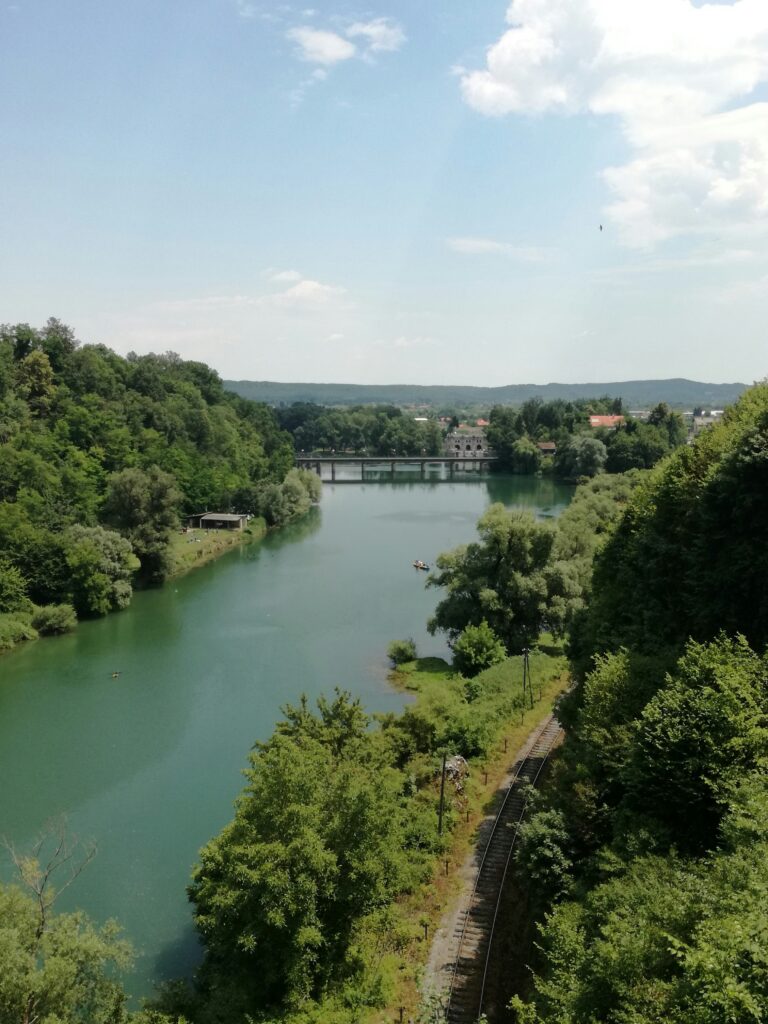
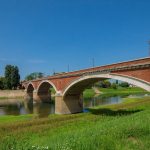
Spanning 296 kilometres, the Kupa is the longest Croatian river that stretches its entire length through the territory of Croatia, and the only one to have such a mysterious source. Its source, protected and declared a natural monument, is located in the Risnjak National Park, near the town of Razloge. At one point in history, it was the division between Croatia and Slovenia, and near Karlovac it is joined by the waters of the Dobra and Korana, which had previously merged with the Mrežnica. Its more significant tributaries are the Odra and Glina. Near Sisak, it flows into the mighty Sava, the longest river in Croatia. It enriches the Sava with an average of nine billion cubic metres of water each and every year.
a snowy start
Sometimes it is referred to as “the river that connects karst and Pannonian Croatia”, and as it passes through different landscapes and changes its appearance and character, it becomes very diverse. At its very source, it is a mountain river packed with rapids and waterfalls. Later on, it turns into a real lowland river. It’s also interesting that, although it is born no more than 30 kilometres from the Adriatic Sea, it “decided” to flow much further from it.
The fascinating story of the Kupa begins, of course, at its source, which is considered one of the most mysterious sources in all of Croatia. It is also one of the most powerful, it never dries up, and of course, it is simply beautiful.
The Kupa is a Croatian river that has anything but a typical source. It’s nothing like the kind you would first imagine. It is located at the foot of 100-metre-high rocks, in fact, it is a lake that is 200 metres long and 50 metres wide. It is a stunning turquoise colour, and is located at 321 metres above sea level. It is assumed that it is fed by Risnjak itself, or rather the snow that falls up there.
an unsolved mystery…
The Kupa has been under protection since 1963. It is often referred to as the unsolved mystery of the karst because the depths at which the river originates have still not been precisely determined. It’s known that it originates from two separate channels, one of which is 80 metres deep and the other 57. These two channels are, as has been confirmed, connected. However, the final depth of the source of the Kupa, in which the water temperature ranges from five to six degrees Celsius, has not yet been determined.
The Kupa is the third longest river in all of Croatia, after the Sava and the Drava. There are many points of interest along its long and fascinating course. We’ve already mentioned Karlovac, Croatia’s city on four rivers. The Kupa is also a symbol of Ozalj, with Brod na Kupi being named after it. This location is considered to be the starting point for exploring its valley, the famous Butterfly Valley. It is called that because it is home to as many as 500 species of butterflies.
There are also very many beautiful viewpoints along the Kupa. The views of the Kupa canyon from Orlova stijena and Severina na Kupi are particularly noteworthy. The Kupa also flows near Kamanja and along the Vrlovka cave, while the legendary Munjara hydroelectric power plant, one of the oldest in all of Croatia, is located in the aforementioned Ozalj. The banks of the Kupa also stand out for their beauty and accessibility from the Slovenian side, where it is known as the Kolpa.