October the 4th, 2026 – The ten-year Copernicus Marine analysis has found some very concerning changes to Croatian waters, some of which are now deemed irreversible.
The tenth edition of the Copernicus Ocean State Report (OSR10), published on the 30th of September 2026, summarises a decade of systematic monitoring of the oceans and European seas (Grégoire et al., 2026). Morski reports that among the exceptional events of 2024, the report also highlights the Adriatic Sea. This analysis presents what the report says about the Adriatic, how these findings fit into changes across the entire Mediterranean, and what they mean for sea monitoring and management. It is based on the report summary (Mercator Ocean International, 2026) and on chapters published in the State of the Planet series.
croatian waters and the wider mediterranean context
The Mediterranean Sea is warming significantly faster than the global average: its surface temperature rose by 0.32 ± 0.01 °C per decade in the period 1982–2024, while the global sea surface temperature is rising by 0.12 °C per decade (EU Space Programme, 2026; Mercator Ocean International, 2026). In 2024 the Mediterranean recorded the highest number of marine heatwave days in the last two decades, regardless of the detection method, and average temperatures were 1.23 °C above the baseline (Fernández-Álvarez et al., 2026). The most extreme conditions were recorded in the eastern Mediterranean. Sea level is not rising uniformly: decade-long trends differ between the western and eastern basins (Borile et al., 2026), and among the cities for which the summary shows changes over the last decade are Venice and Trieste in the northern Adriatic.
The Adriatic is the northernmost and shallowest part of the Mediterranean and is therefore highly sensitive to influences from the land. Limited water exchange, strong land–sea connectivity and high anthropogenic pressure make it vulnerable to disturbances (Coll et al., 2010, according to Krauzig et al., 2026). Along the north-western coast the Po and numerous smaller rivers flow into the sea, bringing freshwater rich in nutrients. This water is mainly transported southwards along the Italian coast by the Western Adriatic Current (Cozzi and Giani, 2011).
five episodes of surface freshening
Krauzig et al. (2026) analysed high-frequency measurements from two autonomous meteo-marine stations – the Fortunae buoy near Fano and the Meda station near Senigallia – as well as data on precipitation and river discharges, satellite images and Copernicus Marine Service products. In the period from May 2023 to November 2024 they identified five separate freshening episodes lasting from 12 to 53 days, with salinity drops of 6.7 to 20.1 g kg⁻¹.
Table 1. Surface freshening episodes in the northern Adriatic, 2023–2024 (according to Krauzig et al., 2026)
The first episode is particularly illustrative because salinity fell from 36.19 to 23.42 g kg⁻¹ in just 13 days. The most extreme was the fifth, in which salinity decreased from 35.09 to 14.97 g kg⁻¹ in 10 days – the most intense freshening in the entire series. The authors distinguish episodes driven by prolonged, abundant inflow (the first) from those with a faster and sharper drop (the second and fourth). This points to the dual sensitivity of the basin: to sustained meteorological pressure and to sudden, short-lived hydrological extremes.
Figure 1. Salinity drop during the fastest freshening by episode (according to Krauzig et al., 2026)
a mix of causes…
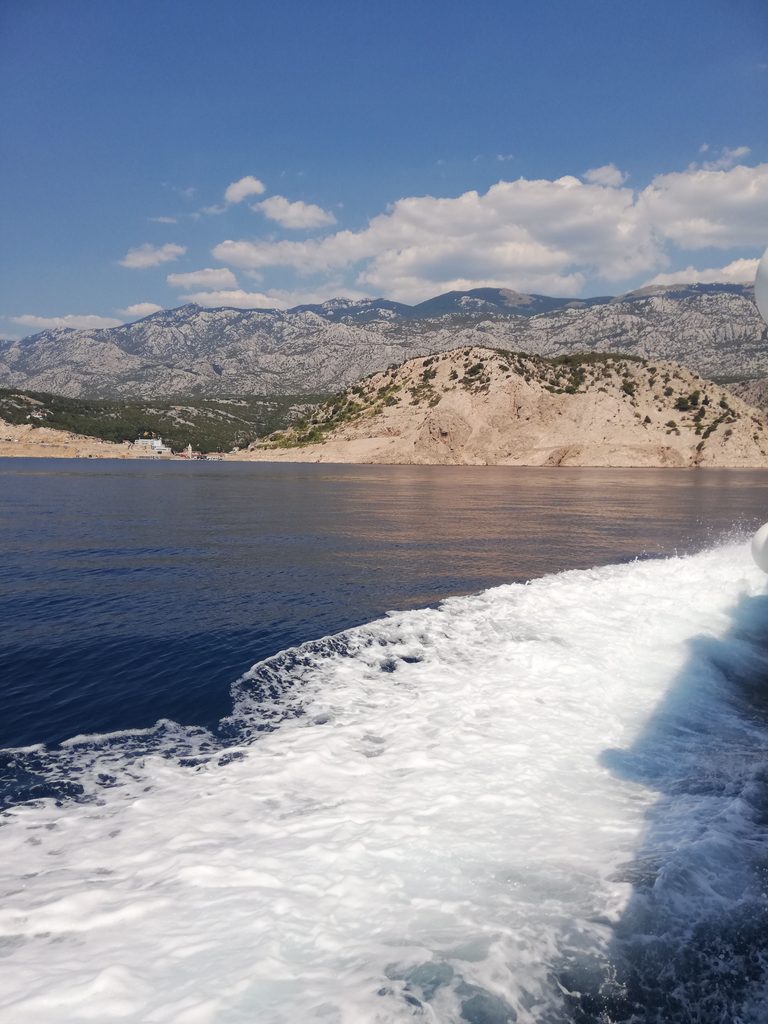
The first freshening was linked to a series of five rainy episodes in the Emilia-Romagna region from 1 to 24 May 2023, which culminated in catastrophic floods. Storm Minerva (from the 16th to the 18th of May) brought more than 300 mm of precipitation near Forlì – more than five times the monthly climatological average. Interestingly, the Po remained well below its average discharge during that period, at around 2,000 m³ s⁻¹, because the most intense rainfall did not affect its main catchment, while smaller rivers such as the Lamone, Savio and Reno exceeded historical flood levels. The second episode was probably caused by local convective storms in the Marche region, and the third by prolonged rainfall in November and early December 2023, when up to 383 mm of rain fell in the Parma Apennines. The fourth was triggered by an unusual spring storm in April 2024, with 70 to 80 mm of lighter but persistent precipitation.
Autumn 2024 brought a new series of extremes. Storm Boris (17–20 September) dumped around 300 mm of precipitation in eastern Emilia-Romagna, and on the 18th and 19th of October a new storm caused record discharges of all major rivers; the Po’s discharge reached 7,880 m³ s⁻¹. The authors interpret this as a sign of a pronounced hydrological recovery after a prolonged drought, and the transition from drought to water abundance is precisely the key difference between 2023 and 2024. Statistically significant links between accumulated precipitation and river discharges (p < 0.05) show time lags of 6 to 120 hours: small rivers with short catchments, such as the Rubicon, respond almost immediately (r = 0.74; lag 6 h), while larger catchments, such as the Adige, respond with a delay (r = 0.71; lag 36 h). Such findings fit the concept of “precipitation whiplash” – sudden transitions between dry and wet extremes (Tan et al., 2023).
the ecological consequences
Every freshening triggered a pronounced biogeochemical response. After the first episode turbidity averaged around 70 NTU for more than a month, with chlorophyll-a above 10 µg L⁻¹, reflecting the simultaneous inflow of sediment and nutrients. Back in June and July 2023 turbidity exceeded 200 NTU and chlorophyll-a 30 µg L⁻¹, and mucilaginous macroaggregates – gelatinous accumulations associated with warm, stratified and nutrient-rich conditions – were observed (Arrighi and Domeneghetti, 2024). Such phenomena impair seawater quality and threaten mariculture and tourism. The second episode shows that even smaller convective systems can stimulate biological productivity without a large sediment input: turbidity remained low, while chlorophyll-a and oxygen saturation, which reached around 150 %, rose almost simultaneously (r = 0.77). The strongest response was recorded after the fifth episode, when chlorophyll-a exceeded 60 µg L⁻¹ with unusually low turbidity. The authors interpret this as the sediments from the Po having probably settled or dispersed before reaching the stations, while nutrients continued to be transported, and favourable light conditions enabled increased primary production. In the summers of 2023 and 2024 the sea surface temperature exceeded 30 °C, accompanied by extensive accumulations of mucilaginous aggregates (Krauzig et al., 2026). An independent chapter by Di Biagio et al. (2026) confirms this picture with a model and satellite approach: in spring and autumn 2024 the northern Adriatic was marked by anomalous eutrophication, and chlorophyll concentrations in early spring 2024 were more than twice the usual average (Mercator Ocean International, 2026).
significance for croatian waters
Three limitations should be taken into account when interpreting the findings. First, the measurements come from two points along the western (Italian) coast and cannot be mechanically transferred to the entire basin. Second, the estimate of freshwater inflow of around 42.5 m³ h⁻¹ per metre of coastline for the first freshening is based on a simplified salt mass balance and is more suitable for comparing orders of magnitude than as an estimate of total discharge. Third, this is a period of only two years, so long-term trends cannot be derived from it: the events are an indicator of the basin’s vulnerability, not proof of permanent change (Krauzig et al., 2026).
For the Croatian coast, where tourism, mariculture and fisheries are of great economic importance, the key question is the extent to which such events are reflected on the eastern Adriatic. The report does not answer this directly: the observations are limited to the Italian coast, and the current cited by the authors transports freshwater southwards along the western coast. Effects in Croatian waters therefore cannot be assumed, but must be verified by continuous observations and domestic research of our own.
this reports conclusion for croatian waters
The central message of the report is that knowledge about the ocean needs to be turned into action through three levels: monitoring, forecasting and planning (Mercator Ocean International, 2026). The Adriatic example illustrates all three. Relatively inexpensive autonomous stations with high sampling frequency recorded sudden changes that satellite and reanalysis fields would have captured only partially, so the authors recommend including such observations in Copernicus and other databases. Coastal forecasting models are important for monitoring land–sea dynamics (Di Biagio et al., 2026); this is also confirmed by the Baltic example, in which a forecasting system accurately predicted a record drop in sea level three to four days in advance (Tuomi et al., 2026). For planning it is important that, according to the IPCC Sixth Assessment Report, heavy precipitation and river flooding will become more frequent and intense when the global temperature exceeds 1.5 °C, and small catchments such as those along the north-western Adriatic are considered particularly vulnerable by the authors (IPCC, 2023, according to Krauzig et al., 2026).
The Adriatic, primarily its shallow northern part, shows how complex events – from sudden alternations of drought and floods through freshening and stratification to phytoplankton blooms and mucilaginous aggregates – form a cause-and-effect chain with direct consequences for seawater quality, mariculture and tourism. At the same time, the limitations of the available data remind us that systematic and openly accessible observations from both sides of the basin are needed for a reliable assessment of the state of the entire Adriatic, including the Croatian coast.