
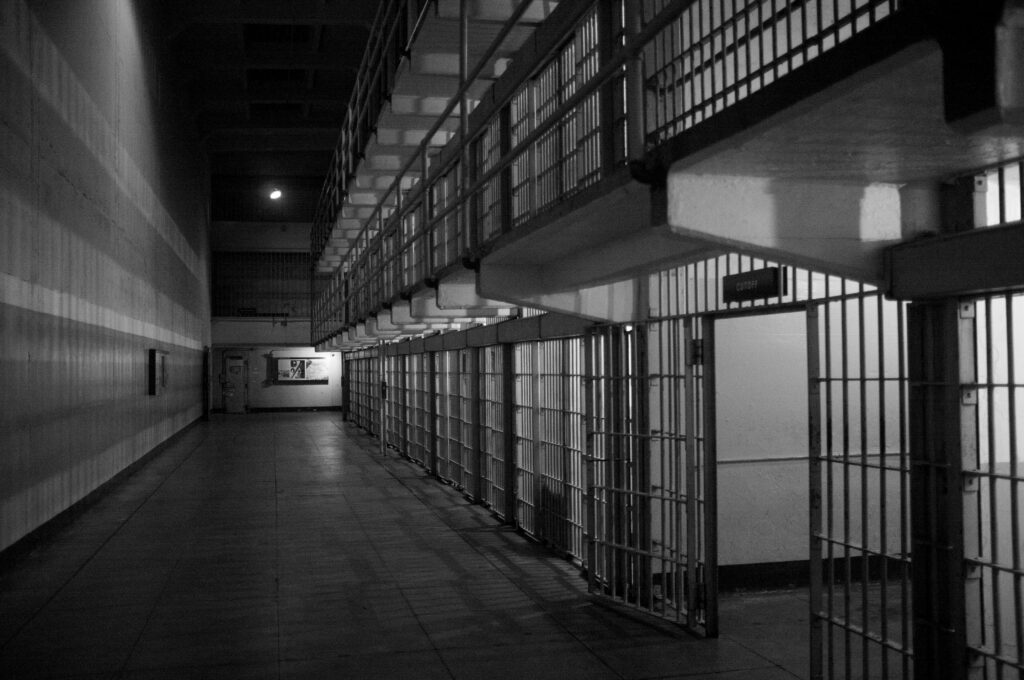
October the 10th, 2026 – The Croatian Helsinki Committee for Human Rights has warned that Croatian prisons are too overcrowded.
Index reports that the aforementioned committee has said that Croatian prisons and penitentiaries and called for greater use of alternative sanctions, conditional release and other measures that would reduce the number of people behind bars. The HHO states that it is increasingly receiving complaints from prisoners about lack of personal space, hygiene, healthcare, the conduct of individual officials and an ineffective complaints system. “The central problem, overcrowding, turns into a chain of other violations: lack of personal space, impaired hygiene and privacy, more difficult healthcare, a higher risk of violence, limited opportunities for work and education,” the HHO said.
some croatian prisons have an occupancy exceeding 200%
The problem of overcrowding in Croatian prisons is also confirmed by official data. According to the latest report of the Ombudsperson, at the end of 2025 the Croatian prison system was 126 percent full, meaning that there were 1,033 more people in prisons and penitentiaries than the existing accommodation capacity. The situation is even worse in closed conditions, where occupancy reached 142 percent. The prison in Osijek was at 205 percent of capacity, Karlovac at 195 percent, Varaždin at 191, Zadar at 188, Dubrovnik at 184, Zagreb at 180, Rijeka at 159, and Split at 151 percent. The Council of Europe, according to data for the beginning of 2025, ranked Croatia among European countries with serious prison overcrowding, with 123 prisoners for every 100 available places.
The Ombudsperson particularly warns that frequent ordering of investigative detention contributes to overcrowding. At the end of last year, investigative detainees accounted for as much as 41 percent of all persons in Croatian prisons and penitentiaries. During the whole of 2025, 16,797 people passed through the prison system. The European Committee for the Prevention of Torture, after its visit to Croatia in 2022, concluded that overcrowding is a serious problem, especially in investigative detention and closed departments, and recommended wider application of alternative sanctions, electronic monitoring and probation.
issues with mould and healthcare
The HHO states that prisoners report unhygienic sanitary facilities, showers without partitions, damp, mould, poor ventilation, pests, lack of hygiene supplies and high temperatures. A particular problem, the HHO claims, is healthcare. Complaints relate to long waits for doctors, dentists and specialist examinations, as well as a shortage of doctors, nurses and psychiatrists. The HHO also reports complaints about insults and belittling of prisoners, routine use of restraints during transport, and responses to their complaints that they describe as delayed and formulaic. These are claims from the complaints received by the HHO, and it does not follow from the statement itself that every individual allegation has been independently verified.
the european courts are concerned
The HHO also recalls the judgement of the European Court of Human Rights in the case of Muršić v. Croatia. The Grand Chamber of that court found that in multi-occupancy cells less than three square metres of personal space per prisoner creates a strong presumption of a violation of the prohibition of inhuman or degrading treatment. In the specific case the Court found a violation of the European Convention during 27 consecutive days in which the prisoner in Bjelovar prison had less than three square metres of space.
The HHO therefore calls on courts, when circumstances and risk assessment allow, to more frequently use alternatives to prison. It particularly proposes that persons punished for misdemeanours and those with sentences of up to one year should not be sent to prison if the prescribed conditions are not ensured for them. For persons serving sentences of up to two years, the HHO demands that after serving at least half of the sentence it be individually checked without delay whether they meet the conditions for conditional release or a milder form of serving the sanction. “Imprisonment must be a measure of last resort, and not an automatic response to lighter criminal offences, misdemeanours or circumstances in which the purpose of sanctioning can be achieved without placement in an overcrowded prison system,” the HHO said.
The HHO also claims that the National Preventive Mechanism for the Prevention of Torture “does not function in practice” and calls for greater and more transparent involvement of human rights associations. The National Preventive Mechanism operates under the Ombudsperson and during the year visits prisons and other places where persons deprived of liberty are held. It is precisely through this mechanism that the Ombudsperson, in the latest report as well, established that overcrowding remains one of the greatest problems of the system. The HHO concludes that a lack of space, staff or money cannot be a justification for conditions that may cross the boundary of permissible punishment and become degrading or inhuman.