November the 8th, 2026 – For the first time, Filipinos have overtaken Nepalis as foreign workers in Croatia, according to the latest data issued by the Interior Ministry (MUP).
It’s important to bear in mind that the mentioned data doesn’t show how many foreigners overall are actually working in Croatia, but how many work permits have been issued to them. Vedran Salvia reports for Index that these statistics are also influenced by legal changes that have enabled the issuance of permits for three years instead of one. Despite that, some trends are quite interesting.
According to MUP data, in the first nine months of 2026, 18,712 residence and work permits were issued to citizens of the Philippines, which is 46.1 percent more than in the same period last year, when 12,809 were issued. At the same time, the number of permits issued to citizens of Nepal fell from 24,948 to 17,386, or by 30.3 percent. An even larger drop was recorded among citizens of India, to whom 7,734 permits were issued, which is 37 percent less than in the same period last year, when 12,274 were issued. Filipinos already last year overtook Indians in the number of permits issued, and this year the difference between them has further increased.
filipinos overtook nepalis, but workers from bosnia and herzegovina and serbia still dominate
Citizens of Bosnia and Herzegovina and Serbia are still at the top in the number of residence and work permits issued in Croatia. In the first nine months of 2026, 22,565 permits were issued to BiH citizens and 19,886 to Serbian citizens. Nevertheless, a drop was recorded in both groups compared to the same period last year, by 12.4 percent for BiH citizens and 4.5 percent for Serbian citizens.
Although workers from neighbouring countries are still the most numerous according to the number of permits issued, in this analysis we particularly focused on changes among citizens of Asian countries, primarily the strong growth in the number of permits for Filipinos and the drop for Nepalis and Indians.
construction declines but hospitality and tourism rises
The largest number of work permits in the first nine months of 2026 was issued in tourism and hospitality – a total of 48,156, which is 5.1 percent more than in the same period last year. In construction 32,701 permits were issued, or 18.5 percent less than last year. The drop is even more pronounced compared to 2024, when 55,507 permits were issued in that activity. In two years their number decreased by 41.1 percent. Industry is also recording a drop, with 15,121 permits issued, as well as transport and communications with 7,853 permits. At the same time the number of permits in trade rose to 7,752, which is 13.5 percent more than last year.
a drop in the number of permits issued doesn’t mean a drop in foreign worker numbers
In Croatia from January to the end of September this year 124,023 residence and work permits were issued, which is 8.9 percent less than last year and 21.9 percent less than in 2024. Particularly pronounced is the drop in the number of permits for new employment, of which 101,841 were issued in 2024, and this year 48,847, or as much as 52 percent less. However, as we mentioned in the introduction to the text, the number of permits issued was primarily influenced by the amendments to the Law on Foreigners that entered into force in March 2025. They enabled the issuance of residence and work permits for a maximum of three years, instead of the previous one year. The amendments to the law enabled foreign workers under certain conditions to change employers without issuing a new work permit, because of which such changes are not recorded in the statistics of permits for new employment.
That a drop in the number of work permits issued does not necessarily mean a reduction in the number of foreign workers is also shown by data from the Croatian Pension Insurance Institute (HZMO). At the end of September 2024, 123,836 insured persons from third countries, i.e. countries that are not members of the European Economic Area or Switzerland, were recorded in Croatia. A year later there were 138,114 of them, and at the end of September 2026 146,307. That is 5.9 percent more than last year and 18.1 percent more than two years ago.
Interesting are also the data according to the countries from which the workers come. At the end of September this year 19,978 insured persons with Philippine travel documents were recorded, as much as 44 percent more than a year earlier. At the same time the number of insured persons with Nepalese travel documents fell by 2.5 percent, to 23,787, and those of India by 4.7 percent, to 10,729.
These data confirm that the number of Filipino workers in Croatia is indeed growing strongly, while the number of Nepalis and Indians is decreasing, but significantly more mildly than could be concluded from the statistics of work permits issued.
Although HZMO data give a different picture of the movement in the number of foreign workers from the statistics of permits issued, the fact is that significant changes are also recorded according to them, especially the strong growth in the number of Filipinos. We spoke with economic analyst Predrag Bejaković about the reasons for these changes. “It’s merely a matter of a reshuffling of the entire European labour migration system. After the pandemic several new destination ‘poles’ emerged, and Croatia is one of them, along with Portugal, Lithuania, Romania and Hungary,” Bejaković explains.
croatia was the top destination for nepalis in 2023
“However, back in 2025 the number of first employment permits issued to those workers in Croatia decreased, while the largest share of those permits was issued in Romania. Thus Nepalese workers are increasingly directing themselves towards Romania, and Indian workers towards Portugal, which in 2025 became their leading destination in the EU. Croatia is thereby competing with other countries for the same workers and is no longer the only ‘new’ destination,” he says.
croatia is the second favourite country in the eu for filipinos
Among the reasons for the changes Bejaković singles out stricter conditions for employing foreign workers, competition from other European countries, and the attitude towards foreigners and the lack of an integration policy in Croatia. With Filipinos, Bejaković explains, a more orderly employment system plays an important role. In 2024 Croatia signed a memorandum of cooperation with the Philippines in the field of the labour market, and Philippine institutions strongly regulate the employment of their citizens abroad. According to the analysis Bejaković is working on, Croatia in 2025 became the second most frequent destination for Filipino workers in the European Union. He emphasises that according to the Eurostat category of first work permits Hungary is in the leading place.
why has the number of permits issued for construction decreased?
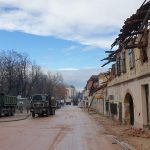
To the question of how much these changes are connected with demand in individual activities, he replies that sectoral demand plays an important role, but that the drop in the number of permits issued cannot be directly equated with a drop in the need for workers. “The drop in construction could partially be connected with changes in the intensity of structural reconstruction after the earthquake and the dynamics of the investment cycle financed by EU funds, including funds from the National Recovery and Resilience Plan. Workers on the reconstruction of buildings damaged by the earthquake received permits without a labour market test and without the opinion of the Croatian Employment Service. If the scope of those jobs is decreasing, the need for employment through that special procedure is also decreasing,” he explained.
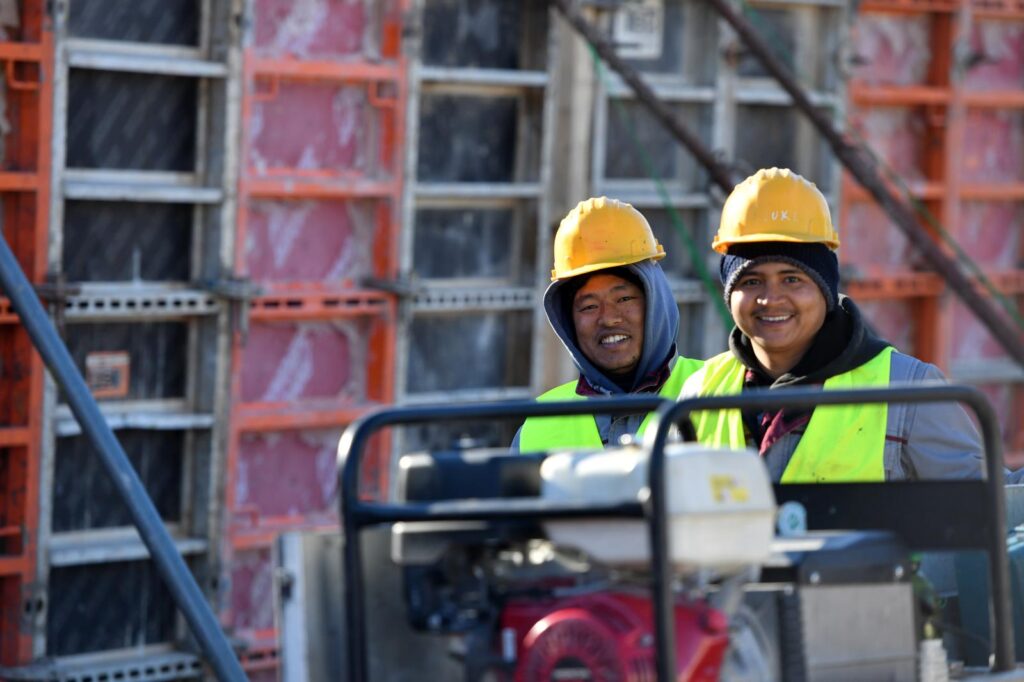
Bejaković says that in practice differences can be observed in the employment of Filipinos and Nepalis according to activities, but that more precise data are lacking for reliable conclusions. He notes that employment in tourism and hospitality is facilitated for Filipinos by knowledge of English, experience in those activities and developed employment channels. Nepalis, on the other hand, he says, more often came for physically demanding jobs, so a reduction in demand in construction could more strongly affect their employment.
the influence of legal amendments
As for the influence of the amendments to the Law on Foreigners on the statistics of permits issued, Bejaković explains that two waves of legal changes need to be distinguished, from March 2025 and June 2026.
“Part of the drop is statistical, and not real. If a permit lasts three years instead of one, there is no annual extension so fewer permits are issued for the same number of people. The same applies to a change of employer: a worker who is already here changes jobs with a notification and confirmation, and not with a new permit for new employment. The new law additionally facilitates this. A change of employer is no longer tied to the same occupation, and is possible after six months with the first employer instead of after a year. The drop in the number of permits for new employment therefore does not mean that the number of foreign workers has fallen by that much,” he says.
stricter rules for croatian employers themselves
Bejaković emphasises that the second part of the drop in the number of permits issued is real and intentional, that is, a consequence of stricter conditions for employers, including a minimum inflow of money into the account, a prescribed ratio of domestic and foreign workers, and a check of whether they are actually performing the registered activity. Thereby, according to his words, fictitious employers and part of the agencies were removed from the system. “Can that explain the differences between Nepalis and Filipinos? Partially. Stricter conditions most affect the agency model and smaller employers, and they were precisely the main channel for Nepalese workers in construction. The Filipino channel, with the memorandum and more orderly employment, more easily passes the new procedure,” he says.
the future of employing foreign workers in croatia
Speaking about the future of employing foreign workers in Croatia, Bejaković expects a smaller inflow of new workers, but also a more stable structure, with a larger number of those who will stay longer in the country, change employers and gradually integrate. He adds that the need will not disappear because the demographic picture is relentless. “The long-term question is the sustainability of a model based on low-skilled and temporary work. If we want foreign workers to permanently fill the demographic gap, the focus must shift from the speed of issuing permits to integration, language, housing and the protection of workers’ rights,” he concluded.