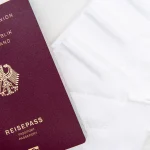

November the 28th, 2026 – The government may be full of self-praise because Croats are leaving Germany, but it doesn’t necessarily mean they’re returning to Croatia. In addition to that, the way Croatia and Germany deal with statistics is very different.
About ten years after the major wave of Croatian emigration to Germany, the migration trend has become more blurry. Slobodan Muftic reports for Index that the data from the German Federal Statistical Office (Destatis) show that from the beginning of January to the end of September this year, 7,012 Croatian citizens moved to Germany, while 16,955 left the country. A closer look at the statistics, however, shows that the reason is not so much a mass return of Croats from Germany as the fact that fewer and fewer of them are going there.
Destatis records that in the pandemic year 2021, 28,457 Croatian citizens moved to Germany, while last year the figure was only 11,352. At the same time, the number of Croatian citizens leaving Germany has for years ranged between 22,000 and 25,000. The negative migration balance is therefore increasing primarily because Germany is attracting fewer and fewer new Croatian immigrants.
not all of them are going back to croatia
“As soon as an economic crisis and existential uncertainty appear, people who are not permanently emigrated return. The European Union no longer needs as much labour, because the European economy is currently not particularly prosperous. These are normal and expected fluctuations. In any case, it is obvious that the major emigration wave from Croatia has been stopped,” academic and demography expert Anđelko Akrap explained.
But who are the people actually leaving Germany today? Are working-age people and families with children who emigrated after Croatia’s accession to the European Union returning to Croatia, or primarily members of older generations of emigrants after retirement? And how many of them choose life in a third country instead of returning to Croatia? “According to Eurostat data for 2024, of the total number of Croatian citizens who left Germany, almost 80 percent were aged 15 to 64. Around ten percent were persons aged 65 and over, and the same proportion were children under 15,” said Monika Balija Vincek, assistant professor at the Croatian Studies.
It would be premature to conclude that all of the almost 17,000 Croatian citizens who left Germany this year returned to Croatia. Although Croatian data also confirm that the migration trend has reversed, our Central Bureau of Statistics (DZS) records significantly different figures from the German Destatis.
differences in the methodology between german and croatian statistics
For example, according to German statistics, last year 20,504 people moved from Germany to Croatia, regardless of citizenship, while Croatian statistics recorded only 9,628 arrivals from Germany, of whom 8,334 were Croatian citizens. Part of these differences stems from different methodology. German statistics record registrations and de-registrations of residence regardless of its duration, while Croatian statistics, based on data from the Ministry of the Interior, cover persons who change their country of residence for at least one year.
As such, a Croatian citizen who every year goes to Germany for several months of work and then returns can regularly appear in German but not in Croatian statistics. Furthermore, some Croatian citizens live and work in Germany for years without ever having de-registered their residence or reported a temporary departure abroad to the Croatian Ministry of the Interior. When such persons return to Croatia, it is possible that their return is not administratively recorded at all.
“Given that German statistics record the departures of Croatian citizens regardless of the country of destination, we cannot calculate how many of them returned to Croatia and how many went to other countries. Likewise, among the mentioned 8,334 Croatian citizens who moved to Croatia there may also be persons who moved to Croatia for the first time, so it is not necessarily a matter of 8,334 returnees,” explains assistant professor Balija Vincek.
not all of them have any intention of going back to croatia
Some Croatian citizens are probably moving from Germany to Austria, Switzerland, Bosnia and Herzegovina or other countries. Special account should be taken of Croatian citizens originating from BiH who went to work in Germany with Croatian documents but never lived in Croatia. Their return to BiH is recorded as the departure of Croatian citizens from Germany.
Demographer and university professor Tado Jurić, in his July analysis for Večernji list, warns that the increasing number of departures of Croatian citizens from Germany does not necessarily mean a mass return to the homeland. He claims that two-thirds of returnees do not end up in Croatia but, after Germany, continue their lives in other European countries. At the same time, the number of new emigrants from Croatia is decreasing, mainly due to exhausted migration potential. In his opinion, the period of mass one-way emigration has ended and a period of multi-directional migrations is beginning.
eurostat’s data makes it even less convincing
“From Eurostat data for 2024 it can be inferred that among Croatian citizens who have been leaving Germany in recent years, the old gastarbeiter generations do not predominate. According to the results of our recent survey of more than 600 Croatian citizens in Bavaria and Baden-Württemberg, among respondents who had already taken steps towards returning to Croatia, almost 70 percent had moved to Germany in 2014 or later,” emphasises assistant professor Monika Balija Vincek. An interesting insight into the reasons for the return of Croats from Germany is also provided by Balija Vincek’s research published in 2023 in the Croatian Geographical Bulletin. It covers nine returnees aged 28 to 41 who spent between two and six years in Germany.
“i’ll go back to germany again if i need to”
Eight of them had planned a return even before leaving Croatia, and five returned after achieving the goal for which they had emigrated – raising enough money to buy property, repay a loan or start their own business. The remaining four cited attachment to family and friends in Croatia, dissatisfaction with life in Germany and difficulties integrating into the local society as the main reasons for return.
It is particularly interesting that eight of the nine respondents did not rule out the possibility of going abroad again if economic conditions in Croatia forced them to do so. Although it is a small and non-representative sample, the research points to problems with housing policy, job insecurity and living standards in Croatia, as well as the fact that the return of emigrants does not necessarily have to be permanent. “In the conversations I had with returnees from Germany, some mentioned that because of potentially unfavourable conditions on the labour market and an unsatisfactory standard of living in Croatia they would again consider leaving, and more recent research also highlights difficulties upon return or after return. We know, therefore, that for some a new departure is still a possibility, but for now we do not have data on how many of them actually leave again,” Balija Vincek said.
Or as one of the respondents in the research, then a 41-year-old who returned and opened a craft business in Croatia, explained: “I went to Germany to repay a loan, so if the same thing happens again, I will definitely go abroad again.”