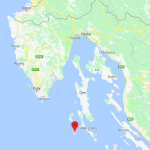
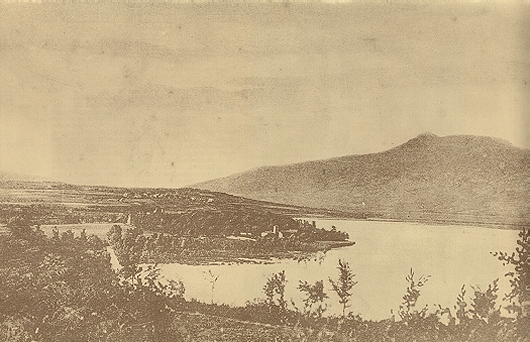
July the 10th, 2026 – Croatia is full of waterways and lakes, but there used to be more than there are today. Čepić is a name you might not have heard, as it’s a formerly huge Croatian lake that disappeared…
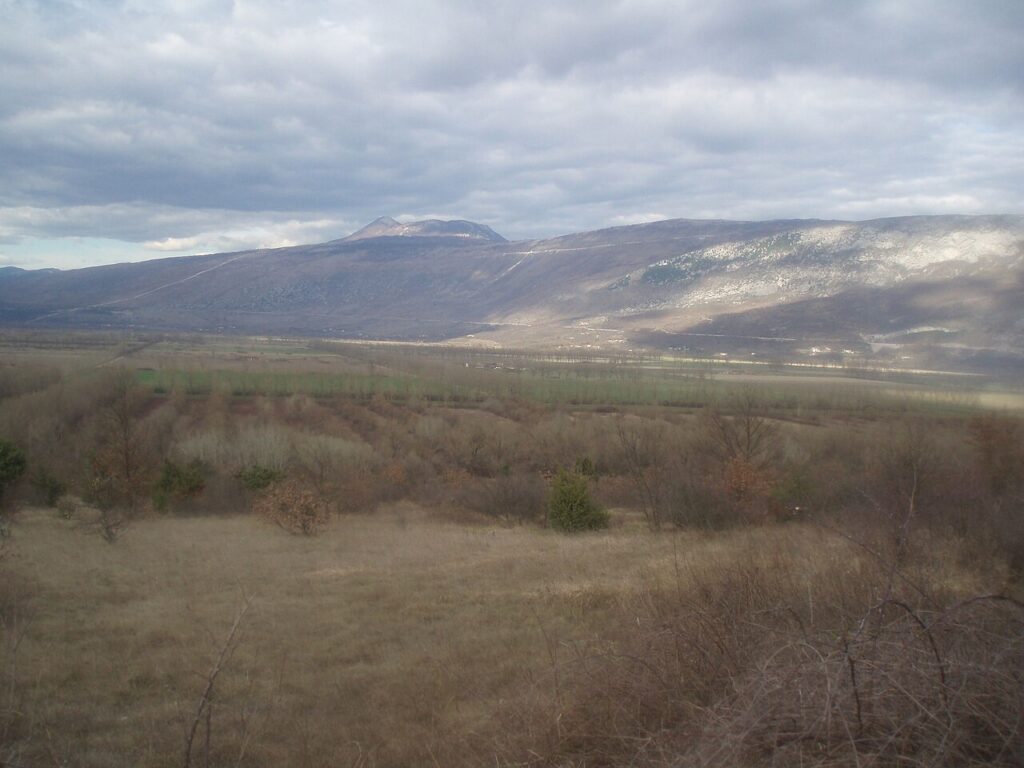
In the modern day, it looks like another ordinary agricultural landscape. It’s typically Istrian. Farmers work the fields, roads cross the valley, and most visitors driving through the area would never guess that a large lake once covered this entire stretch of land.
However, deep beneath the fields of the Čepić Valley (Čepićko polje) lies the story of one of Istria’s biggest environmental transformations, the disappearance of Čepić Lake, a body of water that existed for centuries before being drained in the 20th century.
one of istria’s largest natural lakes… gone forever
Before it became farmland, Putni kofer writes that Čepić Lake was one of the largest natural lakes in all of Istria. Depending on rainfall and water levels, it covered between approximately five and nine square kilometres, with depths reaching several metres. The shallow lake was surrounded by reeds and wetlands, and it was home to fish, birds and other wildlife. For local communities, however, the lake also brought serious challenges. The marshy environment was associated with malaria-carrying mosquitoes, and the area’s stagnant waters were considered a major health problem at the time.
The transformation began with one of the most ambitious engineering projects in Istria’s long history. A drainage tunnel was constructed to carry the lake’s water from Čepić Valley toward Plomin Bay and the Adriatic Sea. The tunnel, completed in 1932, was around 4.2 kilometres long and allowed the lake to gradually empty.
The project required years of work and hundreds and hundreds of workers. It completely changed the landscape, a lake that had shaped local life for generations slowly disappeared, leaving behind fertile land that could be cultivated. When the final waters drained away, the bed of the former lake was transformed into agricultural fields.
from fishing to farming

Čepić Lake vanishing also ended a traditional way of life, as many lived by, from and alongside this Croatian lake that eventually disappeared forever. For countless centuries, fishing had been an important economic activity in the area, with the lake providing fish for nearby communities. After the drainage, fishermen disappeared and agriculture replaced fishing as the main use of the land. The former lake bottom eventually became known as Čepić Field, a landscape where crops, roads and settlements now exist where boats once travelled and fishing lines once shone in the sunlight.
istria’s forgotten landscapes and water sources

Today, the story of Čepić Lake is almost invisible unless you know where to look. The valley gives few clues that it was once covered by water. There are no docks, no beaches and no lakefront villages, only farmland and memories preserved in historical records. Yet the landscape remains a reminder of how dramatically humans can reshape nature. A place that was once a lake became farmland. A wetland became a field. And one of Istria’s largest bodies of water became a forgotten chapter of Croatian history.