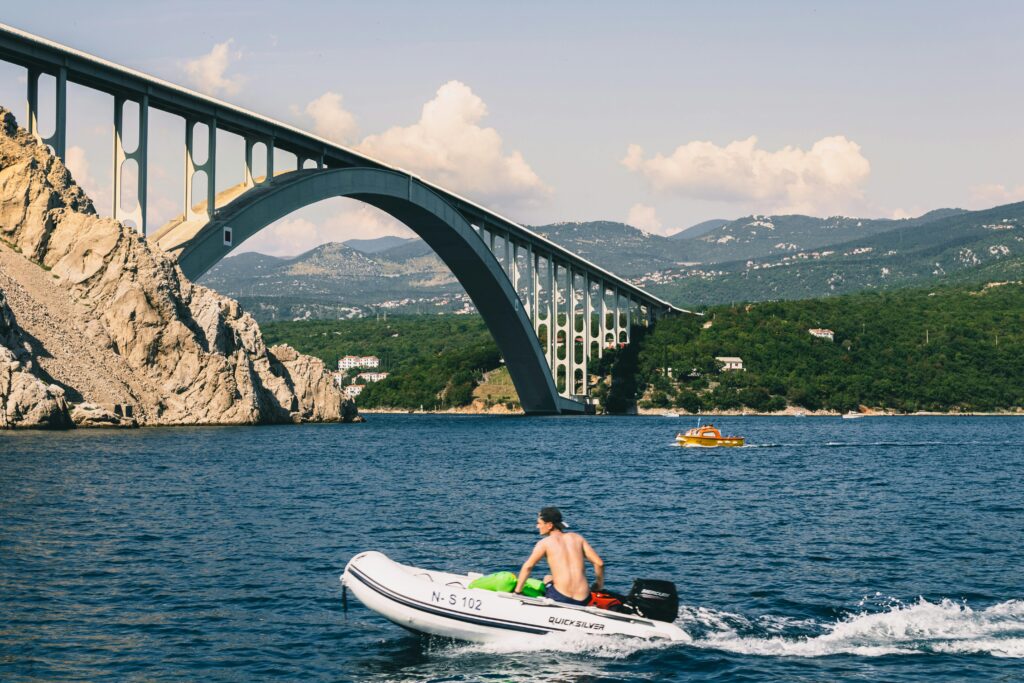
May the 23rd, 2026 – Krk Bridge isn’t exactly a bridge you’d consider to be massive or particularly amazing in the modern day, but once upon a time, it was the envy of Europe.
When it opened back in 1980, the spectacular bridge connecting the island of Krk to the mainland was not only one of the biggest infrastructure projects in the former Yugoslavia, it was also one of the largest concrete arch bridges on Earth at the time. Now very controversial, it was widely known at the time as “Tito’s Bridge (Titov most).” The huge structure immediately attracted international attention and became a symbol of engineering ambition on the Adriatic coast.
Over four decades later, the Krk Bridge remains one of Croatia’s most recognisable infrastructure landmarks and one of the defining gateways to the Adriatic islands.
Before the bridge was built, access to Krk depended entirely on ferries. As tourism and economic development accelerated during the second half of the 20th century, pressure grew for a permanent connection between the island and the mainland. Construction began in the late 1970s, and the bridge officially opened in July 1980. At the time, the project was viewed as an extraordinary engineering achievement due to both its scale and the difficult Adriatic conditions in which it was built.
one of the world’s largest concrete arch bridges
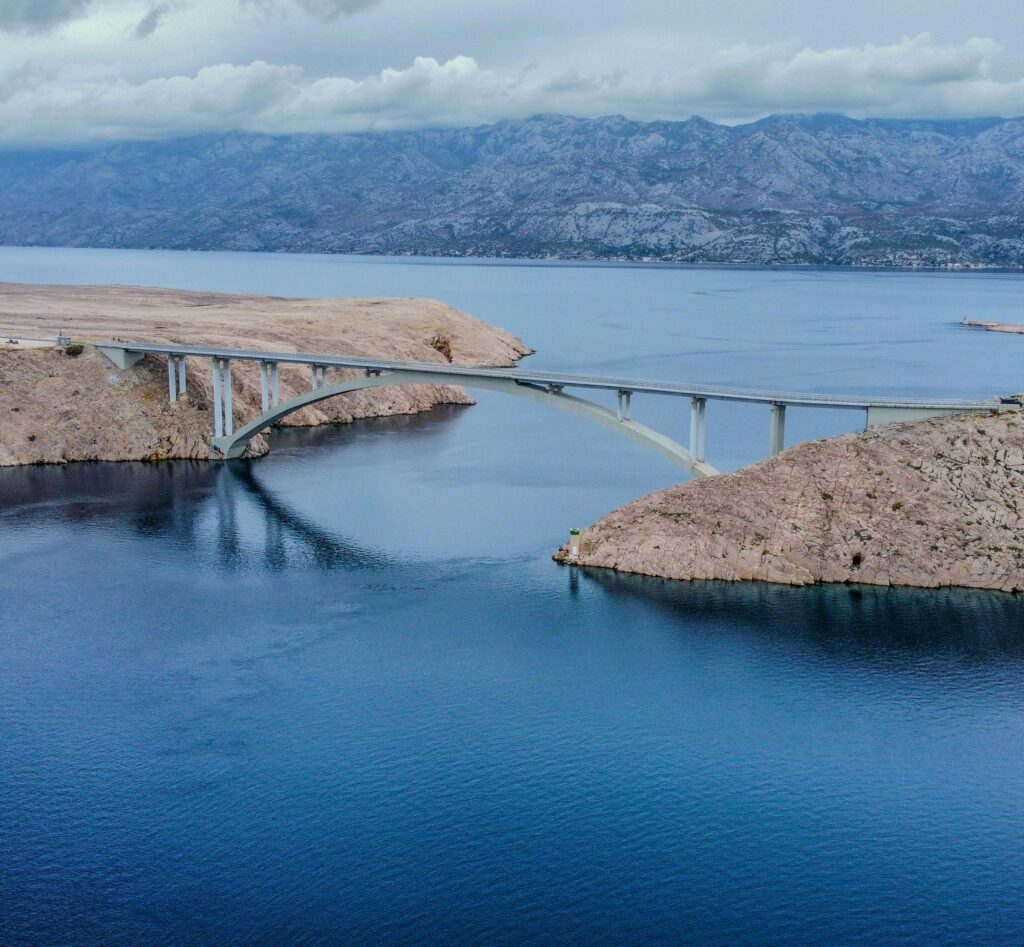
The bridge immediately gained international recognition because of its enormous reinforced concrete arch. Its main arch span measured 390 metres, making it briefly the largest concrete arch bridge in the world when completed. Engineers and architects across Europe closely followed the project, and the bridge became widely admired as an example of advanced Yugoslav engineering and coastal infrastructure design. For many years, it remained among the largest structures of its type anywhere in the world.
During the Yugoslav period, the bridge was commonly referred to as Tito’s Bridge. The name reflected the era’s tendency to associate major infrastructure projects with the state and its leadership. Although the official name later changed to Krk Bridge following Croatian independence, older generations across the region still occasionally refer to it by its former nickname, though they may now do so under their breath.
built to survive the adriatic’s wild winds
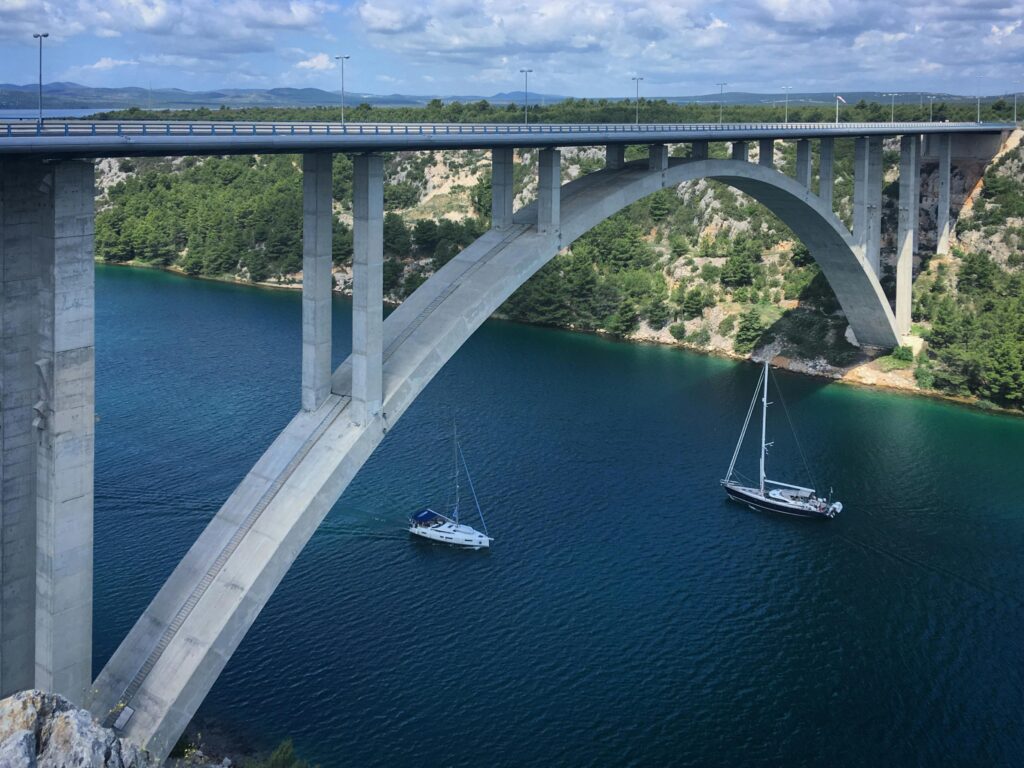
Constructing such a large bridge across the Adriatic was not only a technical challenge because of size, but also because of weather. The area is famous for strong bura winds, which can become extremely dangerous and regularly affect traffic even today. Engineers therefore had to design a structure capable of handling severe wind conditions while maintaining long-term stability over sea and rock foundations. The result was a bridge that became both functional infrastructure and a symbol of engineering resilience.
Naturally, the impact on the lives of the residents and visitors of Krk was enormous. Permanent road access accelerated tourism, trade and population movement between the island and mainland Croatia. Krk quickly became one of the Adriatic’s most accessible islands, helping drive economic growth and making it a major tourism destination. Krk Bridge also strengthened connections to nearby Rijeka and the wider Kvarner region.
Today, millions of vehicles cross the bridge every year, especially during summer when traffic toward the Adriatic coast intensifies. For many travellers, crossing the bridge marks the symbolic beginning of an island holiday. Its dramatic position above the sea, combined with the surrounding rocky landscape, continues to make it one of the most photographed infrastructure sites in Croatia.
What makes the Krk Bridge especially interesting is that it has outlasted the ultimately failed political system that built it – Yugoslavia. Originally constructed during socialist Yugoslavia as a showcase infrastructure project, it remains one of the most important transport links in modern Croatia. Its history therefore reflects both engineering ambition and the broader political transitions of the region over the past half century.
more than just another crossing
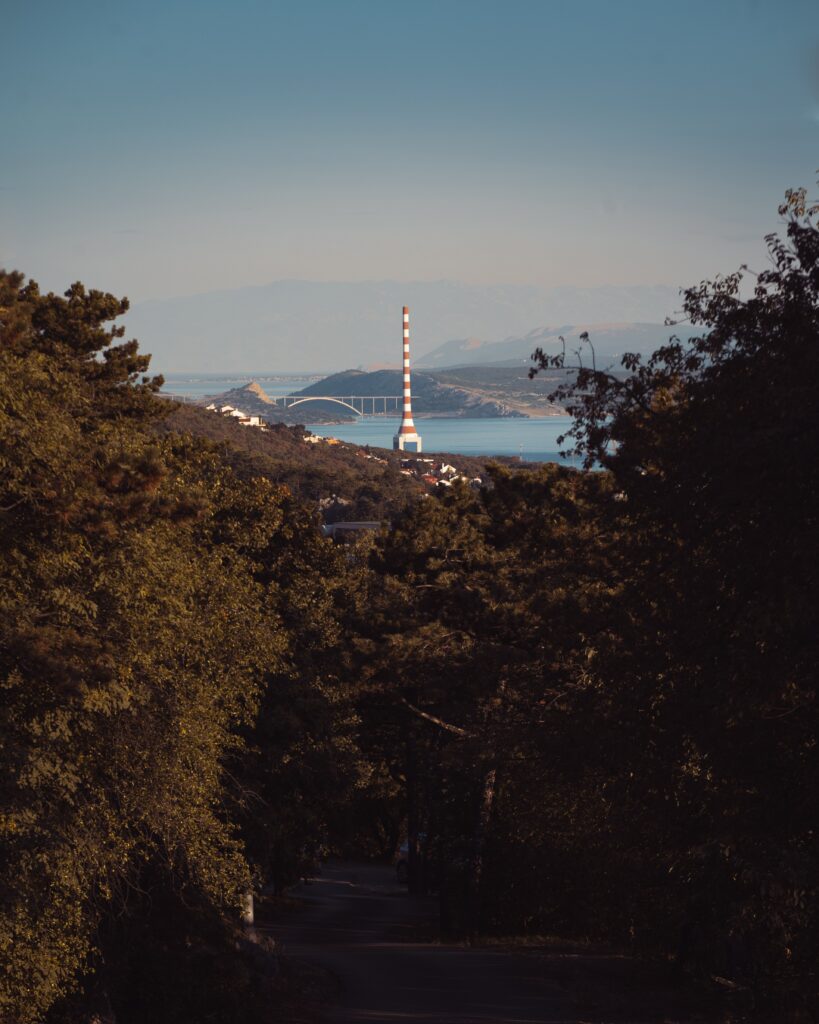
Krk Bridge is now so familiar that many drivers cross it without thinking twice, but when it opened, Europe saw it as one of the world’s most ambitious concrete bridge projects and a symbol of Croatian modernisation. Even decades later, the massive arches rising above the sea still carry some of that same sense of scale and ambition to all who cross it.