
August the 14th, 2026 – Should Croatia send out SRUUK messages to tourists before danger strikes? With more and more incidents of mountain, sea and other rescues taking place, some believe the country be doing more to warn visitors of potential risks.
Four Portuguese nationals recently went missing at sea after strong bura winds took control of their 1.5 metre inflatable boat. Index reports that this is one incident in an increasingly long list of issues that take place every single summer. From flip flop-donning “hikers” on Biokovo to people trying to cross the Adriatic to Italy on an inflatable flamingo, there’s never a drama-free tourist season in this regard.
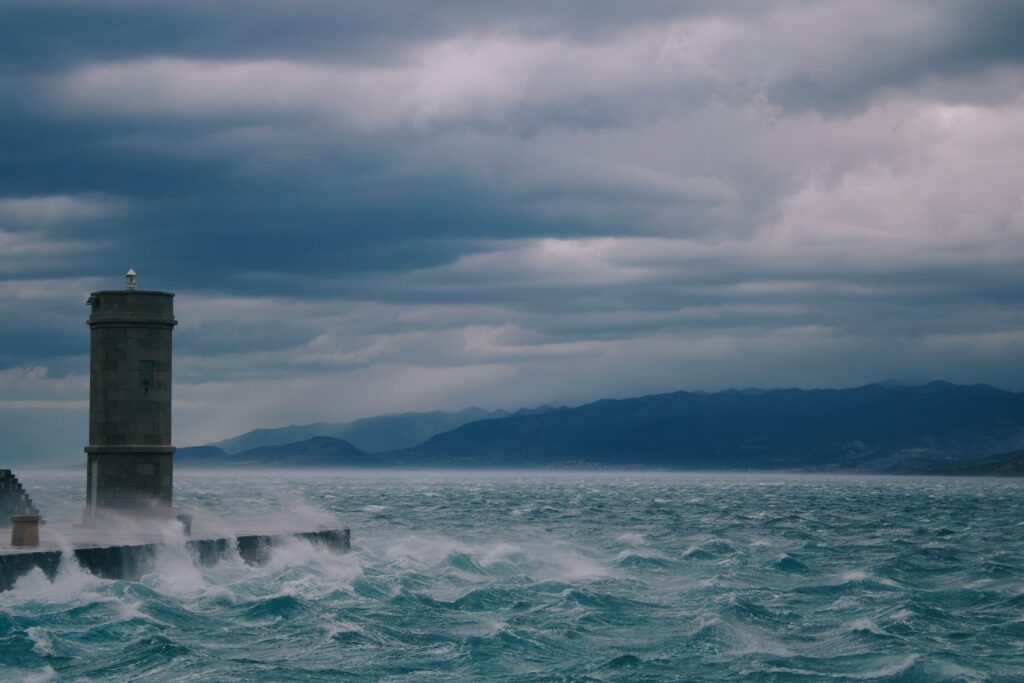
The question for some is whether Croatia could be doing more, such as sending out SRUUK messages to tourists about specific dangers they may face during their stay. The latest case of the Portuguese tourists being swept away has once again raised the question of how well tourists are actually warned about the dangers of a strong and stormy bura. This is especially true in the area of the Velebit Channel, where rescue operations for people blown away from the shore by the wind are commonplace during the season.
sruuk messages specifically for bura winds
A similar case occurred at the end of July, when the bura carried a foreign national on a SUP board from Karlobag across the Velebit Channel all the way to Pag. After a multi-hour night-time operation, the Croatian Mountain Rescue Service (HGSS) found him uninjured on an inaccessible part of the Pag coast.
Because of the frequent occurrence of such cases, an inquiry was sent to the Ministry of the Interior, which is responsible for Civil Protection, asking why warnings about a strong and stormy bura on the Adriatic are not sent to citizens and tourists via the Early Warning and Crisis Management System (SRUUK). The ministry was also asked whether the introduction of such warnings is being considered, when they could start being sent, and whether there are any obstacles that prevent strong and stormy bura from being among the events for which citizens receive SRUUK messages.
From the response of Civil Protection it follows that Civil Protection itself doesn’t actually decide whether an SRUUK message will be sent due to a severe weather issue. They explained that the sending of SRUUK messages is regulated by the Ordinance on the procedure for early warning of the population.
warnings for severe weather events
“The early warning of the population is the provision of timely and useful information on the basis of which the competent institutions mobilise communities and individuals exposed to dangers to take measures to avoid or reduce risks and to carry out timely preparations for an effective response to threats,” they replied.
Information for early warning is collected by institutions responsible for meteorology, hydrology and flood defence, fire protection, seismology, ionising radiation, public health and geology. Operators of facilities with hazardous substances and hydro-accumulations, inspection services and scientific institutions also participate in the system. These institutions use their websites, social media channels, the traditional media and other methods as the basic channels for warnings so that the information can reach citizens as quickly as possible. Data on immediate danger are also forwarded to the Civil Protection Directorate.
who can actually issue a sruuk message urgently?
The Ordinance defines the persons who can decide to initiate the procedure for sending an SRUUK message, depending on the type of danger. In the case of floods, the decision is made by the chief flood defence manager or a person authorised by him, and in the case of large-scale fires by the chief fire commander or an authorised person.
For natural disasters and severe weather warnings, which include dangerous weather phenomena such as a strong and stormy bura, the decision is made by the director of the Croatian Meteorological and Hydrological Service (DHMZ) or a person authorised by him. In the case of a threat from military means, the decision is made in accordance with the Defence Act, while in the case of an immediate terrorist threat or other security reasons of a larger scale the decision is made by the chief police director or a person authorised by him.
There is also the possibility of activating the system due to an extraordinary event in the area of a particular county, city or municipality. In that case, a request with the text of the message can be submitted to the competent county 112 centre by the head of the civil protection headquarters of the local or regional self-government unit affected by the event, or a person authorised by him.
Civil Protection therefore emphasises that SRUUK is not an institution that assesses whether citizens should be warned, but a technical system by which the decision of the competent body is transmitted to people in the threatened area. “From all of the above it is clear that SRUUK is only an information tool by which early warning messages are sent to all mobile devices located in the area that the decision-maker has designated as threatened,” they state.
After receiving the decision, the Civil Protection Directorate enters the message composed by the decision-maker and sends it via mobile operators to users in the designated area.