
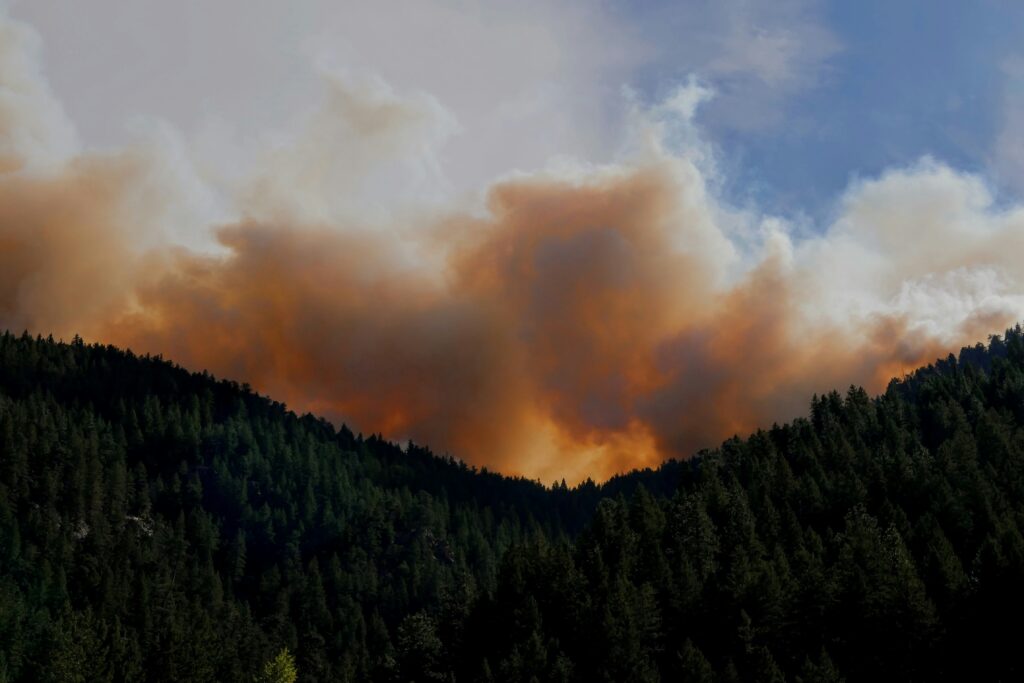
August the 28th, 2026 – A fire has been burning for 10 days straight in the Konavle hills in the extreme south of Croatia, having spread from neighbouring Bosnia and Herzegovina.
In the very far south of Croatia, right next to the border with Montenegro, fires that spread from the territory of Bosnia and Herzegovina have remained active for the tenth day already. Index reports that Canadair aircraft are also participating in the firefighting in Konavle, and around 50 firefighters are on the ground every day. Difficult terrain, months-long drought and wind are making extinguishing harder, while residents have been waking up to the stench of smoke for days now.
Inaccessible terrain is complicating the work of the present firefighters, whose top priority is to keep the fire away from any houses. “We successfully defended the houses and pushed the fire back up into the hills. Now we’re monitoring it and hope we can catch up with it. Two days ago we followed it for 10 kilometres, and the Canadairs helped us. We go to every open flame and every place that is still smoking, because if a firefighter hasn’t passed through, it isn’t classed as extinguished. The Canadair helps significantly and reduces the flames, but if the firefighter’s boot and water don’t arrive, the fire will continue to burn and spread,” said Nikša Miletić, commander of the Dubrovnik Intervention Fire Unit.
on duty 24 hours per day
In the small villages of Stravča and Njivice, residents continue to watch the flames with uncertainty and hope for rain, which has not fallen at all for three months now. “It’s extremely hard to breathe, there’s a lot of smoke. It’s uncertain whether it will become dangerous for houses, people and livestock,” said a resident of Stravča. “In the morning it’s terrible, you can’t breathe because of the smoke. Luckily the firefighters are extinguishing the flames, but the hill has been completely burned. Those who have livestock now have no pasture to put them in,” added a fellow villager. Canadairs have been flying over this whole area for days, and a large number of firefighters have been on the ground almost without a break ever since the fire on Pelješac broke out.
“On such a large area, 50 people have to be engaged every day. We’re on duty 24 hours a day because that is the only way to try to deal with this. This is a very serious fire, and the area from Molunat to Cavtat is covered in smoke every single morning. Today, even the area around the airport was unrecognisable,” said county fire commander Stjepan Simović.
bosnia and herzegovina didn’t request the help of croatian canadairs
The fires in the Konavle hills and the general area of Župa dubrovačka spread from neighbouring Bosnia and Herzegovina, which is located within a mere few miles. “The first fire on Ivanica started on the 18th of August and lasted until the 24th of August. There was only one day when we weren’t up there. That one is now under control, and colleagues from Ravno have remained on duty. We do hope it stays that way,” said Štefi Bogdan, commander of the Župa Dubrovačka volunteer fire department. Simović explained that at no point did a request for the assistance of Croatian Canadairs arrive from Bosnia and Herzegovina, which is why the spread of the fire was inevitable. “According to my information, they didn’t submit a request from either side in Bosnia and Herzegovina, so our Canadairs were unable to operate. That isn’t usual, especially with fires like these. It should have been reacted to earlier,” Simović explained.
The biggest problem now can be created by the problematic Dalmatian winds, primarily the bura. Firefighters hope to bring the fire under control soon, but there is still a lot of work to be done on the ground.