August the 18th, 2026 – Despite the focus constantly being on this country, it seems that there’s been higher price growth in Greece, Spain and Cyprus than in Croatia.
As Jadranka Dozan reports for Poslovni, Croatian prices in tourism had risen to 95 percent of the EU average by 2024, but last year they grew faster in the rest of the EU. That brought Croatia back below 90 percent of the average. This means that Croatia currently remains among the more expensive destinations in the Mediterranean, but the direction of price competitiveness is also important to note.
Growth rates in hospitality and accommodation signal that our price competitiveness is roughly the same as last year. State statisticians confirmed the preliminary estimate of July inflation from two weeks ago: prices of goods and services for household personal consumption fell for the third month in a row on a monthly basis (by 0.2 percent in July) and slowed their annual growth. The annual rate was reduced to 3.9 percent, and this slowdown is the result of current pressures and base effects that are particularly pronounced in food prices (the increase in July last year). According to the harmonised index (HICP), which also includes the consumption of foreign tourists and is used as a measure of inflation in comparisons with other EU members, the annual price growth slowed from 4.2 to 3.6 percent.
Besides the fact that we are no longer at or near the very top of the Eurozone ranking, inflation in the rest of the zone accelerated slightly in July (from 2.8 to 2.9 percent), so the inflation gap has also narrowed; Croatia is now “only” 0.7 percentage points above the average.
price policies and adjustments

From the 1st of July to the 13th of August, hospitality turnover stood at around 1.32 billion euros, or 10.8 percent higher than last year, with 6.8 percent more invoices issued. Among the main groups of goods and services according to the CBS categorisation, seasonal discounts on clothing and footwear contributed most to the July monthly decline (prices fell 13%). The largest monthly increase is also seasonal in nature: in Restaurants and accommodation services, prices rose by an average of 3.4 percent in July after June’s +2.2 percent. On an annual basis they also accelerated growth, from 5.8 to 6.3 percent, but this is still lower than for total services, which are currently at +8.5 percent.
It is also worth noting that the average annual growth in prices in hospitality and accommodation in the first seven months was 6.2 percent compared with 8.9 percent in the same period last year. Moreover, compared with tourist competitors from the south of the EU, the annual growth of these prices in Croatia in the middle of the year (according to HICP, 4.9 percent) was lower than in, for example, Greece, Cyprus and Spain (8.9, 6.4 and 5.3 percent respectively). This could also be a signal that in terms of tourism price competitiveness, Croatia remains more or less holding last year’s positions relative to our main competitors.
After the price level of these services in Croatia rose from 84 to 95 percent of the EU average between 2022 and 2024, in the rest of the Union they grew faster in 2025, which brought us back below 90 percent (to 89.6) of the average of all member states. While all of the above does mean that Croatia remains among the more expensive destinations in the Mediterranean, the direction of price competitiveness is significant, as touched on previously.
higher turnover
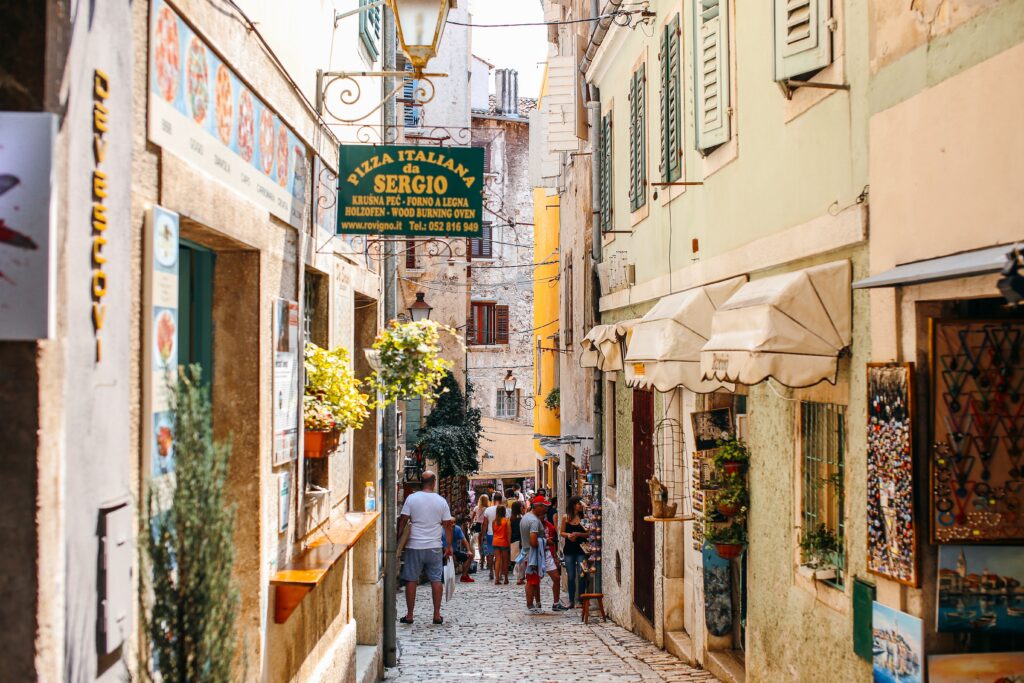
At the peak of the 2026 summer tourist season, fiscalisation data suggests some very solid indicators of turnover in final consumption. From the beginning of July to the 13th of August in cafes, restaurants and other forms of food and drink preparation and service across Croatia, 6.8 percent more receipts and invoices were issued than last year, while the 1.32 billion euros of recorded turnover means a nominal increase of 10.8 percent.
In the provision of accommodation in those just under a month and a half, 1.11 billion euros passed through fiscal cash registers, or 14.8 percent more turnover than last year, with 6.2 percent more invoices. The difference in percentage growth is partly attributed to price increases, but may also reflect a higher average number of overnight stays per invoice. At the same time, retail trade turnover in Croatia from the beginning of July to 13 August exceeded 4.43 billion, which is a year-on-year increase of seven percent, achieved on 3.1 percent more invoices issued.
The significantly smaller percentage difference between the number of invoices and turnover in retail reflects the slower growth in the prices of goods, including those that make up a significant part of tourist consumption. This is particularly true for supermarkets and hypermarkets or so-called non-specialised stores predominantly selling food, drink and tobacco. Thus, for example, prices of Food and non-alcoholic beverages after a slight June decline rose very little in July (by 0.4 percent), but in the annual comparison, after a slowdown in growth (to 1.4% in May and 0.8% in June), in July they were on average at approximately the same level as a year earlier or a symbolic 0.1 percent lower than in July 2025.