
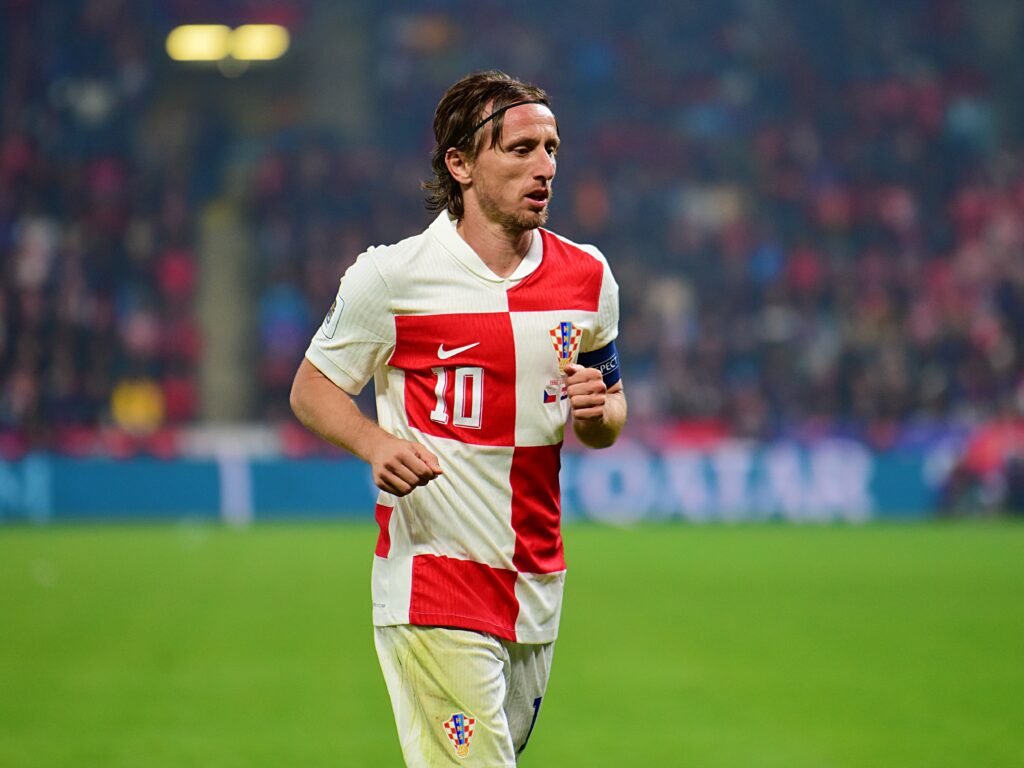
Celebrating 20 years of Luka Modrić in the Croatia shirt.
March 1st, 2006, was meant to be just a warm-up. A friendly between Argentina and Croatia to prepare for the upcoming World Cup in Germany.
Managers José Pékerman and Zlatko Kranjčar wanted clarity on who they could trust for the summer ahead, leaving little room for experimentation at Basel’s St. Jakob-Park. Still, there were two young names who needed to be tested.
Lionel Messi’s early debut for Argentina hadn’t gone to plan, but Pékerman stood by him, placing him centrally alongside Riquelme and Cambiasso.
Across from Messi that night stood another young hopeful — a boy from Zadar making his first appearance in Croatia’s red-and-white: Luka Modrić.
Kranjčar sacrificed defensive midfielders Ivan and Jerko Leko to give creativity a chance, handing the then-Dinamo Zagreb player a start beside Niko Kovač. The gamble paid off.
Though Messi got his first international goal, it was Modrić who left Basel victorious, with Croatia sealing a 3–2 win thanks to a late goal off Dario Šimić’s back. Modrić played 84 minutes, and by the final whistle, international media were already asking: Who is this Luka Modrić who moves and thinks like Johan Cruyff — even wearing his number 14?
Two decades later, that “Zadar Cruyff” is still here, still defining games on the biggest stages for both club and country. He’ll wear the captain’s armband again at the 2026 World Cup, where he’s expected to reach his 200th international appearance — a milestone achieved only by Cristiano Ronaldo and Kuwait’s Bader Al-Mutawa.
This space is too small to capture all that’s followed, but one thing is certain: March 1st, 2006, was Ground Zero for modern Croatian football. All because of one man — Luka Modrić.
Source: Zadarski List