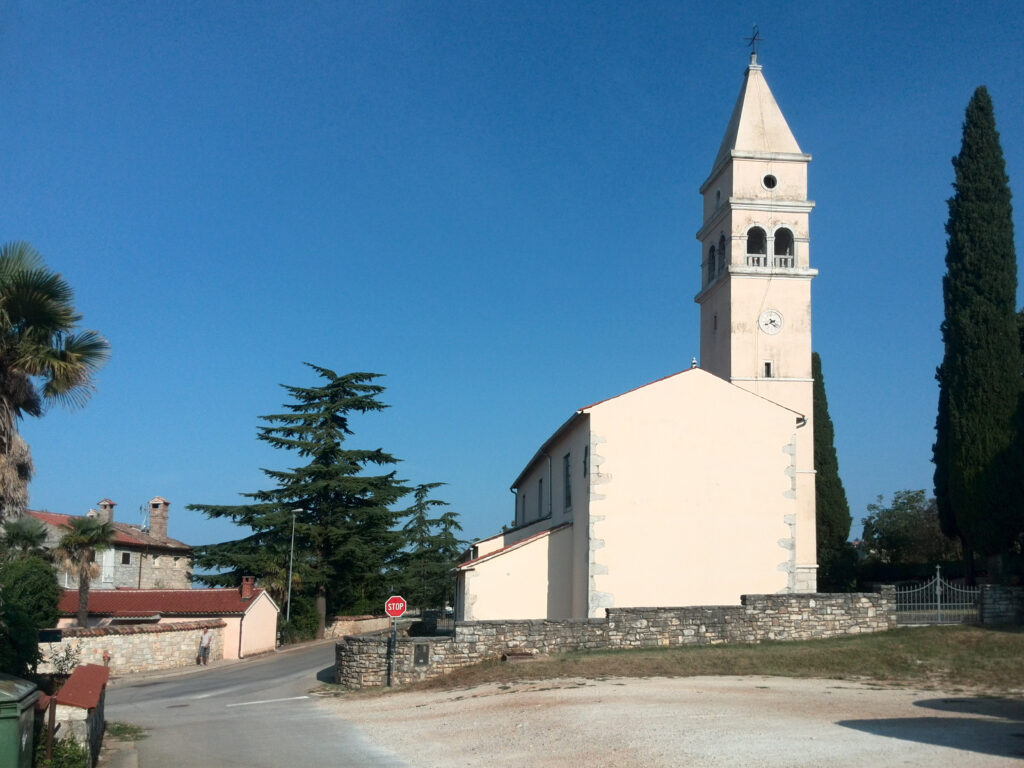
October the 23rd, 2025 – The UNWTO has included Kaštelir-Labinci in the top 52 Best Tourist Villages of 2025, shedding light on Croatian tourism far away from the typical bustling destinations we’ve become so used to.
As Poslovni Dnevnik/Ana Roksandic writes, the World Tourism Organisation within the United Nations (UNWTO) recently awarded 52 villages in the Best Tourist Village 2025 category. The charming Istrian municipality of Kaštelir-Labinci was among the winners for the most outstanding rural destinations. This is an overlooked municipality which, after participating in the upgrade programme since 2021, has further improved its sustainability and capacities for tourism development according to stringent UN guidelines.
“With this award, Croatia has once again confirmed its status as a country that successfully develops sustainable rural tourism, recognises the importance of preserving tradition and an authentic way of life, and at the same time improves the quality of life of the local population. Slunj won the same award back in 2023, which further confirms Croatia’s success in strengthening the international recognition of its rural destinations,” the ministry said.
The UN programme initiative, which brings together the best tourist villages, was launched back in 2021 with the aim of improving the role of tourism in rural areas, preserving landscapes, cultural diversity, local values and culinary traditions. Linda Grebac, Director of the Kaštelir-Labinci Municipality Tourist Board, said: “We’re very proud of this award, primarily because we’ve worked hard for four years now and have been in constant contact with the UNWTO. We’ve significantly enriched our tourist offer and added new tourist products. I’d specifically like to highlight Butiga, our local products store managed by the municipality where our local producers sell their products, which our guests all really like.”
Grebac also noted that they sell various products from local farmers, winemakers and olive growers, and they also have special offers. One such offer is that every Friday, two local producers present their products for free in Butiga and guests can also come and taste them for free.
“We consider this achievement an important incentive for the further implementation of the guidelines from the Strategic Marketing and Operational Plan of Croatian Tourism for the period 2023-2027, which pays special attention to the territorial dispersion of tourism demand and the valorisation of rural areas, i.e. the affirmation of authentic experiences. The promotion of rural tourism is aimed at strengthening local communities, preserving cultural heritage and developing innovative, authentic and sustainable tourism products,” emphasised Kristjan Staničić, Director of the Croatian National Tourist Board (HTZ).
Over 1,600 service providers in special forms of tourism operate in this country, of which around 70 percent are engaged in rural agri-tourism, according to an analysis carried out by the Croatian Rural Tourism Association (URTH). According to the analysis of this association, over 1,100 providers of such services are engaged in rural agri-tourism across Croatia. In the group of special forms of tourism, there are providers of services in cultural tourism, 176, adventure tourism 122, fishing 72, equestrian tourism 54, hunting 42 and health tourism 12. The majority are located across Istria County (196), followed by Dubrovnik-Neretva County (168), Osijek-Baranja County (95), Split-Dalmatia County (88) and Zagreb County (70). The least are in Lika-Senj County (11) and Virovitica-Podravina County (12).
“We still have a lot of untapped potential in Croatian rural tourism. At the same time, sometimes it seems to me that we’re attributing mythical abilities to tourism, although it would be worth discussing this professionally, I believe that not every village needs to develop tourism. Someone, after all, has to be involved in agriculture and some other activities,” said Damir Krešić, director of the Institute for Tourism.
Krešić also believes that areas such as eastern Croatia and Baranja, Slavonia and the Zagreb Ring are excellent for this type of tourism, and he had special praise for Istria County. “Istria is much more developed in terms of tourism than the rest of Croatia is, and some of the things they’re doing there today, other regions will only do in five or ten years,” concluded Krešić.