
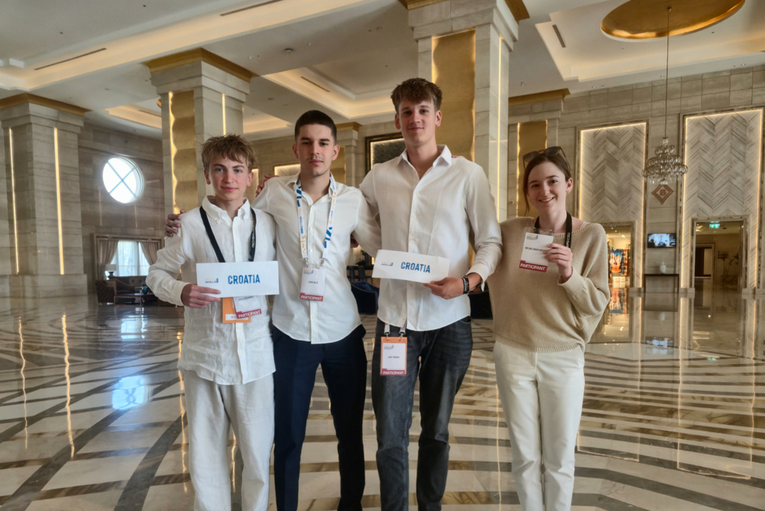
June the 12th, 2026 – A group of Zagreb students have taken Croatia to the Egyptian capital of Cairo as education looks beyond the confines of a classic classroom.
A group of students from Europska gimnazija Zagreb returned from Cairo this week after representing Croatia at one of the region’s largest education forums. While that is all well and good, it seems that the much bigger story may be what their experience says about the changing role of education as a concept itself.
From the 2nd to the 6th of June, a group of Zagreb students and representatives of the school took part in the international TechSkills Forum in Cairo. Index reports that the event brought together various education ministers, schools, experts, and students to discuss how education should evolve in an era increasingly shaped by artificial intelligence and rapid technological change. Croatia was represented alongside delegations from across Europe and the rest of the Mediterranean region.
Despite the increasingly controversial topic of a AI being one of the headline subjects, the participants repeatedly returned to a different conclusion: technology alone will not define the future of education. The discussions focused instead on the skills considered hardest to automate, critical thinking, communication, creativity, adaptability, leadership, and the ability to work across cultures.
For the Croatian students involved, the forum was designed as more than a study trip. According to accounts from the school, students participated directly in workshops, presented ideas publicly, collaborated with international teams, and engaged with peers from different countries and educational systems. Organisers and school representatives described the experience as part of a broader effort to prepare students not simply for exams, but for participation in an increasingly international world.
One initiative emerging from the event drew particular attention: the concept of creating AI-powered “cultural ambassadors”, where students would train digital tools using knowledge of their own national traditions, language, food, and cultural identity — combining technology with heritage rather than treating them as opposing forces.
The idea reflects a wider debate taking place across Europe. As schools race to respond to AI, many education systems are asking whether success will come from teaching more technology, or from strengthening the human skills that technology cannot replace. For Croatia, that conversation arrives at a particularly important moment.
The country continues to grapple with demographic challenges, international competition for talent, and questions about how to prepare younger generations for careers that may not yet exist. International forums such as Cairo increasingly serve not only as networking events, but as testing grounds for what future education models might look like.
For the students who travelled to Egypt from Zagreb, the lesson may ultimately have been simpler than any policy discussion. That even a school from a very small European country can take part in shaping conversations that increasingly affect classrooms everywhere.