May the 23rd, 2026 – Mljet is a Croatian island with another island inside it, not to mention a beautiful 11th century monastery you can visit in mere minutes.
Croatia is home to 1,000+ islands (depending who you ask, as some may say they’re not all technically islands, but I digress), and each of them has its own character. Singling out one or two worth visiting is a total waste of time, as each and every one of them is deeply special in its own right. There are a few, however, that really do stand out for being something so unusual that you’d rarely find anything remotely like them anywhere else.
an unusual geological formation

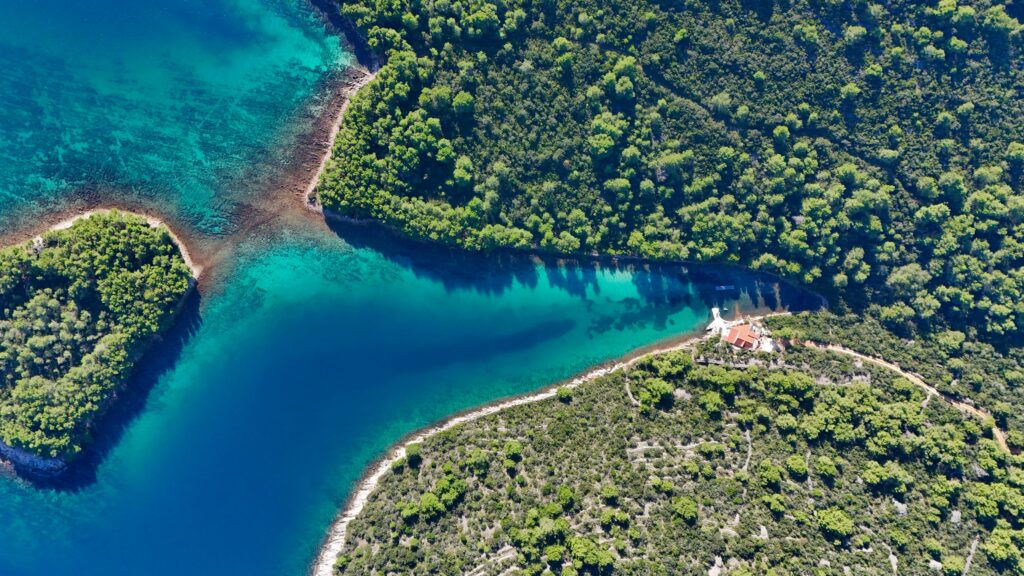
One particularly geographical and historical curiosity is the Croatian island that has yet another island inside it, all of which can be explored in just a few minutes on foot or by boat. This beautiful but frankly odd site combines unusual natural formation with one of the Adriatic’s lesser-known monastic histories, including a monastery dating back to the 11th century.
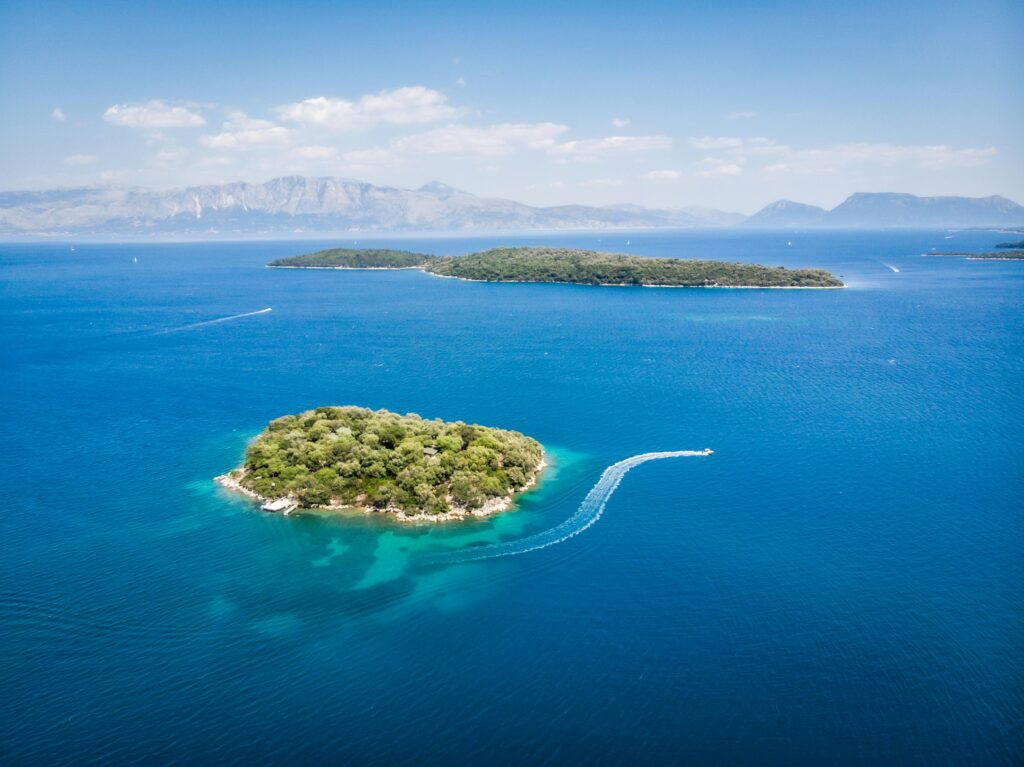
Mljet, or Melita, if we’re being historically accurate, is part of Croatia’s dense network of more than a thousand Adriatic islands, many of which hide unusual natural formations and historic sites. In this case, the key curiosity is simple but striking: a smaller island sits within a sheltered bay or lagoon-like formation on a larger island, creating the impression of an “island within an island.” Because of the short distances involved, visitors can circle the area in just a few minutes, making it one of the most compact yet unusual island experiences in Croatia.
an 11th century complex as a witness to the past
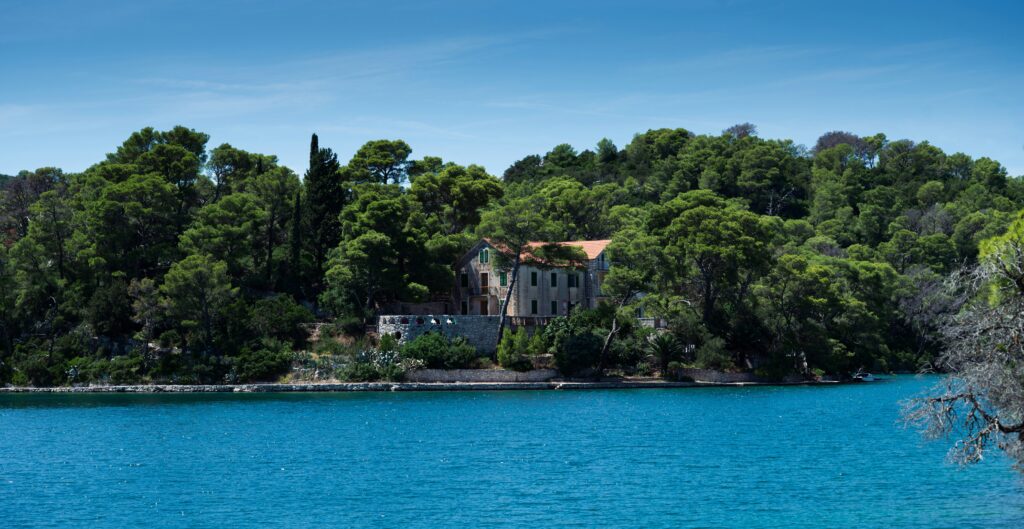
At the centre of the site is a monastic complex believed to date back to the 11th century, reflecting the long tradition of religious settlement across the Adriatic. Throughout the tumultuous and mostly dark Middle Ages, small monastic communities were often established on remote or semi-isolated islands as places of retreat, prayer and agricultural self-sufficiency. These sites later became important cultural and spiritual centres, preserving manuscripts, religious artefacts and local knowledge through centuries of change in the region.
Like many Croatian island monasteries, the site reflects a lifestyle built around isolation and self-sufficiency. Monks and religious communities typically relied on fishing, small-scale agriculture and limited contact with the mainland, creating tightly controlled micro-communities shaped by geography. The result today is a landscape that feels unusually peaceful and preserved, with stone buildings, coastal vegetation and quiet walking routes.
One of the most surprising aspects of the location is how quickly it can be explored. Unlike many historic island sites that require long hikes or complex travel, this one can be experienced in just a short visit, making it accessible even for day-trippers moving between nearby coastal towns. Despite its simplicity, the combination of unusual geography and deep historical roots leaves a strong impression on visitors.
The site also fits into a broader pattern seen across Croatia’s Adriatic coastline, where small islands frequently host monastic communities. Similar examples include places like Visovac Island and Košljun Island, both of which preserve centuries of religious and cultural history in isolated island settings. This tradition reflects how geography shaped spiritual life along the Adriatic, where isolation was not a limitation but a feature.
an overlap of history, geography, religion and nature
Croatia’s very many beautiful islands are often associated with beaches and summer tourism, but sites like this reveal a different dimension of the Adriatic. Here, geography, religion and history overlap in compact spaces that can be explored in minutes but contain stories stretching back nearly a thousand years. In a country defined on a global scale by its coastline, even the smallest islands and the most silent of locations are often home to the biggest, most authentic old stories.