
August the 31st, 2026 – A Serbian so-called influencer has been arrested and detained in Split for publicly displaying his Chetnik tattoos and now faces deportation and a 5-year ban from entering Croatia.
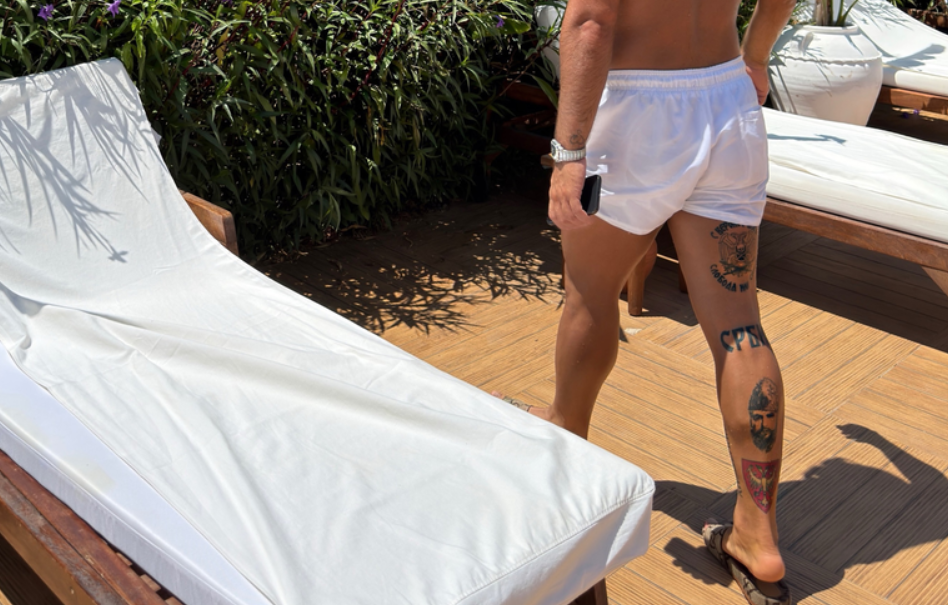
Split police arrested a 31-year-old Serbian citizen who publicly displayed tattoos of Chetnik leaders Draža Mihailović and Momčilo Đujić, as well as a Chetnik emblem, on Žnjan and then posted the photo on Instagram. Index reports that the court ordered him held for 15 days, and after the misdemeanour proceedings are completed he will be expelled from Croatia and banned from entering the country for five years. According to earlier media reports, this is Serbian influencer Marko Stojković, who has around 90,000 followers on Instagram. Nacional reported that Stojković had been photographed in a hospitality establishment on Split’s Žnjan, where a large tattoo of Draža Mihailović was clearly visible.
multiple people reported the man
Police revealed that the incident occurred on Thursday around 18:15 on the outdoor terrace of a hospitality establishment on Šetalište Ivana Pavla II. They say the 31-year-old publicly displayed on visible parts of his body a tattoo of Draža Mihailović, a tattoo of Momčilo Đujić, and an emblem featuring a double-headed spread eagle, a skull and crossed swords. Next to the symbol were Cyrillic inscriptions reading “with faith in God” and “freedom or death”. Police note that such insignia was used by Chetnik forces. About ten minutes later the man posted the photograph taken at that location on his public Instagram profile. “The post caused unrest and outrage among the public in Croatia,” police stated, adding that they subsequently received multiple reports from distressed members of the public.
the police discovered him in a car in split
Police launched a criminal investigation and yesterday established his identity and location. Around 14:00 they found and arrested him in a vehicle in the Split area. The criminal investigation, police say, established a well-founded suspicion that by publicly displaying the tattoos he disturbed public order and peace and that, “with the aim of causing fear and creating a hostile and humiliating environment,” he violated dignity and caused public disturbance. Police are also charging him with a misdemeanour under the Law on Combating Discrimination. He was brought before the competent court today, and police requested a 30-day prison sentence and a fine of 2,000 euros. The court has so far ordered him held in custody for 15 days, while the verdict will be delivered later.
he will face a 5-year ban from croatia
Police announced that after the misdemeanour proceedings are completed he will be issued an expulsion order from Croatia and a five-year ban on entering the country. Measures were also taken against a 56-year-old Serbian citizen who was in his company. His stay in Croatia was cancelled under the Law on Foreigners. Police state that by participating in the activities he promoted behaviour which he “knew or must have known” was contrary to Croatian regulations and public order.
who were the people his tattoos are depicting?
Draža Mihailović was the organiser and commander of the Chetnik movement during the Second World War. The Croatian Encyclopaedia states that from the autumn of 1941 he openly collaborated with the Germans and their allies, and that his forces committed numerous crimes and carried out ethnic cleansing of the non-Serb population in the territories of Croatia and Bosnia and Herzegovina. After the war he was convicted as a war criminal, sentenced to death and executed by firing squad in 1946.
Momčilo Đujić was a Chetnik vojvoda from the Knin area and commander of Chetnik formations in Dalmatia. The Croatian Biographical Lexicon states that he collaborated with the Italian occupation authorities and, after Italy’s capitulation, with German forces. Units under his command committed numerous crimes against the Croatian population, as well as against Serbs who did not accept Chetnik ideology.
this isn’t the first such incident…
A similar case occurred back in 2004. Croatia at that time banned the entry of Serbian basketball player Milan Gurović, who had a tattoo of Draža Mihailović on his upper arm and did not intend to cover it during a Partizan vs Cibona match in Zagreb. The Ministry of the Interior explained at the time that publicly displaying such insignia expresses or incites hatred or violence on racial, national or religious grounds.