
August the 31st, 2026 – Martelovo jezero lies inside a strange cave deep below a town in Istria. It is the name of an even stranger lake that lies inside it. Very strict rules apply if you want to pay it a visit…
Croatia’s main “event” is certainly the coast, but there are plenty of incredible lakes to enjoy up and down the country. From the world-famous Plitvice Lakes to the “colourful” ones near Imotski, they all share one thing regardless of their shapes, sizes and depths: supernatural beauty. Putni kofer writes that some of them hide from our view, forcing us to make a little effort and look deeper into the secrets of the earth. One such lake is found in the very heart of Istria and its administrative centre, the town of Pazin. Martelovo jezero, or Martel’s lake, is a real gem of the darkness.
pazin’s most striking feature
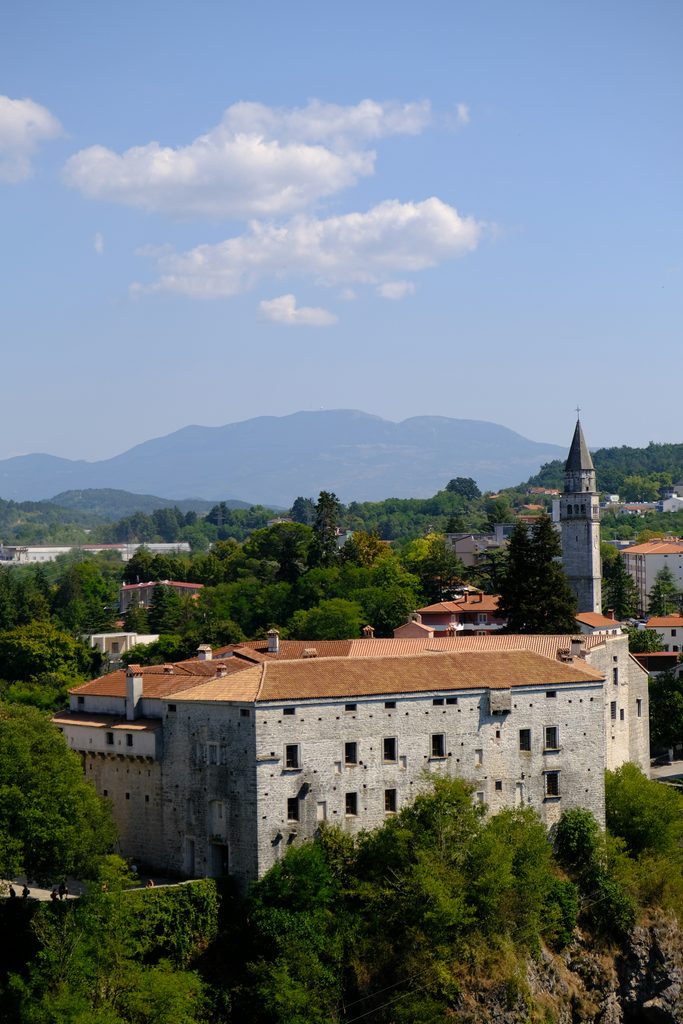
Martelovo jezero is located deep within the Pazin Cave. As one of Pazin’s most distinctive features, the cave dominates the town: Pazin’s buildings cluster above this abyss, which has been protected since 1964. The protected area covers the canyon and sinkhole of the little river Pazinčica, about 500 metres long and around 100 metres deep, as well as the 300-metre-long speleological object known as the Pazin Cave, in which this largest Istrian sinking river disappears. It is precisely this cave that is home to Martel’s Lake.
the cave is named after a frenchman

But let’s start from the beginning, from the very entrance to the cave. It is called Dante’s Vestibule and is a huge, rock-vaulted fissure more than 20 metres high and 30 to 50 metres wide. The fissure continues into the darkness in a south-westerly direction, first narrowing to a width of only 10 metres and then widening again. At a distance of 100 metres from the entrance begins an expansion that essentially grows into an 80-metre-long and about 20-metre-wide terminal hall. In it lies the siphon lake named Martel’s Lake. The lake is widest at the very end of the hall, where water swirling can sometimes be observed. On average it is 10 metres deep. The lake owes its name to the French speleologist Édouard-Alfred Martel, who at the end of the 19th century began exploring the Pazin Cave in cooperation with Wilhelm Putick, a forestry expert from Ljubljana. The two of them also made the first detailed plan of the cave, and it was Martel who recorded the greatest flood that has so far occurred in the cave: in 1896 the water in the cave rose to 30 metres below the walls of the Castle that stands above it. Major floods were also recorded in 1964 and 1993.
adventure deep below the surface…
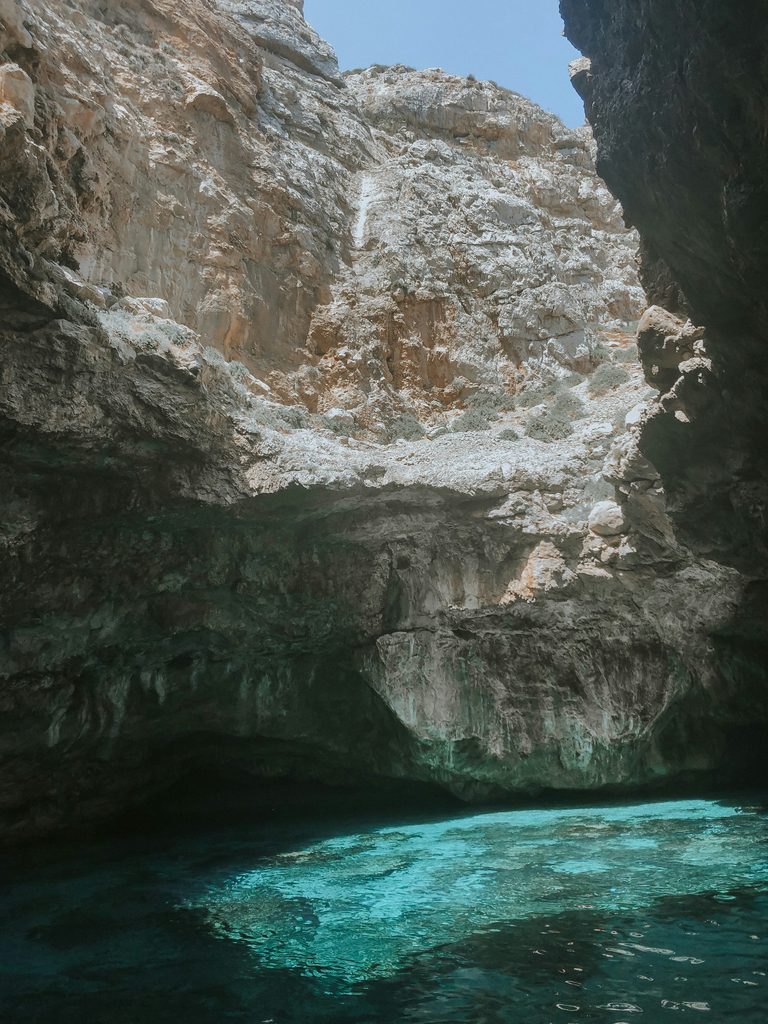
Martelovo jezero itself is located in the “terminal” hall of the Pazin Cave, but it is not the only lake the cave hides. It is connected by a siphon to another lake. That second, smaller lake is called Mitar’s Lake and was discovered in 1975, when Pazin speleologist divers dove into the terminal siphon and discovered a 70-metre-long continuation of the sinkhole. The diver responsible for that discovery was Mitar Marinović, and the smaller lake bears his name. Although Martelovo jezero is at first glance hidden from view, it is still possible to enjoy the sight of it as part of a guided speleo-adventure lasting two and a half hours, with equipment provided. As part of it, visitors also get a small zipline with which they cross over to the gravel bank of the underground lake.
a descent into the bowels of the earth…

“Physically, what awaits you is a somewhat more demanding walk that is accessible to all healthy people. It is not accessible to children without parental supervision or to people with physical motor impairments. It is necessary to bring sturdy sports footwear and a change of clothes; light long sleeves are recommended because of the cooler interior (around 15°C). The minimum age for children is 8 years,” state the pages of the Tourist Board of Central Istria.
If you aren’t up for this adventurous option, the Pazin Cave can also be enjoyed in other ways. For example, on the large zipline above the canyon itself, at a height of about 100 metres. There is also the possibility of walking along an educational trail or simply enjoying the view of the Pazin Cave from the Vršić Bridge or from below the terrace of the Hotel Lovac. These two locations are considered the best viewpoints overlooking the Pazin Cave.
diving is exceptionally dangerous…
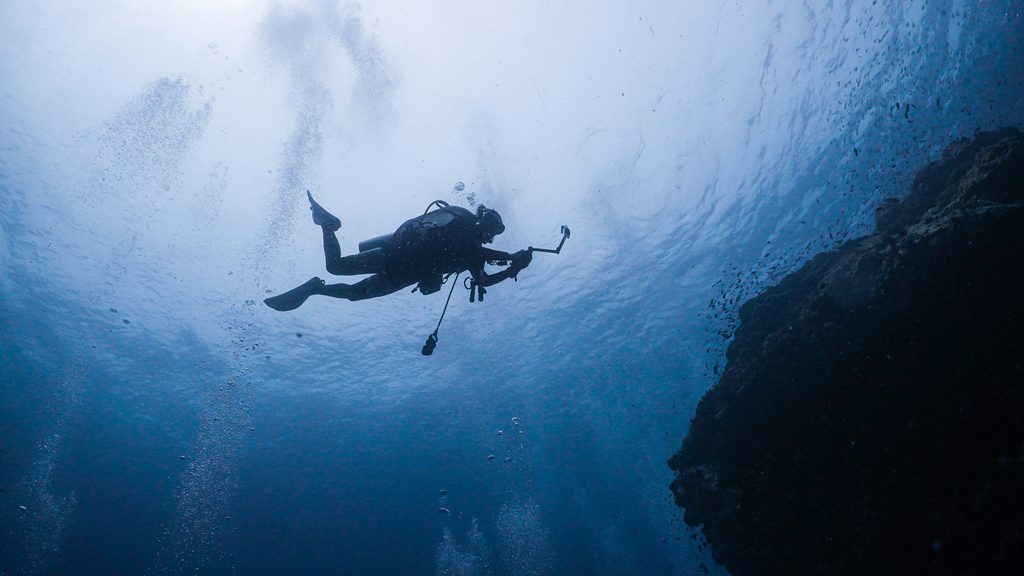
But let us return briefly, at the end, to an activity in the Pazin Cave that will truly remain beyond the reach of ordinary mortals, and that is diving, which is left to experts. And even for them it is demanding and dangerous.
“Diving in the Pazin Cave is one of the more demanding cave dives because of the poor visibility (only 0.5–1 metre), which makes orientation and exploration of new space difficult. In addition, large quantities of branches and tree trunks are packed into the lake in front of the siphon, and in the siphon itself they are jammed between the rocks. This has caused cave divers to get tangled in the branches as well as the safety line being pulled under tree trunks, which made the return from the siphon difficult in already poor visibility. On top of that, the rocks in the siphon are very smooth and compact, which prevented cave divers from attaching the safety line,” states, for example, a document on the subject of the Pazin Cave.