September the 15th, 2026 – The CRANE Forum 2026 was recently held, which welcomed around 200 guests from the fields of investment to politics, and from economics to financial institution representatives.
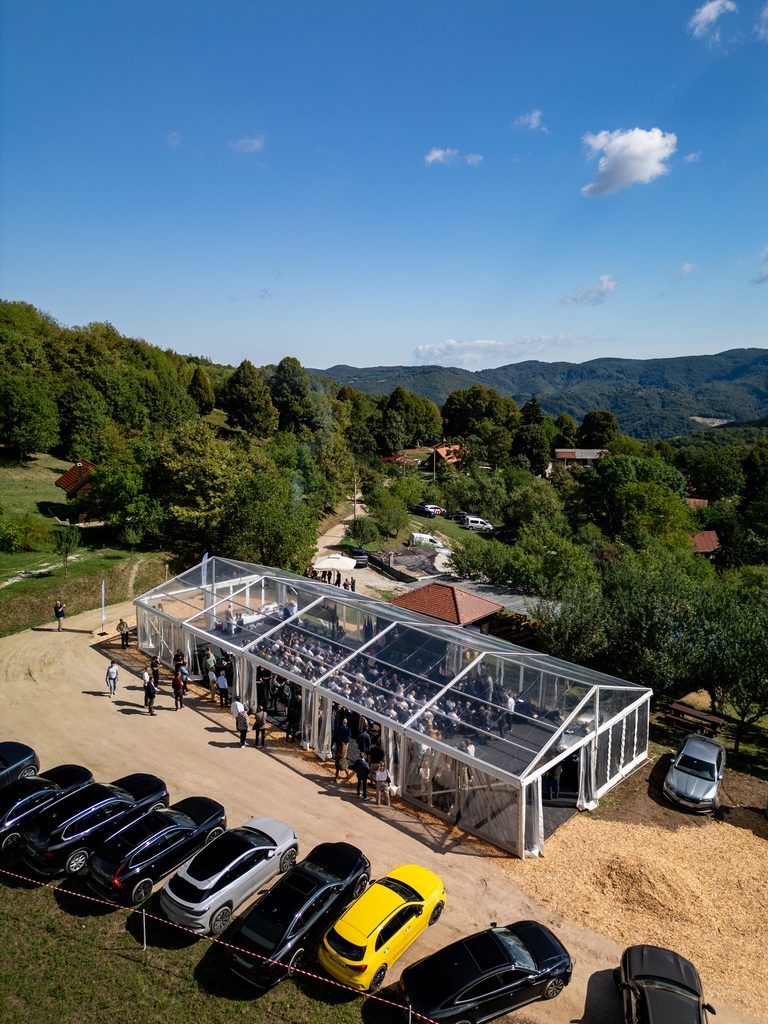
As stated, around 200 guests involved with the Croatian economy, entrepreneurs and investors, members of the Government, ambassadors and representatives of international financial institutions, as well as county prefects and mayors, gathered at the Tihočaj estate in the Žumberak – Samobor Hills Nature Park to discuss investment prospects and the frameworks in which they will be implemented.

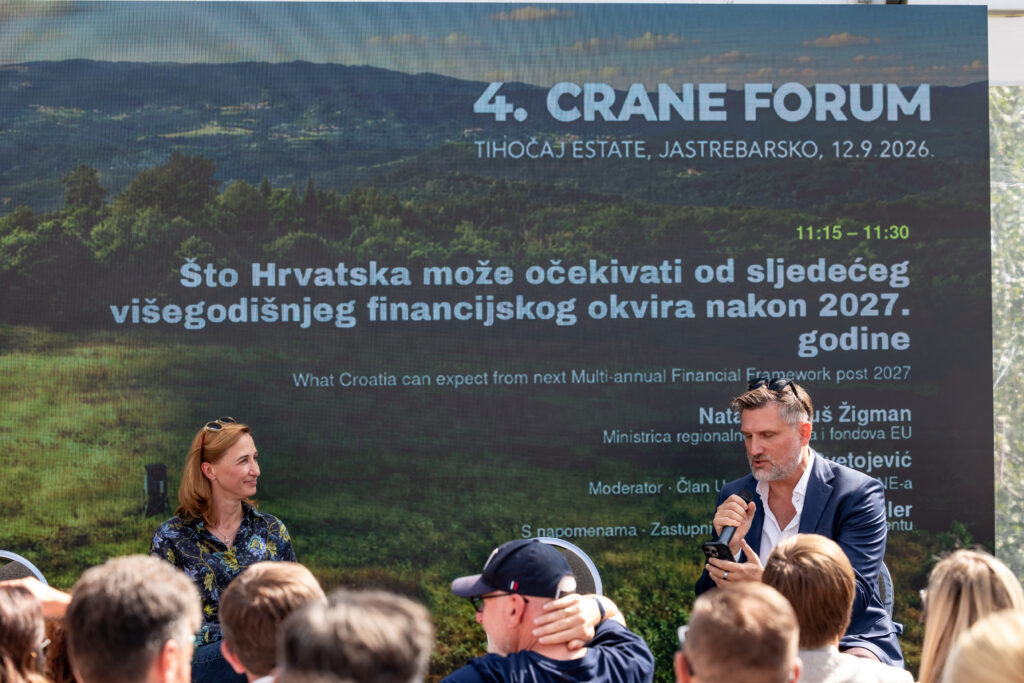
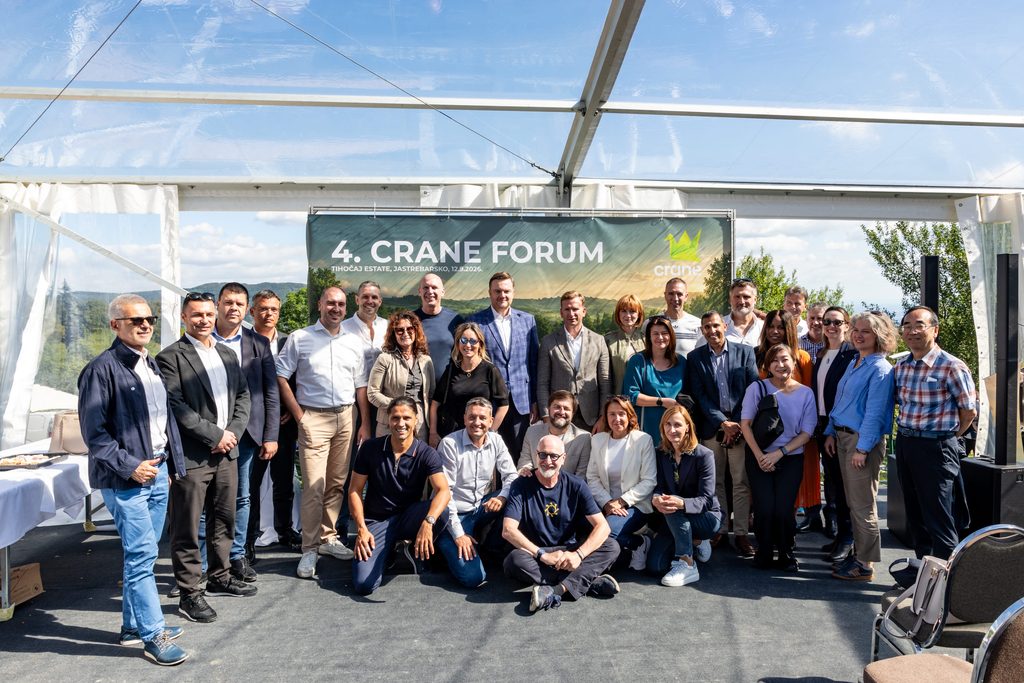
In Jastrebarsko on the 12th of September 2026, the fourth CRANE Forum, organised by CRANE, the Croatian Association of Investors and Business Angels, was held. The location was the Tihočaj estate in the Žumberak – Samobor Hills Nature Park. Once again this year, the Forum brought together all levels of decision-making on a single investment in one place: 200 guests from the top of the Croatian economy, entrepreneurs and investors, members of the Government, ambassadors and representatives of international financial institutions, as well as county prefects and mayors.
“Since 2008, CRANE has been connecting entrepreneurs and investors and bringing together capital, knowledge and experience with those who make the decisions. For development and new investments, finding an investor is not enough. What is also needed is a state that cooperates and understands the vision, and a local environment that knows how to create the conditions for its implementation. That is why we do not build the Forum as a conference, but as a working meeting at which everyone who decides on a single investment is present,” said Davorin Štetner, President of CRANE.
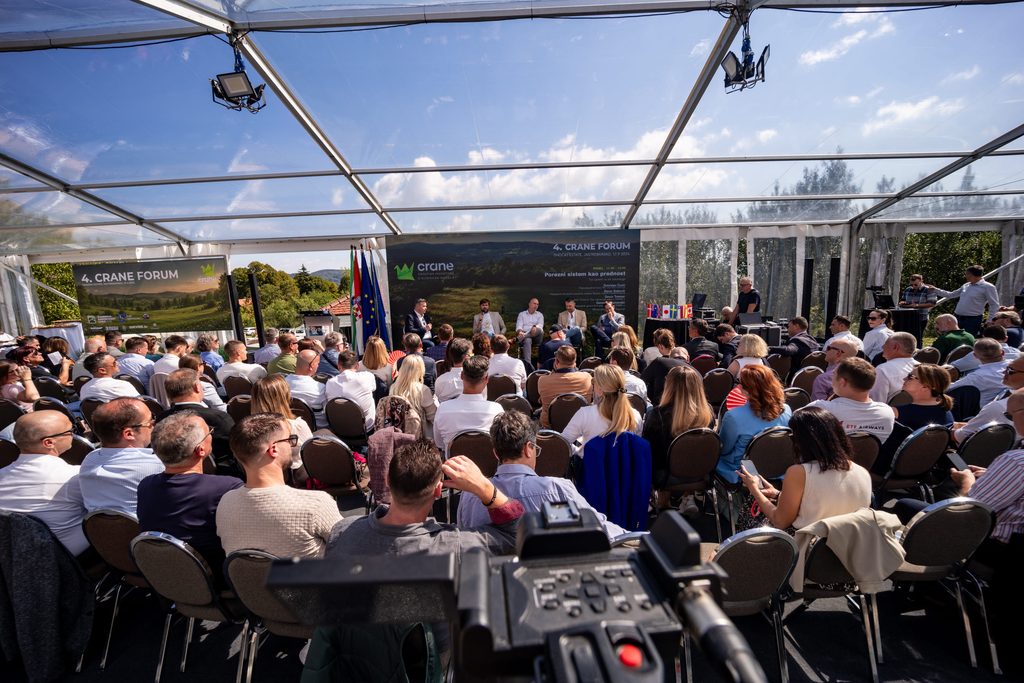
The key topics of this year’s Forum were the new multiannual financial framework of the European Union after 2027, the tax system as a competitive advantage, the role of local self-government in attracting strategic investments, and investments in healthcare.
Speaking about what Croatia can expect from the EU’s multiannual financial framework after 2027, Nataša Mikuš Žigman, Minister of Regional Development and EU Funds, stressed that the priorities coming from Brussels are focused on security, defence and climate efficiency, but equally on investments in productivity and competitiveness. Croatia, she announced, has already begun preparing a future competitiveness investment programme that will combine public and private funds, with the aim of raising the productivity of the economy. Among the novelties are milder requirements for technical documentation at the application and contracting stage, the possibility for applicants with smaller tax debts not to be excluded from the procedure but to settle them before the decision on the award of support is made, and raising the threshold for the implementation of procurement procedures with simple procurement via the eKohezija platform. In the negotiations on the new multiannual financial framework, Croatia insists that administrative burden relief actually reaches end-users and does not remain only on the Brussels–Member State axis.
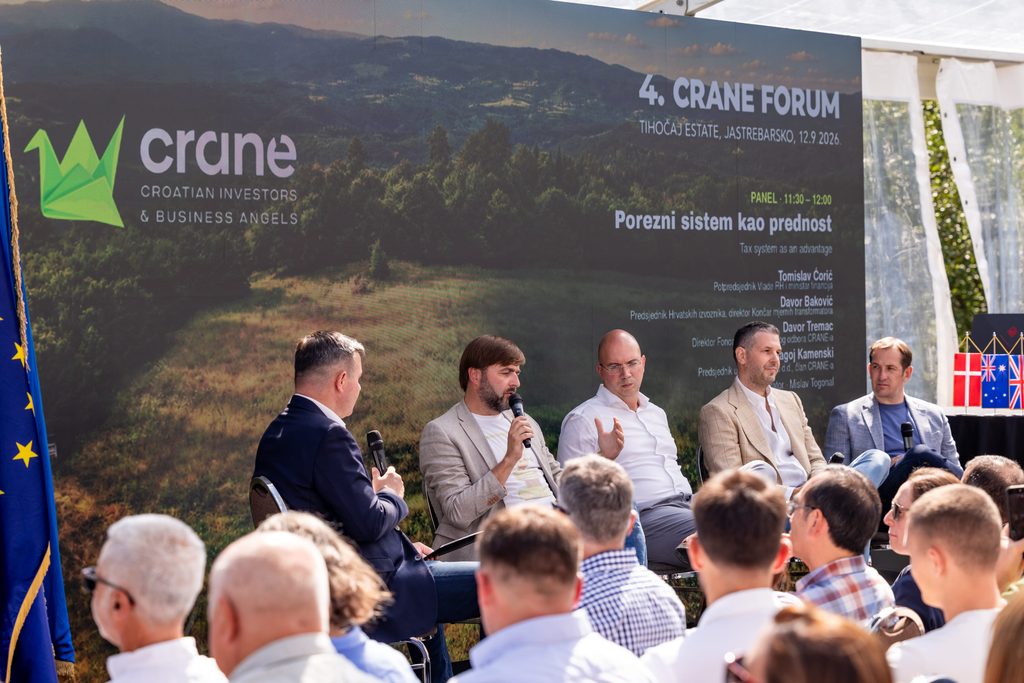
On the panel dedicated to the tax system, in which Tomislav Ćorić, Deputy Prime Minister and Minister of Finance, Davor Baković, President of the Croatian Exporters Association and Chairman of the Management Board of Končar MT d.d., Davor Tremac, Executive Director of Fono, and Domagoj Kamenski, Executive Director of Kamgrad, participated, it was emphasised that the Croatian tax framework in itself is not an obstacle to growth, but in certain segments even represents a competitive advantage, with a corporate income tax rate lower than the average of developed countries and excellent incentives for investment and research and development.
That the tax rate is not decisive is also shown by comparison with the surrounding region: ahead of Croatia on investment attractiveness rankings are the Czech Republic and Slovenia, which have significantly higher corporate income tax rates. The key problem, as Tremac stressed, is distrust in the judiciary, because what is contracted on paper is difficult and slow to enforce before Croatian courts, and this has been pointed out for thirty years without progress. The price of this distrust is measured in capital that does not arrive: when the enforceability of contractual protections is not certain, investors do not abandon the investment, but the jurisdiction, so Croatian companies register their holding companies in Ireland, the Netherlands or Luxembourg, and the tax base moves with them. The conclusion of the panel is therefore that lowering tax rates would not solve a problem that the rates did not create; the greatest contribution to the investment climate would come from judicial reform, i.e. the speed and predictability of resolving commercial disputes.
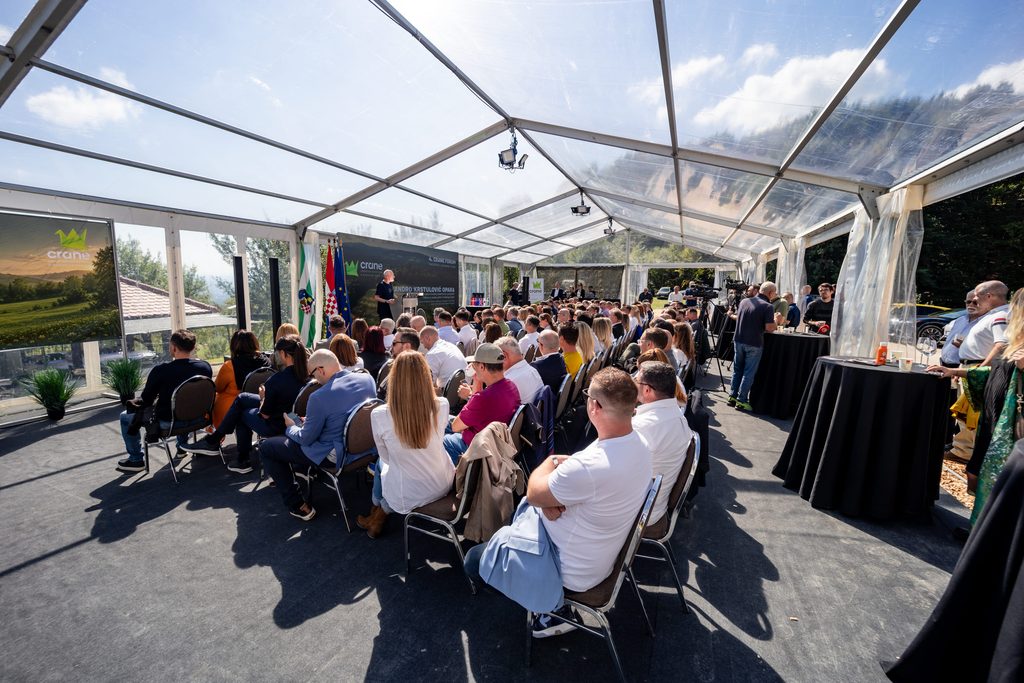
Speaking about investments in healthcare from the Government’s perspective, Minister of Health Irena Hrstić emphasised that the Government of the Republic of Croatia has invested around €3.4 billion in the healthcare system over the past ten years or so, and that investments continue in line with the policy of balanced regional development – from the new University Hospital Centre Osijek and the project for a new University Hospital Centre for Dalmatia, which the Ministry and the Government have already given the green light, to the hospital in Blato, whose foundation stone will soon be laid and which will be the first “Carbon Zero” hospital in Europe, heated by geothermal energy and financed by European funds. The leading principle is smart investment, with the emphasis that the goal is functional healthcare equally accessible to all parts of Croatia.
A strong diplomatic dimension was given to the Forum by the presentation of new interlocutors of the Croatian business community at the international level: Ronke Amoni Ogunsulire, World Bank Director for Croatia and Slovenia, Her Excellency Anne Toft Sørensen, Ambassador of the Kingdom of Denmark to the Republic of Croatia, and His Excellency Glenn Morrison, Ambassador of Australia to the Republic of Croatia. Their presentation opens new channels of cooperation and a direct link between the domestic business and investment community and partners outside Croatia, which is crucial for attracting investment and strengthening export opportunities. In addition to them, the Forum also gathered other esteemed ambassadors and representatives of international financial institutions, thereby confirming its role as a meeting place of the Croatian economy with international partners.
what is crane?
CRANE – the Croatian Association of Investors and Business Angels is otherwise the oldest Croatian association of investors and business angels, founded in 2008. It connects ambitious entrepreneurs with investors who invest money, knowledge, skills and business contacts in their projects, with the aim that as many innovative companies in the early stage of development as possible grow into successful business stories. CRANE is the national representative of Croatia in the European Business Angels Network (EBAN) and a member of the Global Business Angels Network (GBAN), and in addition to its investment activity systematically advocates a better regulatory and tax framework for entrepreneurs and investors in Croatia and at the level of the European Union. More at www.crane.hr.