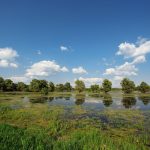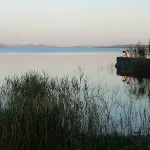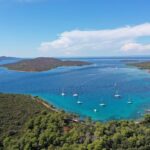
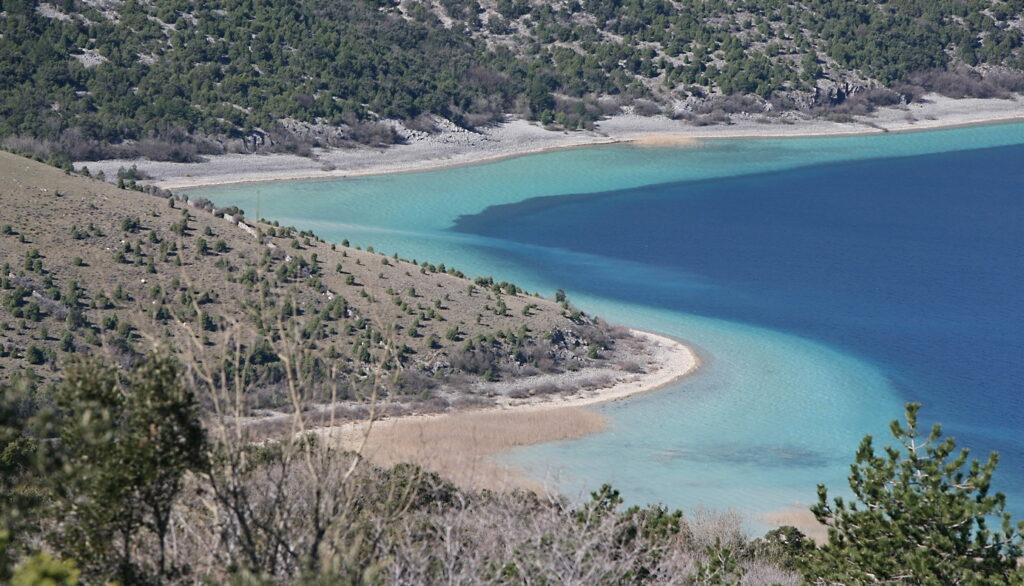
December the 12th, 2025 – One of Croatia’s most beautiful lakes by far is actually hidden away on an island, and you’re not even allowed to get anywhere near it, let alone swim in it…
As Putni kofer/Martina Hrupic writes, whenever you hear the name “Lake Vrana” (Vransko Jezero), there are two options that come to mind. Most people immediately think of the famous and beautiful nature park bearing that name and the ornithological reserve within it, which is located near Pakoštane in the wider Zadar area. However, there are some that will lean more towards the other one, which is the relatively unknown Lake Vrana, or Vransko Jezero, on the gorgeous island of Cres. This much lesser-known freshwater lake on the largest and second longest island in all of Croatia is one of the most special in the entire country, and there are many reasons for that…
uncovering a 12,000 year old story…
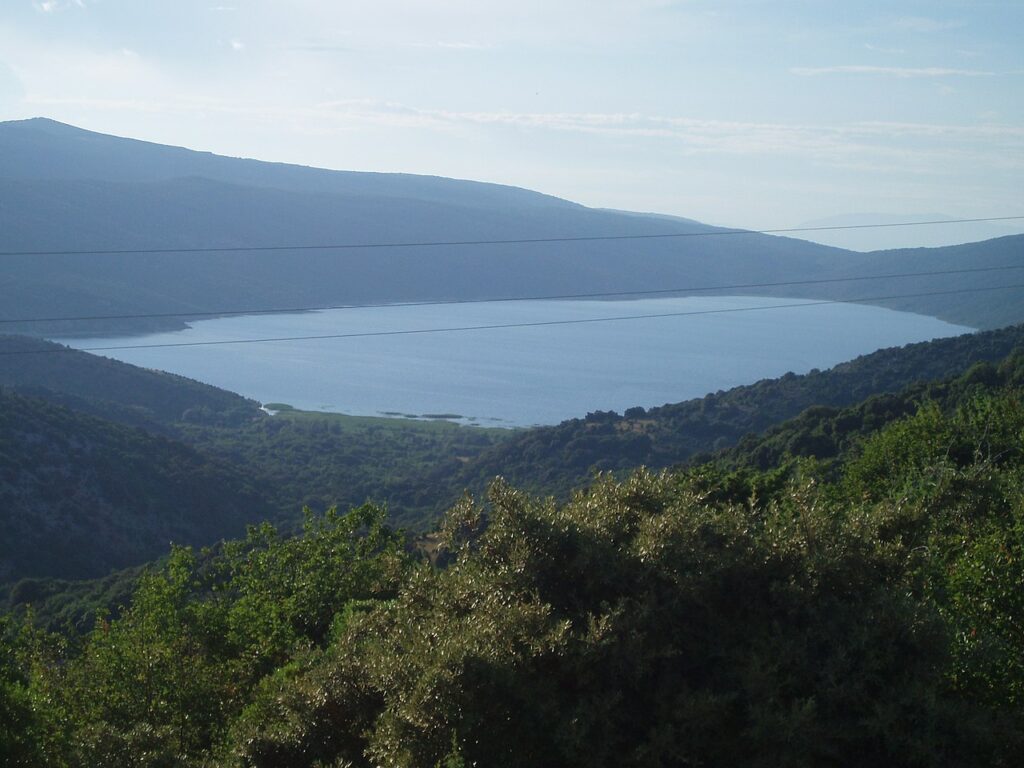
Located in the very middle of the island of Cres, this incredible lake was named after the local village of Vrana, one of the places that surrounds it. However, for the inhabitants of the island, it has always been just “the lake”. The name Vransko Jezero was given to it by Alberto Fortis, an Italian theologian, naturalist, travel writer and monk, when he wrote about his travels in the area. The name somehow stuck, and one of Croatia’s most beautiful lakes, hidden away on a truly magical island, lives in the shadow of the other lake of the same name near Zadar. That might actually be a good thing.
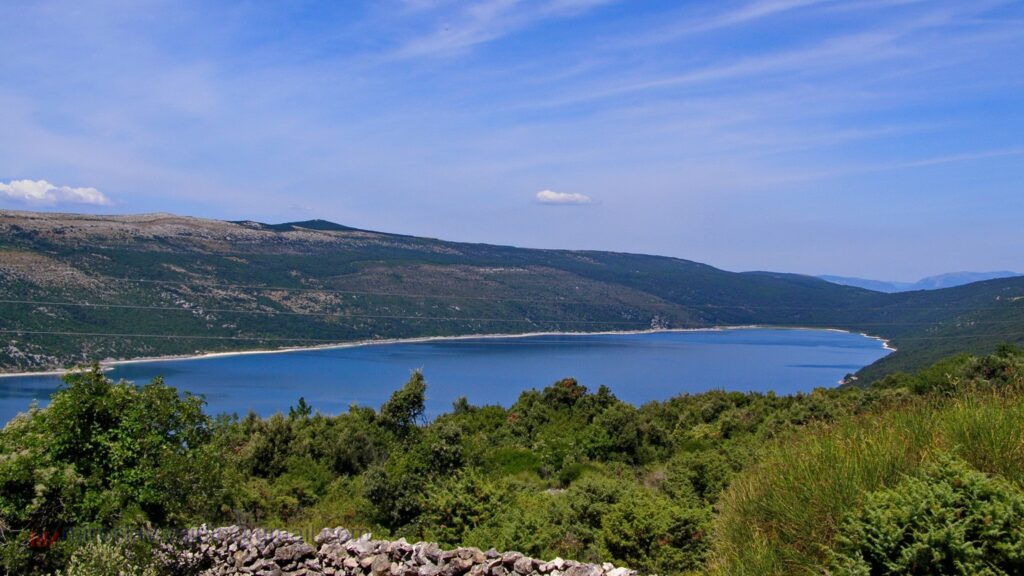
This special lake’s surface area is between five and six square kilometres, and its greatest depth is 74.5 metres. It is about 5.5 kilometres long, and a maximum width of one and a half kilometres. Experts say that it was formed around 12,000 years ago.
Perhaps one of the most interesting characteristics one of Croatia’s most beautiful lakes can boast of is that it is essentially a crypto-depression. By definition, it is a “depression filled with water with a surface rising above sea level and a bottom lying below sea level”. In the case of this particular body of water, this means that, on average, its surface is 13 metres above sea level. On the other hand, its greatest depth (which plunges down to 74.5 metres) lies 61.5 metres below sea level. The water in the lake is constantly being renewed, and the main sources of water for are precipitation and water runoff from the neighbouring hills. Most of the water is lost through evaporation.
a lake full of variables and a battle between fresh and salt water

Its other recognisable feature is that, although sources state that its surface area is 5.7 or 5.5 square kilometres, it is actually a very variable item. This lake hidden away in the heart of Cres never actually bears the same surface. At its northern and southern ends, it is adorned with shallow zones that, as the water level in the lake decreases or increases, also affect its total surface area.
There is also a very delicate natural balance here, the disruption of which could have very serious consequences. There’s a constant battle between fresh and salt water, which is where the greatest risk for it lies. Sea water mixes with fresh water in the deeper layers of the lake, but the pressure of the mass of the lake itself prevents the sea from penetrating the lake through the harsh karst rocks. If the water level in the lake were to decrease dramatically, this pressure would weaken and the lake would become totally saline, making its water completely unfit for drinking.
What is most astonishing is the incredible purity of this lake, which is essentially a natural reservoir with a volume of about 200 million cubic metres. The water from this body if water is life-giving for most of the Cres-Lošinj archipelago, and it is so pure that only mechanical forms of purification are used before it is used in the homes of the local population.
a lack of bacteria, no larger settlements, sewage systems or health risks
There are almost no bacteria living in the lake, there are no larger settlements nearby, industries, or sewage systems in the area, while the catchment waters from the surrounding hills first flow into the coastal gravel and are filtered there. Thanks to all of the above, Lake Vrana is extremely clear. You can clearly see into it to a depth of up to 10 metres, and in some places even down to 25 metres, seeing it considered one of the most transparent lakes in all of Croatia, as well as being among the most beautiful.
a tale of two sisters, a sunken castle and some illusive local fairies

Unsurprisingly, there are two folk legends associated with one of Croatia’s most beautiful lakes, one of which is related to its origin. According to legend, where the lake is located today, there was once a valley owned by two sisters. One was poor, and the other was rich, greedy and mean, and she took her sister’s land and treated the peasants badly. According to Priroda Hrvatska (Nature Croatia), the richer of the sisters lived in a castle, and the poor one lived in a modest house. In order to feed her family, she worked for her wealthy sister, among other things, kneading dough on a sheepskin apron.
She would knead bread for her family from the pieces that would stick to her apron at home, but she was willing to share even such a thin piece of loaf with a poor man who knocked on her door. At that moment, the legend says, that small loaf became a large loaf, the water in the barrel turned into wine, and the poor man advised her to leave the valley because her evil sister would be punished for it. The punishment was an earthquake that destroyed her castle and flooded the lake. The castle is said to still be at the bottom of the lake, and on stormy nights, it is said, a bell rings out from its dark depths.
According to another local folk tale, the caves around the lake are actually inhabited by fairies. Neither the castle nor the fairies, of course, have ever been found. What has been found in the lake are eels (at least at one time) and several species of fish that were supposedly “imported” there later on.
you can’t enter the water in this lake, and you can’t even come near it
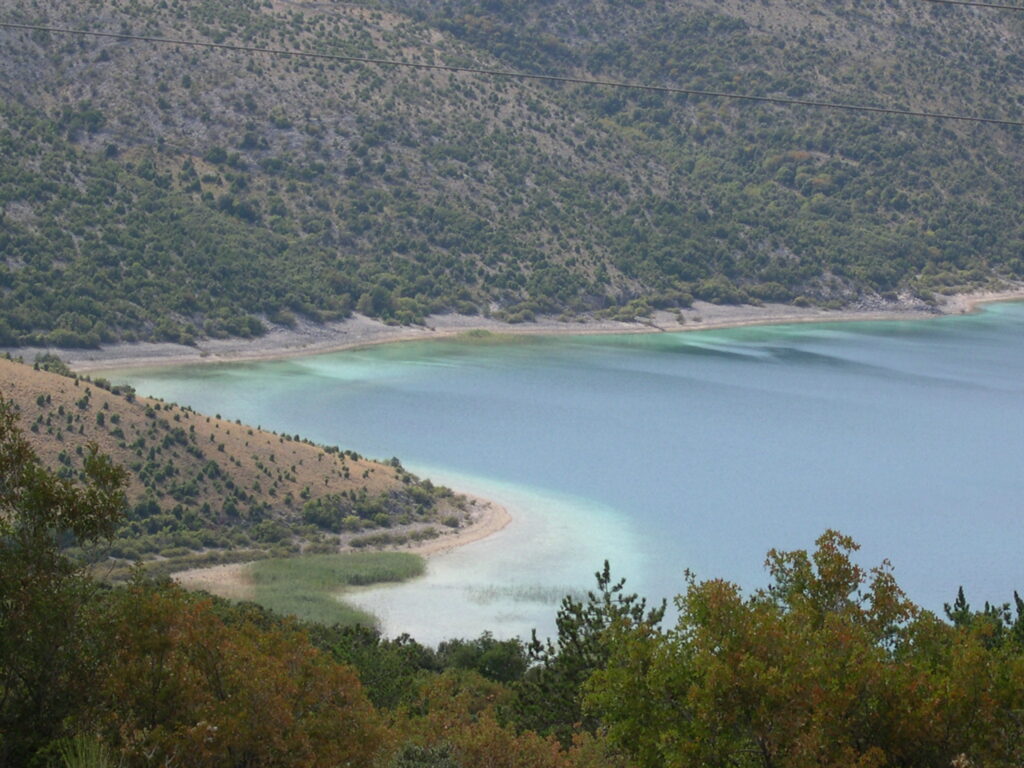
Due to its exceptional importance and extremely fine balance, this marvellous lake is strictly protected and access to the lake is totally prohibited. A number of activities in the vicinity of the lake that could affect the quality of the water there are prohibited. This all adds to its already alluring level of mystery, and it sharing the same name as a far better known lake further south allows it to bask in (relative) anonymity among the masses who descend on Cres.