
August the 7th, 2026 – Ice deliveries through the mountains was how southern Croatia coped during the intense summer heat, long before the advent and comfort of air conditioning.
Long before refrigerators and ice machines, the local people of Dubrovnik developed an incredibly organised ice-supply system. Snow was stored in special pits in winter and kept under straw and brushwood.
Imagine what summers looked like a few hundred years ago. The Dalmatian sun is strong, heating the ancient stone walls and streets; electricity doesn’t even exist, nor do refrigerators, freezers, and definitely not air-conditioners. Putni kofer/Lana Mindoljevic writes that instead of getting a full glass of ice in a few seconds, ice was an extremely precious commodity. Down in Dubrovnik, however, it existed even during the middle of summer.
Mountain snow was stored throughout the winter in special pits in the Konavle hills, kept under straw and brushwood, and in summer lowered by horses down to Cavtat and sent by boat to Dubrovnik. This precious ice was so highly valued that it was given as a gift to distinguished guests, and Dubrovnik even had an Ice Street.
Hundreds of kilograms of ice arrived in the City every summer
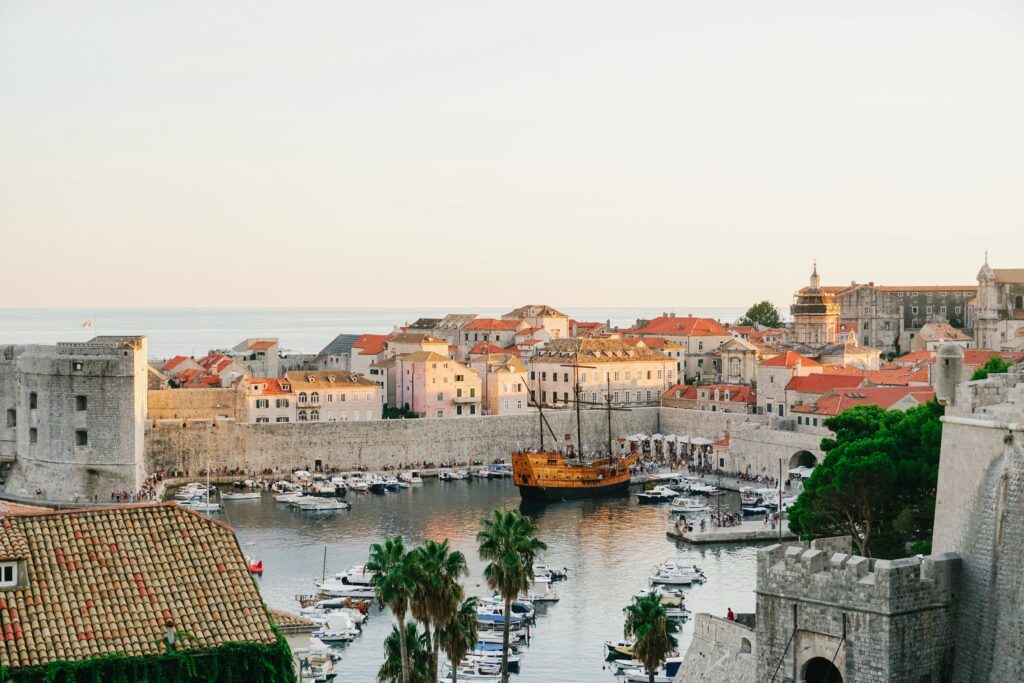
How was it possible that something considered a real little miracle during the hot summer days could already be found on the tables of Dubrovnik’s nobility? And not just a few accidentally preserved pieces. In the hottest part of summer, according to surviving accounts, around 260 kilograms of ice arrived in Dubrovnik every day.
Hundreds of kilograms of something that had to be produced months earlier, protected from the spring and summer sun, carried across the mountain, loaded onto horses, brought down to the sea and then transported by boat to the City. Apart from showing the fascinating organisational skill of the former Republic of Dubrovnik, this also reveals how much people already sought ways to refresh themselves in summer.
In winter they stored snow in pits and kept it until summer

Dubrovnik’s main reserve of cold lay far from the hot stone of Stradun, in the Konavle hills, in the Sniježnica area. The Museums and Galleries of Konavle write that in the time of the Republic of Dubrovnik three ice-houses (ledenice) were filled every winter – special natural or adapted pits into which snow was collected. The work was most often done in January or February. The snow was thrown in and compacted, then covered with brushwood and straw, and the ice-houses were closed and locked. The prince (knez) was responsible for their operation and maintenance, and the whole process took place under the supervision of a guard.
The ice-houses were by no means just small holes in the ground. They are located about a two-hour walk from the village of Duba and have been thoroughly explored by speleologists. The Konavle museum blog states that the Great Ice-house is 11 metres deep and 12 metres long, while the Small one is four metres deep and eight metres long.
When summer arrived, the night-time delivery operation began

Although collecting the ice was already interesting, the method of transport when summer arrived was even more fascinating. During the warmer part of the year, ice delivery from the Konavle hills to Dubrovnik was organised almost daily. Ice was taken from the ice-houses in the late afternoon, when the greatest heat had subsided, then loaded onto horses and brought down towards Cavtat.
From Cavtat, the journey continued by sea to the City of Dubrovnik. After the horse journey, the ice would set off by boat from Cavtat in the early morning hours so that it would not melt before reaching its destination.
For the year 1783, there’s concrete data: almost 16 tonnes of ice were brought to dubrovnik

How extensively the whole system was used is best shown by one surviving account. HRT’s programme Gradoplov, referring to Zdravko Šundrica’s book The Secret Box of the Dubrovnik Archive II, gives very precise figures for 1783. From 20 May to 20 August, 12,123 oka of ice arrived in Dubrovnik – that is, 15,759 kilograms. Transport required 146 horse-loads, and the whole operation cost 129 of the prince’s thalers.
in some cases, ice was brought in from herzegovina

On average, around 170 kilograms of ice arrived in the City every day during that period. In June about 110 kilograms were used, in July 170, and in August consumption rose. From 1 to 20 August Dubrovnik needed around 260 kilograms of ice daily. And every one of those kilograms first had to be produced with the help of winter alone, preserved for months and physically delivered to the city. If the winters were weak and did not produce enough snow to fill all three ice-houses, ice was obtained from the Herzegovinian mountains.
dubrovnik’s very own ice street
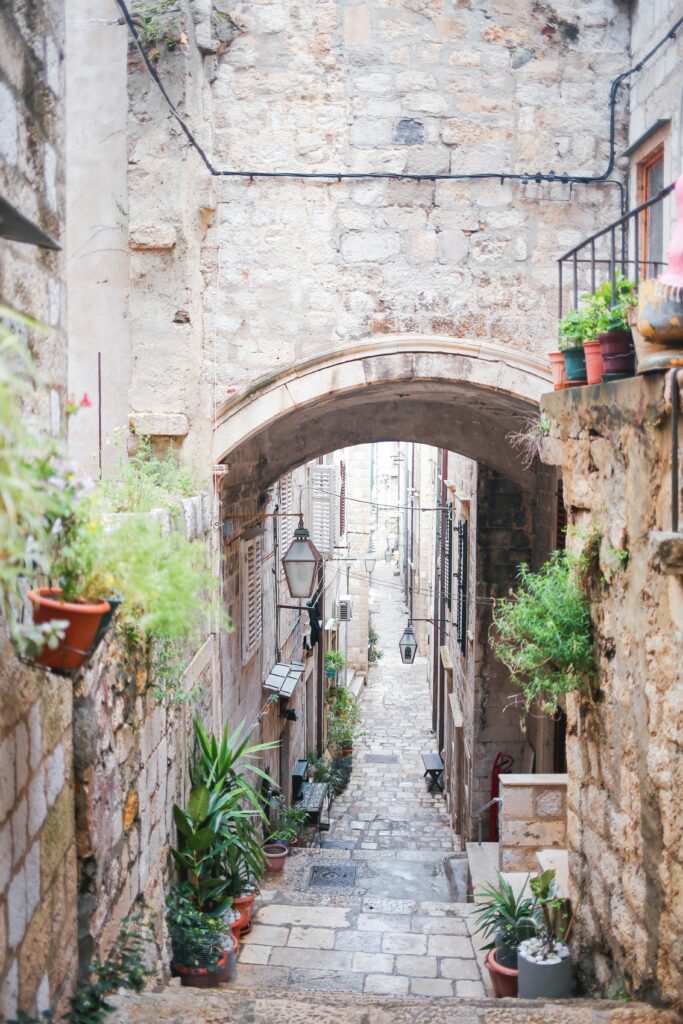
Over time the trade became so organised that ice had its own place in the City. HRT notes that there was an Ice Street (Ulica od leda) in Dubrovnik where ice could be bought, and interesting equipment for its use was also developed. One of the best examples was the kantiflora, a special glass bottle for cooling drinks. Ice was, of course, available only to the wealthier, so it was often given as a gift to distinguished guests. The Museums and Galleries of Konavle mention another tasty detail: ice cream was already spoken of in Dubrovnik in the 18th century.
Remains of the old ice-houses are still hidden on Sniježnica mountain today

The story does not live only in archival documents today. The Great and Small Ice-houses still exist in the Konavle hills, and in 2016 speleologists explored them and drew up their plans. The Cavtat-Konavle Tourist Board notes that the trail to the Konavle ice-houses is marked and starts in the village of Duba by the Church of St Stephen.