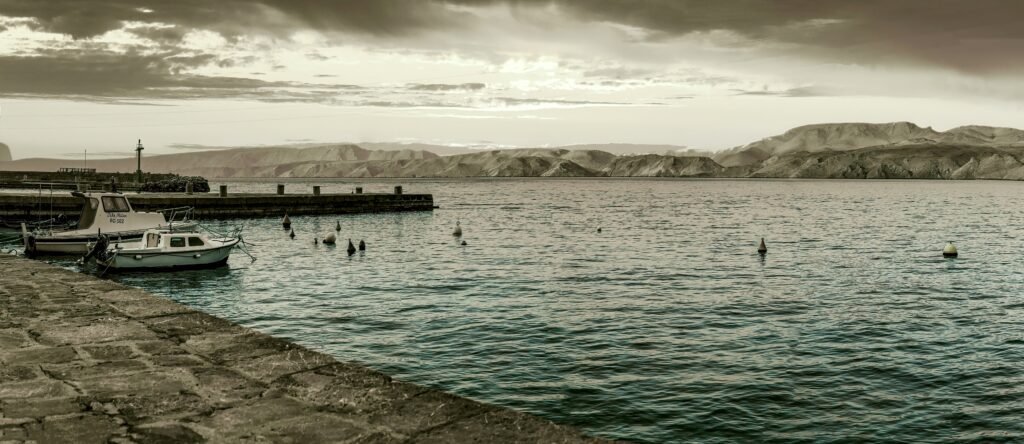
May the 1st, 2026 – Karlobag often gets missed off many a list that Croatia so frequently appears on, but it’s actually a very special place that connects Dalmatia, Lika and the Littoral (Primorje).
As Putni kofer writes, Karlobag connects three different Croatian regions – Dalmatia, Lika and the Littoral. It often flies under the tourism radar, but this is the place where the crystalline Adriatic quite literally merges with the most beautiful Croatian mountain range, and the varying cultures of the three regions intertwine into one. Karlobag is a little but stand-out gem within the mountainous and truly beautiful Lika-Senj County.
karlobag – a mix of three regions and cultures
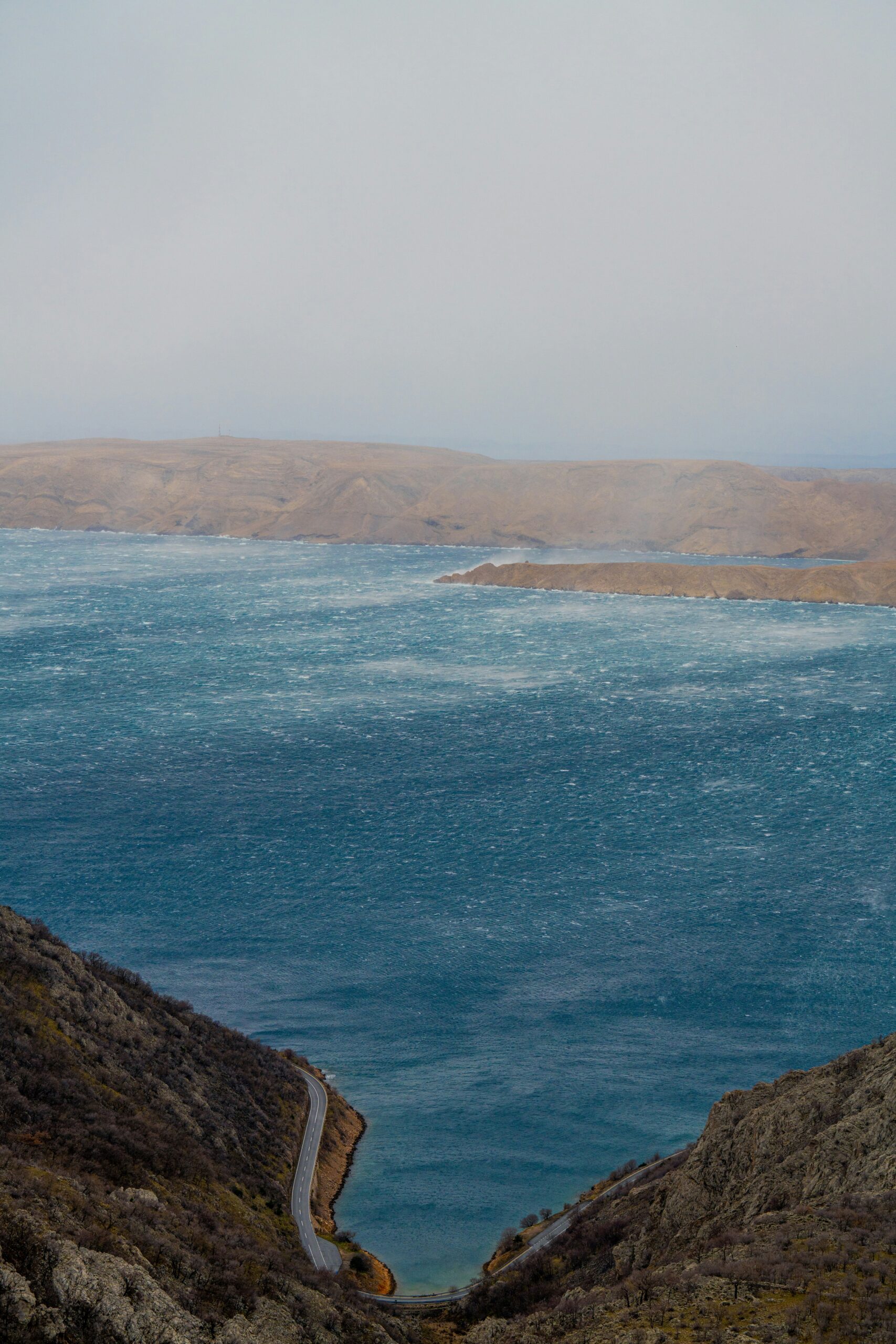
Karlobag can be immediately recognised as a place that isn’t just another ordinary seaside town. Nestled in the dramatic embrace of the Adriatic Sea and the slopes of Velebit, Karlobag offers scenes that remain in the mind for a lifetime. The sea here stretches out to form a wide, shimmering frame, while the imposing silhouette of Velebit towers high above it, creating a scene that looks almost cinematic. Rarely in Croatia does the meeting of two natural phenomena seem quite so impressive, almost as if the sea and the mountains were always destined to meet here, in perfect harmony.
What makes Karlobag truly unique is not only its natural beauty, but also the fact that it lies at the intersection of three Croatian regions and cultures. Dalmatia, Lika and the Littoral touch here in the space of a small town that combines their differences and turns them into a very unique, special local story. This mixture of influences is visible in the language, customs, food and everyday rhythm of life. Karlobag doesn’t belong exclusively to any of the regions, but bears the characteristics of each of them, which gives it a recognisable character and makes it a place that doesn’t quite fit into the classic geographical framework.
karlobag, the 13th century scrissa (bag)
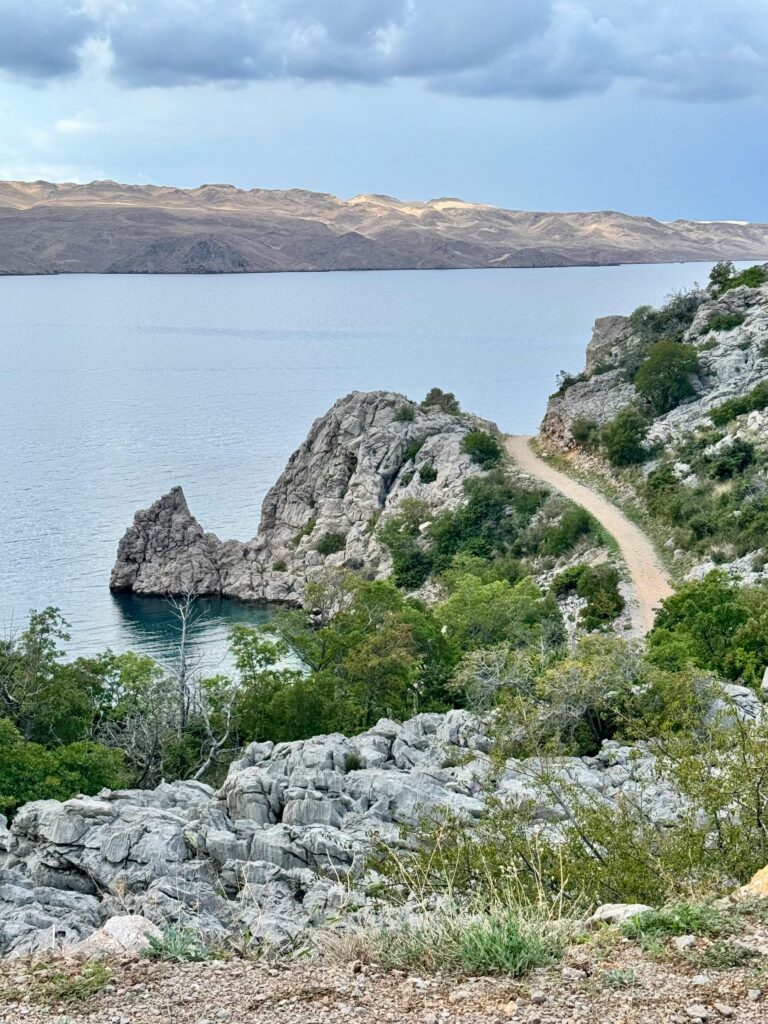
In addition to its natural beauty, Karlobag also delights all those who wander through it with its rich history that can be felt at every turn. Even way back during the early Middle Ages, there was a settlement here known as Scrissa or Bag, and the old remains of Fortica, a small fortress from the 13th century, still stands watching over the area. The fortress was once a strategic point that controlled the mainland and navigation towards the island of Pag, and today it’s surrounded by a Mediterranean garden full of fragrant herbs including lavender, sage, immortelle, rosemary and more.
Karlobag was also strongly marked by life around the old cisterns used for collecting rainwater. Before the construction of the water supply network, they were the only source of drinking water, and also much more than that. New friendships were made around them, kolo dances were performed, and many love stories even began there. Today, these ancient cisterns are preserved as a monument to the local Karlobag community and everyday life as it once was, and there are as many as six of them dotted all over the town.
the author of the first croatian grammar book is honoured there
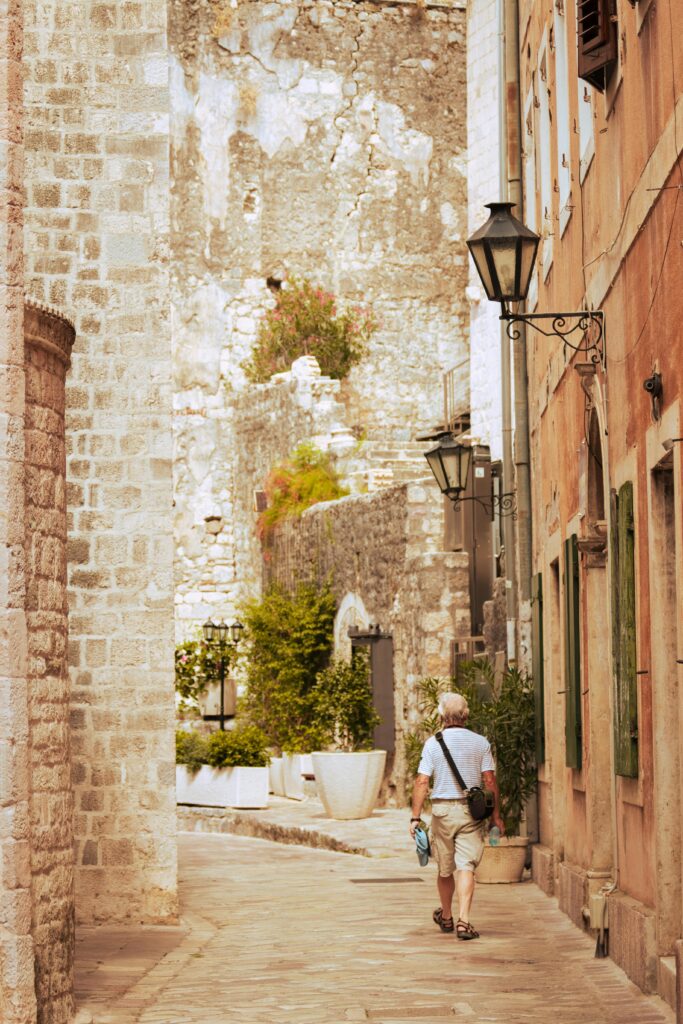
Along the coastline itself, you will find a stone school from 1875, once the most impressive building in Karlobag, built thanks to the efforts of the Austrian general and baron Anton Mollinary. At the time of its construction, it held enormous symbolic importance because it represented educational progress and the strong ambition of a place that, despite its size, wanted to be a centre of knowledge and education.
Not far from the school stands a monument to Šime Starčević, a prominent linguist and the author of the very first Croatian grammar book written in the Croatian language. His “Nova riccoslovica ilircska”, printed in 1812, was a pioneering work written in the Ikavica dialect, and laid the foundations for the development of the Croatian language standard.
In the immediate vicinity is the Church of St. Charles Borromeo from 1710, built on the foundations of the far older church of St. John (Sveti Ivan). Although it was seriously damaged during the Allied bombing of 1943, its tower and part of its ancient walls have been preserved as silent witnesses to the turbulent history of this area. Next to the remains of the church is a monument dedicated to Starčević, the work of sculptor Ivan Golac, which further emphasises the cultural, historical and indeed linguistic importance of this part of Karlobag.