
August the 3rd, 2026 – Stari grad Pag was entirely planned and constructed, but ended up being completely relocated because of a cholera outbreak that decimated the local population.
Stari grad (Old town) Pag used to be quite a large, fairly wealthy town protected by impressive walls, much like those down in Dubrovnik. Putni kofer writes that all was well until 1852, when a terrible cholera epidemic struck and decimated the local population. It was at that point that plans pivoted, and the entire town ended up elsewhere.
stari grad pag – the town that moved

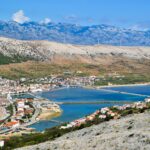
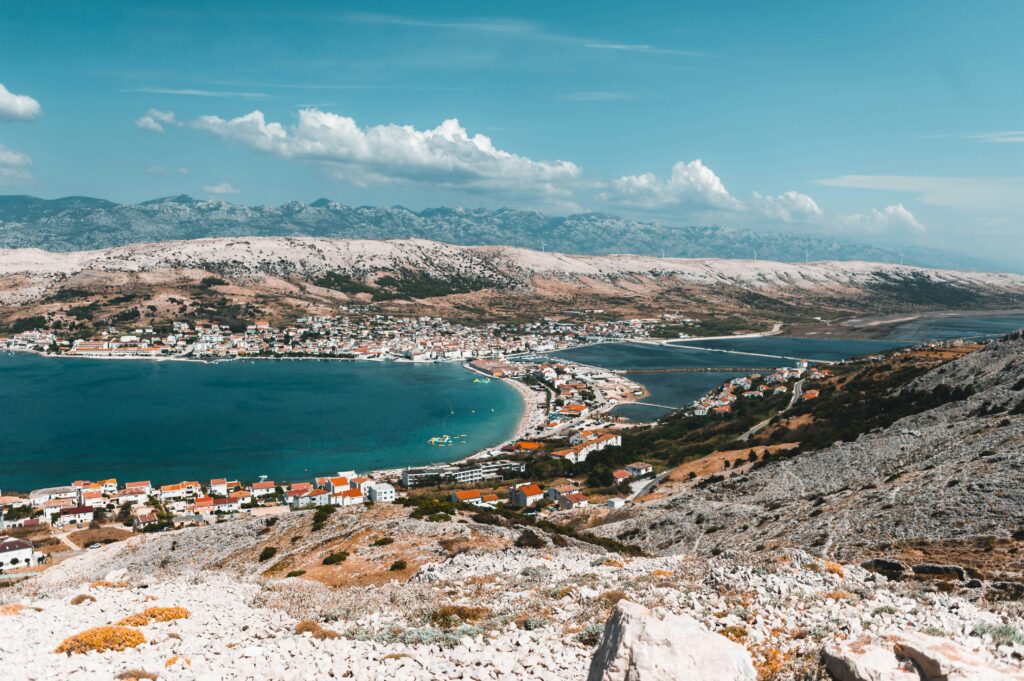
It’s very well known at this point that the moon-like, rather bizarre looking island of Pag offers an otherworldly landscape of stark stone expanses, centuries-old salt pans that still yield “white gold,” outstanding cheese, and a history stretching back to the Middle Ages. Its main town, Pag, is the ideal base for exploring the island. Highlights include the Gradac viewpoint, the historic core reached via the stone Katina bridge, and the remains of walls and towers.
Few people know that the original Pag actually stood roughly one kilometre further south. Residents moved to the present planned town in the 15th century. Old Pag flourished throughout the Middle Ages thanks to salt production, which sustained the island. On the hilly ground next to the salt pans sat churches, monasteries, a fortified citadel, a palace, large and small loggias, a hospital, and large and small town squares. Along the coastline itself stood salt warehouses and two harbours – Veliki and Mali mul. What remains of Old Pag today are the ruins of the Franciscan monastery and the Romanesque Church of St Mary, which houses a wooden Gothic statue of the Mother of God.
salvation from a deadly disease? maybe…
For a century and a half, every year on the Feast of the Assumption (on the 15th of August), the people of Pag make a pilgrimage from the Old Town to the new Pag, carrying with them the statue of the Blessed Virgin Mary. The votive procession dates from 1855 and has a striking historical background.
The devastating cholera epidemic hit Pag hard in 1852 and took a particularly heavy toll. To stop the spread of the disease, all cemeteries were moved out of the town and local churches. On Assumption Day back in 1855, the townsfolk spontaneously gathered around the statue of the Mother of God in the then Stari grad, praying for deliverance. After they carried the statue on their shoulders to Pag’s Collegiate Church, the last cholera victims were buried on the 16th of August, on the feast of St Roch. The residents then vowed that every single year on that day, they would bring the statue to Pag, where it would remain in the Collegiate Church for a full 22 days, until the Nativity of Mary, so the faithful could give thanks and pray for health, peace and love.
the discovery of remarkable megaliths and an ancient greek settlement
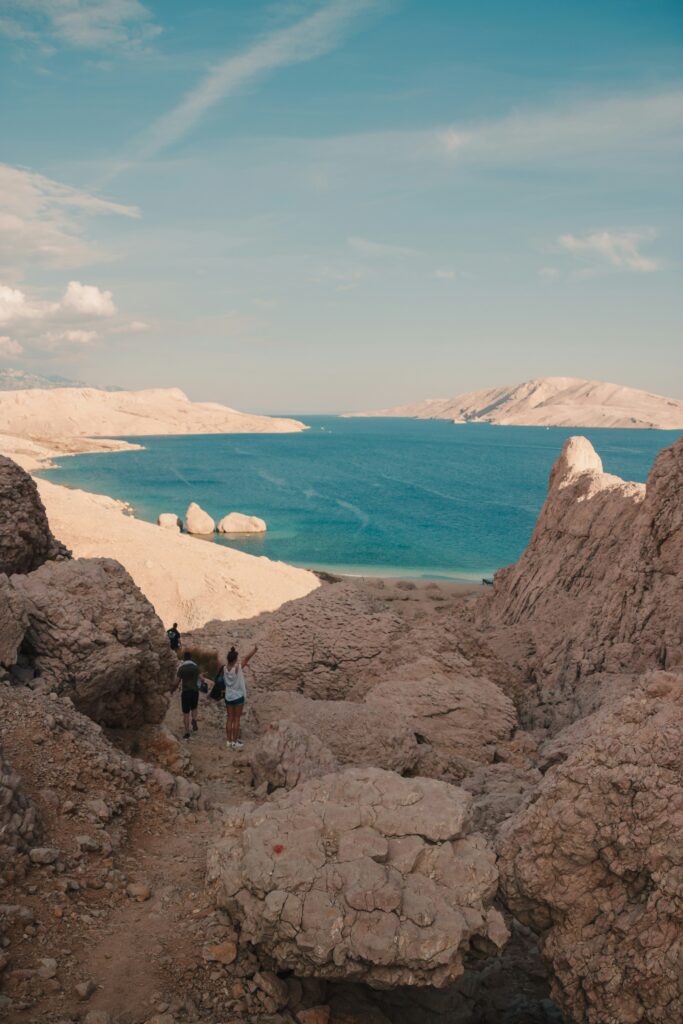
Megaliths and numerous artefacts from antiquity have been found on the site of Stari grad Pag, indicating that a human settlement already existed and functioned there way back during ancient Greek times. The old town was once so rich and economically powerful that it could finance the construction of its own defensive walls.
Its history was also shaped by King Béla IV, who, back in 1244, found refuge on the island while fleeing his enemies. In gratitude for the help he received, he granted Pag a charter as a free royal city. After the relocation in the second half of the 15th century, Stari grad Pag lost its importance and eventually ceased to be an independent settlement. Its only fully preserved building is the Church of St Mary, first mentioned in 1192 and believed to stand on the site of an early Croatian basilica from the 8th century. It was saved from ruin by the Franciscans, who built a monastery nearby and lived there from the 16th until the end of the 19th century.