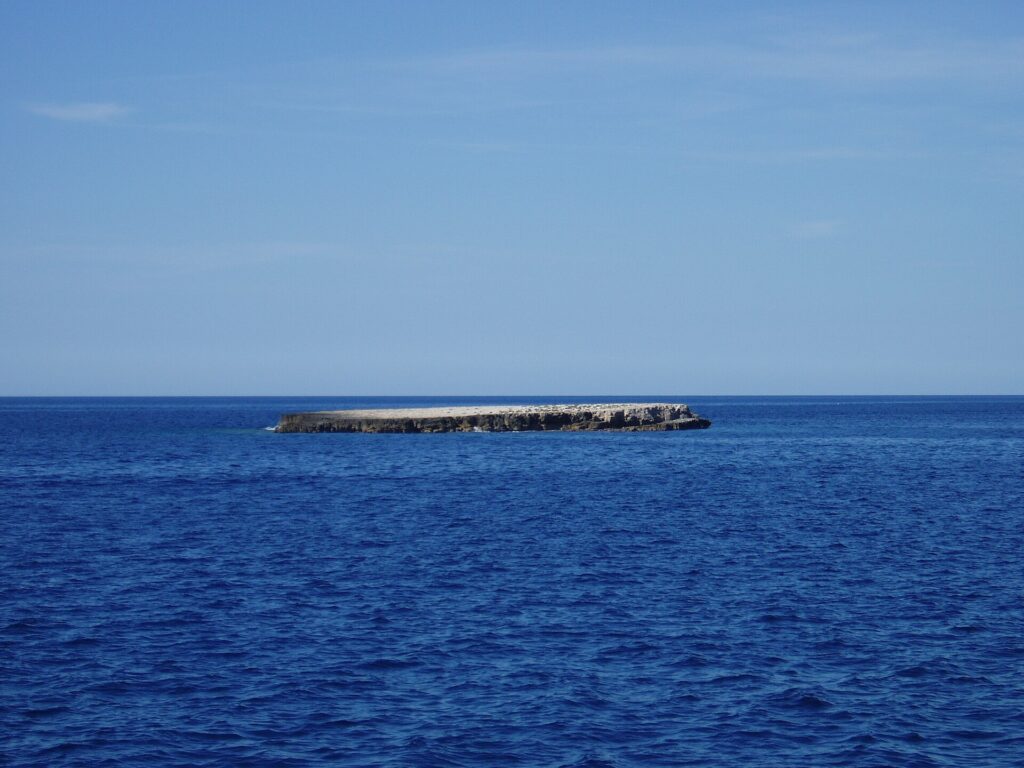
August the 3rd, 2026 – Taljurić, (or Pijat if you’re local) is a strange formation, it’s a totally flat Croatian island that resembles a human fingerprint and has absolutely zero vegetation on it.
The Adriatic might look calm and alluring during summer, but it’s no stranger to surprisingly violent storms and winds. When they hit, the usually calm Adriatic becomes very choppy and washes over almost its entire surface repeatedly. Putni kofer writes that over countless centuries, these repeated actions have made it appear like a flat stone plate laid carefully in the middle of the open, unforgiving sea.
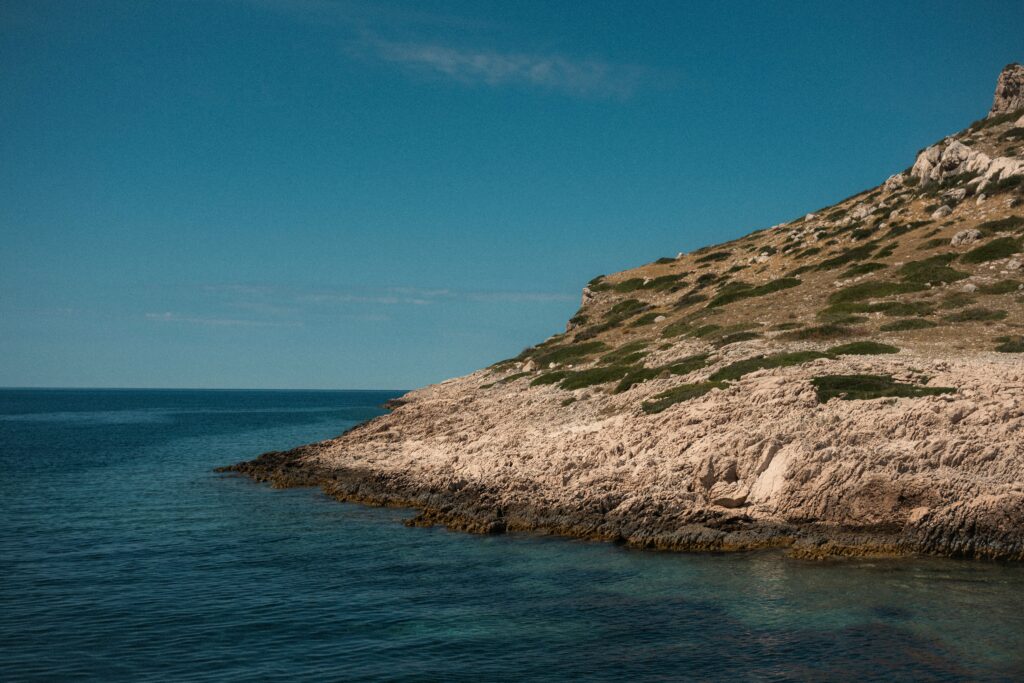
Wherever you look along Croatia’s heavily indented, rugged and island-laden coastline, something takes your breath away. Be it stunning beaches, pebbles and rocks of every shape, secret coves, water shifting from transparent turquoise to deep blue, shores battered by waves on one side and watched over by powerful mountains on the other… The list goes on. Then there are the 1,000+ islands, small and large, bare and green, low and steep, and some of the most unusual shapes imaginable. Some have been inhabited for thousands of years; others hold only a lighthouse, a lonely chapel or traces of former farming. A few are so tiny and exposed that almost nothing can grow on them. Among these rocky outcrops lie some of the strangest sights on the Croatian coast.
From Galešnjak and Baljenac to… Pijat, (Taljurić)
Some of these islands have gained worldwide recognition. Galešnjak, thanks to its almost perfect heart shape, became known as the Island of Love. Baljenac (also called Bavljenac), seen from the air, resembles a giant human fingerprint – an effect created by the dense, tangled network of dry-stone walls that once enclosed tiny agricultural plots. In this sea of bizarre shapes lies another islet whose appearance is perfectly captured by its name. It is called Taljurić (locally also known as Pijat). Viewed from the sea or from the air, it really does look like a large stone plate carefully placed on the surface of the Adriatic.
Taljurić lies within the boundaries of the remarkable Telašćica Nature Park, on the south-eastern part of Dugi otok, and is regarded as one of the most unusual natural phenomena of this protected area. Official documents list it as a rock (hrid) and rank it among the smallest islands and rocks in the park’s archipelago. It measures about 60 metres in diameter and rises only three metres above the sea.
In essence, it is an almost flat stone slab made of horizontally layered limestone. Its upper surface has been continuously exposed to waves, salt and wind, so the whole islet looks as if the sea has been grinding and levelling it for centuries. During powerful storms the waves can sweep across nearly its entire surface – which explains why no vegetation has ever managed to take hold.
no vegetation manages to take hold on taljurić
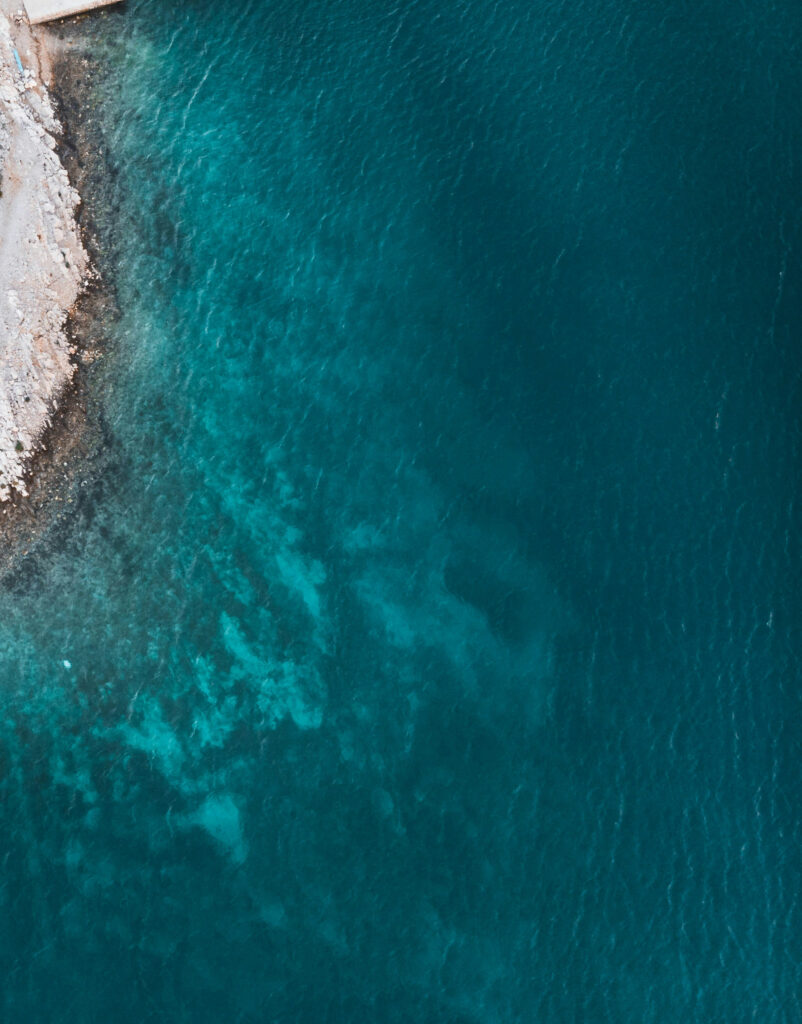
Its unusual appearance directly influenced its name. The islet resembles a flat, round board of the kind once used in kitchens, which Venetian sailors called “tagliero” in their dialect. According to Telašćica Nature Park, the name Taljurić, which isn’t frequently used by locals, developed from that word. There are absolutely no trees, bushes or grass on the surface. Although from a distance it looks completely barren, its edge is not lifeless. On the rocks just above the waterline live colonies of barnacles (known locally as brambuljci), tiny marine crustaceans that cling tightly to the stone and withstand the constant pounding of the waves.
Another curiosity lies on the south-western side of Pijat: the remains of a former fossil cave whose roof eroded away over geological time. Today it looks like a cave open to the sky – a stone hollow without a ceiling. The sea around the islet is rich in life, and the wider Telašćica area includes valuable marine habitats such as posidonia meadows, underwater cliffs, reefs and sea caves.