
August the 2nd, 2025 – Croatia Airlines has managed to get close to one million passengers transported in the first half of 2026, despite enormous, continuous losses totalling almost 50 million euros.
Croatia Airlines carried a record 981,482 passengers during the first six months of 2026, the highest first-half passenger total in the company’s history, but the airline still posted a net loss of 49.7 million euros as rising operating costs and its fleet renewal programme continued to weigh on its finances.
Financial Findings reports that passenger numbers increased by 15% compared with the same period last year, with around 130,000 more travellers choosing the national carrier. The strongest growth came on international scheduled routes, where passenger numbers rose 18%, while domestic scheduled services recorded 6% growth. Overall, Croatia Airlines operated 12,631 flights during the first half of the year, a 2% increase year-on-year, while flight hours climbed 5% to 17,648 hours. The airline’s average passenger load factor also improved to 66.2%, up 2.7 percentage points from a year earlier.
The results outpaced growth across Croatia’s airport network as a whole. While passenger traffic at Croatian airports increased by around 3% to 5.5 million passengers during the first six months of the year, Croatia Airlines expanded five times faster, strengthening its market position.
Revenue also continued to rise. Operating revenue increased by 12%, with passenger transport accounting for 84% of total operating income. Passenger transport revenue alone was up 11% compared with the first half of 2025.
However, the higher income was offset by rapidly rising costs. Operating expenses increased 22%, producing an operating loss of 36.8 million euros, while the company’s overall net loss reached 49.7 million euros for the first half of 2026.
Croatia Airlines said several factors contributed to the weaker financial result. Fuel costs rose by 11.9 million euros, maintenance expenses increased by 4.9 million euros, and aviation service costs were up 3.4 million euros. The airline also incurred additional costs associated with introducing its new Airbus A220 fleet, including pilot and cabin crew training, operational adjustments and the temporary expense of operating multiple aircraft types simultaneously during the transition.
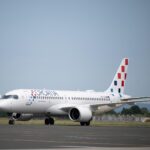
Fleet renewal remains the company’s biggest strategic investment. Two additional Airbus A220 aircraft joined the fleet during the first half of the year, bringing the total to nine. Croatia Airlines expects to receive another seven aircraft before the end of 2026, meaning 14 of the 15 ordered A220s should be in service by year-end. The carrier says replacing its older fleet with a single aircraft type will reduce maintenance and fuel costs, improve operational efficiency and enhance the passenger experience over the long term.
The airline also cited broader industry pressures, including geopolitical uncertainty, fuel price volatility, exchange-rate movements and continuing supply-chain disruptions affecting aircraft parts and maintenance services, all of which continue to impact airline operations across Europe.