
June the 4th, 2026 – Croatia has introduced a brand new central population register in a huge administrative overhaul. For those even remotely familiar with the country’s infamous bureaucracy, you’ll know just how enormous this is.
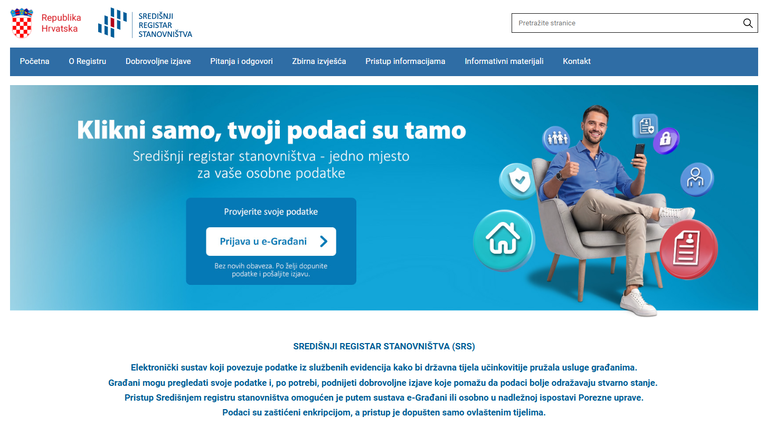
Croatia has officially introduced the Središnji registar stanovništva (Central Population Register), an entirely new digital system that will consolidate key data on the population into a single unified database.
The register, which began partial operation on the 1st of June, has been carefully designed to replace the traditional population census system taken every 10 years and instead create a continuously updated overview of the country’s demographic structure.
Under the new system, people will be able to access their personal data through the e-Građani (e-Citizens) platform, with the ability to review, verify, and request corrections if necessary. The government has stated that the goal is to improve accuracy, reduce administrative burden, and streamline access to public services.
The new register will compile data from multiple state institutions and existing databases, including information on residency, household composition, employment status, education, social benefits, and other demographic indicators. It will also be used by state bodies and local authorities to improve policy planning and distribution of public funds.
Officials say the system will significantly reduce bureaucracy, as institutions will no longer need to repeatedly request documents from the general public. Instead, data will be drawn directly from official records in real time.
A key change is that Croatia’s traditional population census, previously conducted every ten years, will eventually be replaced by this continuous digital model. The government says this will allow for more accurate and up-to-date population tracking.
From the 1st of January, 2027, the register is expected to become fully operational and form the basis for determining eligibility for various social and administrative rights.
Authorities have encouraged citizens to check their data once the system becomes available, stressing that accuracy will be important for accessing benefits and public services.
The project is part of a broader push toward digitalisation of public administration in Croatia, aiming to modernise how the state collects, manages, and uses population data.