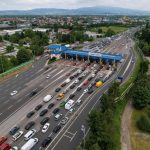
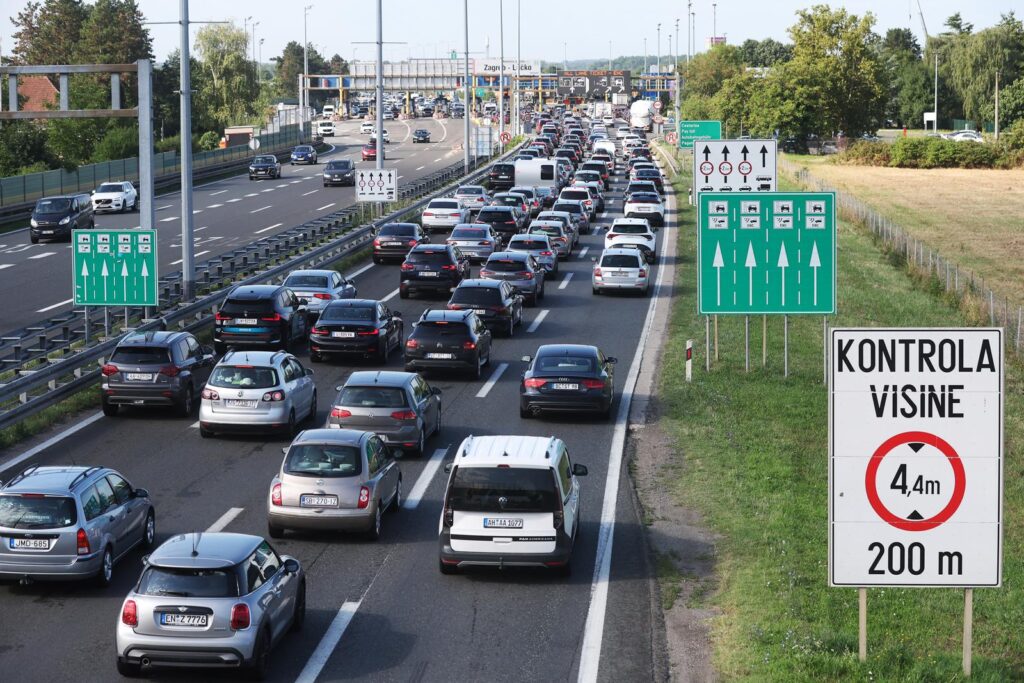
September the 6th, 2026 – Croatia is set to introduce Crolibertas early next year as the country finally bids farewell to toll booths.
Poslovni reports that as of the beginning of March 2027, Croatia will abandon the system of toll booths and introduce a fully electronic toll collection system called Crolibertas. Croatia is preparing for a “traffic revolution” that should permanently erase the images of kilometre-long queues in front of toll booths during the summer months. With planned implementation starting on the 1st of March 2027, a new, fully electronic toll collection system named Crolibertas is coming into force. This will consign to history the model of stopping, taking a ticket and paying on exit from the motorway, replacing it with a free-flow traffic system.
It is important to emphasise straight away that, despite the digitalisation, Croatia is not introducing vignettes along the lines of Slovenia or Austria. Tolls will continue to be charged according to the distance travelled and the vehicle category, meaning drivers will pay only for the distance they actually travel on the motorway. The main change lies in the technology and method of collection, which will be automated, faster and more efficient, with the aim of reducing congestion, shortening travel times and cutting harmful emissions caused by stop-start driving.
how it will work
The new system will operate on the basis of so-called “Multi-Lane Free Flow” (MLFF) technology. Instead of the existing toll plazas, portals equipped with cameras and sensors will be installed along the entire motorway network. The system will rely on a combination of two proven technologies: Automatic Licence Plate Recognition (ALPR), which will be the primary solution for light vehicles such as passenger cars and motorcycles and DSRC technology, i.e. communication via the existing ENC devices.
Drivers of light vehicles will have a choice: they can register in the system and link their licence plate to a valid payment method (such as a bank card), or they can continue using an ENC device as before. However, for heavy goods vehicles weighing more than 3.5 tonnes, the use of an ENC device will be mandatory. This ensures that all traffic, regardless of vehicle type, can pass without stopping.
what tourists and foreign drivers need to do
For tourists and foreign nationals, who make up a significant portion of summer traffic, advance preparation will be key. In order to use the motorways smoothly, they will need to register their vehicle in the Crolibertas system in advance. This can be done in several ways: via the central internet portal or mobile app (the most recommended option, so everything can be sorted out before setting off). For those who do not do this in advance, rapid registration will be available on special lanes at motorway entrances (at the locations of the current toll plazas), as well as at physical sales points such as HAC offices or petrol stations.
To avoid any delays, drivers are strongly advised to complete registration online. Special attention should be paid to the accuracy of the entered licence plate data and the validity of the linked payment method, as even the smallest error can lead to charging problems and potential fines.
existing enc users
Existing ENC device users will not need to buy new ones. They will be able to continue using their devices, but with one key change: it will be mandatory to link the existing ENC device to the vehicle’s licence plate.
associated costs and coverage
Regarding prices, Croatian Motorways (HAC) say that the introduction of the new system itself should not lead to an increase in tolls. A new tariff study is being prepared that could introduce more flexible charging models, for example lower prices for travel outside peak periods, which would further relieve traffic. The single electronic toll collection system will cover the entire motorway network in Croatia, including the sections managed by the concessionaires Bina-Istra and Autocesta Zagreb-Macelj. This means drivers will need only one single system for the whole country.