
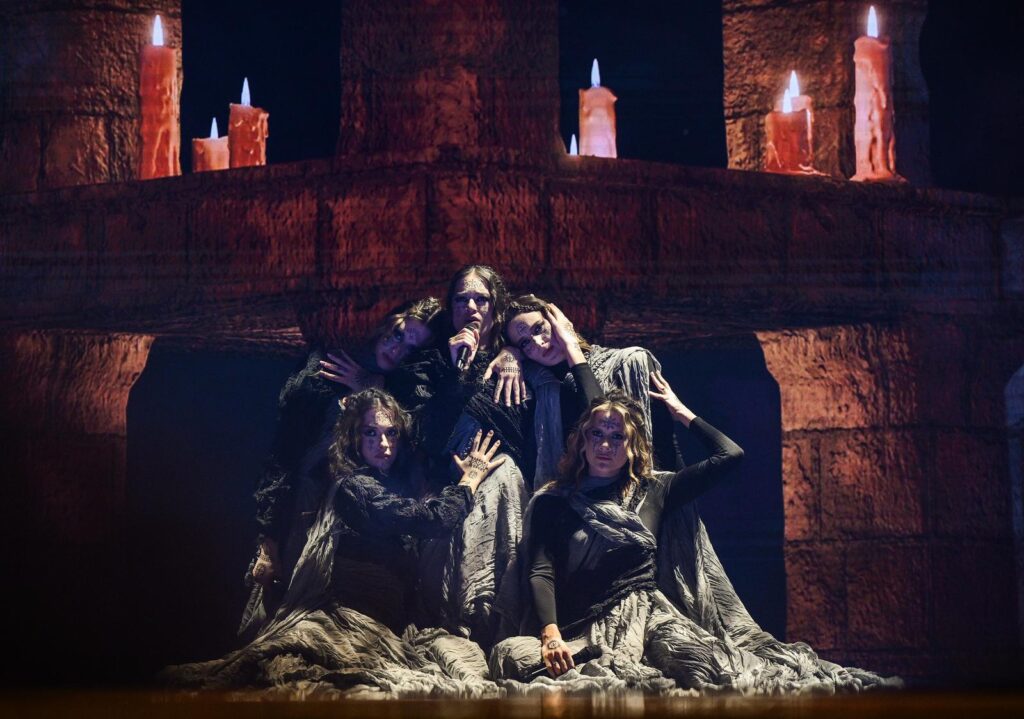
May the 19th, 2026 – For Croatia’s LELEK, the Eurovision journey didn’t draw to an end when the final scoreboard appeared for this year’s song contest.
According to growing discussion, Croatia’s 2026 representatives LELEK could now be experiencing something increasingly valuable in the modern Eurovision era: post-contest momentum. While some Eurovision entries disappear almost immediately after the competition ends, LELEK’s performance of Andromeda appears to be continuing its rise online, and in some ways attracting even more attention after Eurovision than during it.
croatia’s lelek remain a hit online even after eurovision ends
Clips of LELEK’s performance continue circulating heavily across TikTok, YouTube, Instagram and Eurovision fan pages days after the contest. Fan reactions online repeatedly focus on the group’s distinctive visual identity, layered harmonies and strong Croatian and regional folk influences, elements that helped Croatia stand out in a competition often dominated by polished mainstream and sometimes largely comedic pop formulas.
Social media users are increasingly pointing out that Andromeda feels like the kind of Eurovision entry that grows over time rather than delivering instant commercial impact. That slower-burning appeal is becoming one of the most interesting parts of Croatia’s Eurovision story this year.
One of the clearest themes emerging in fan discussions is that Croatia no longer feels like a country still searching for its Eurovision identity. For years, Croatian entries often struggled to stand out or appeared designed primarily to imitate broader European pop trends. However, recent Croatian acts have moved strongly in the opposite direction.
Baby Lasagna embraced regional humour, absurdity and chaotic Croatian energy. LELEK leaned heavily into folklore, symbolism and ethno-inspired performance aesthetics. In both cases, Croatia attracted attention precisely because the entries felt culturally specific rather than internationally neutral.
LELEK’s growing online popularity reflects a wider Eurovision trend. Fans of the cult song contest are increasingly rewarding thoughtful performances that feel authentic, emotionally distinctive or culturally rooted instead of heavily manufactured for radio appeal. Many international Eurovision viewers described Andromeda as atmospheric, haunting and visually memorable, which are all qualities that often perform extremely well online even beyond official voting results.
That dynamic matters because modern Eurovision success is no longer measured only by final rankings. Streaming numbers, viral clips, social media engagement and long-term cultural visibility now play a major role in defining whether an entry truly succeeds internationally.
the baby lasagna effect
Commentators are busy comparing LELEK’s post-Eurovision momentum with the trajectory experienced by Baby Lasagna last year. Baby Lasagna became far bigger after Eurovision than before it, transforming from a contest participant into a broader regional cultural phenomenon with strong international recognition. LELEK may now be benefiting from a similar effect: international curiosity about Croatia’s evolving Eurovision identity.
Eurovision fans increasingly expect Croatia to deliver entries that are unusual, visually distinctive and rooted in regional culture. That expectation itself has become valuable, even after the contest is over.
Perhaps the biggest shift is reputational. Just a few years ago, Croatia was rarely considered one of Eurovision’s defining countries. Now, the opposite may be becoming true. Between Let 3, Baby Lasagna and LELEK, Croatia has developed a reputation for unpredictability and creative risk-taking, which is something Eurovision fans often value highly. The country increasingly feels culturally confident in presenting its own identity rather than chasing broader trends.
eurovision itself is now far bigger than the scoreboard
What LELEK’s continued momentum shows is that Eurovision has fundamentally changed. The contest no longer ends when voting finishes. Today, performances live on through streaming platforms, fan edits, reaction videos and social media algorithms long after the official competition is over. In such an environment, Croatia’s LELEK may be perfectly designed for long-term cultural impact rather than just one-night voting success.
Whether LELEK ultimately won Eurovision almost matters less than this: Europe is still talking about Croatia after the contest ended. For the meaning and weight carried by modern Eurovision, that may be one of the biggest victories possible.